
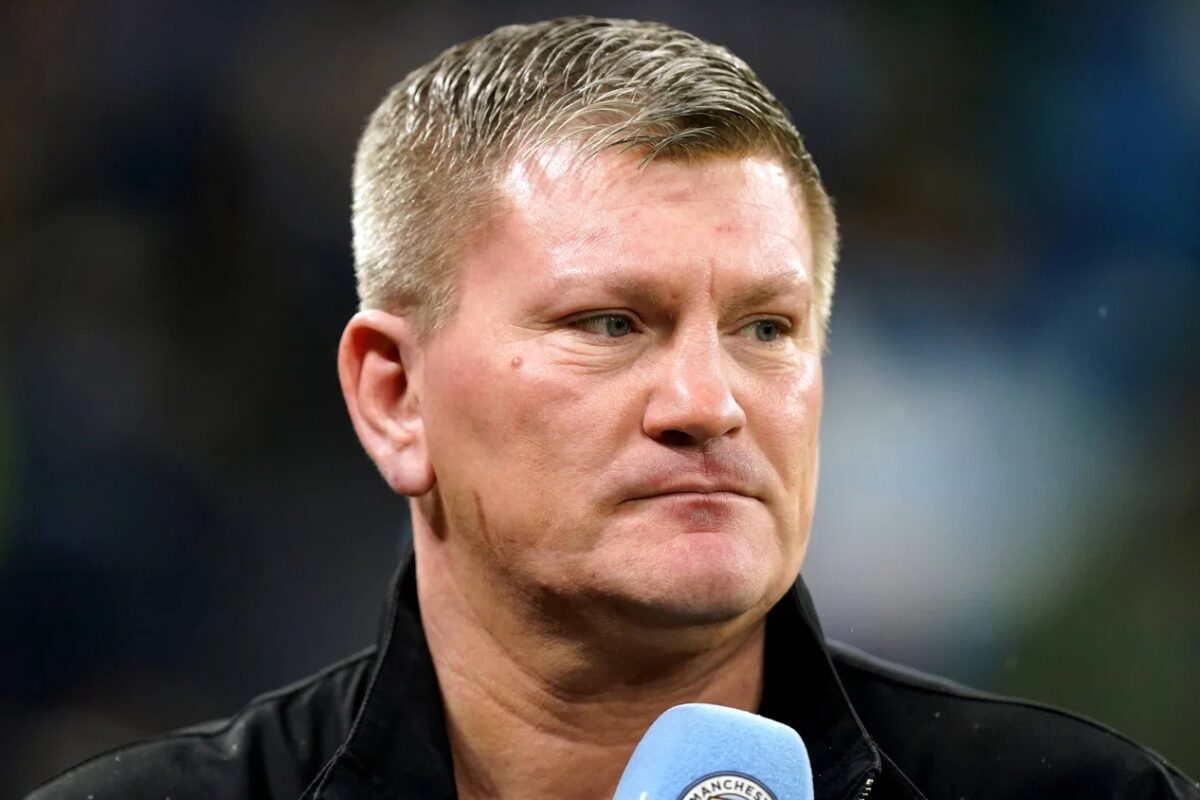
Nearly eleven months have passed since Ricky Hatton’s death shook British boxing, but the conversation about what he was carrying privately hasn’t faded. His son, Campbell Hatton, brought it back into focus on the Fight Your Corner podcast, reflecting on how little the outside world understood about his father’s struggles.
Watch What’s Trending Now!
“I think my dad’s a good example of someone who achieved everything he ever set out to,” Campbell said. “He had millions, he had family around him, he had his kids. A lot of people look at his life and say, ‘What struggles could you possibly have?’ But everyone does, don’t they? And from the outside looking in, no one has a clue. Yeah. It’s a massive problem. Forget the boxing side of it now. It’s one of the highest, I think it is the highest k—er in middle-aged men.”
Hatton was found dead at his home in Hyde, Greater Manchester, on September 14, 2025. A coroner’s inquest later concluded his cause of death was hanging, though the senior coroner said she could not be satisfied he had intended to take his own life, noting that no note was found and that he had appeared well to his family days earlier while making genuine plans for a comeback fight in Dubai.
Imago
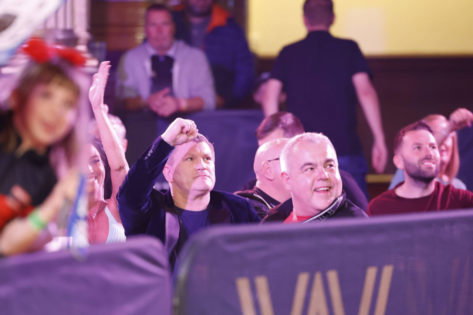
Darts Betfred World Matchplay Nathan Aspinall fan Ricky hatton during the 2023 Betfred World Matchplay Darts Quarter Final at Winter Gardens, Blackpool, United Kingdom on 20 July 2023. Blackpool Winter Gardens Aberdeenshire United Kingdom Editorial use only , Copyright: xStephenxDobsonx PSI-17617-0075
That uncertainty doesn’t erase the struggles Hatton had spoken about publicly for years. He first opened up about his mental health after a brutal knockout loss to Manny Pacquiao in 2009, a defeat that hit him hard enough that the pressure never fully lifted. A losing comeback attempt against Vyacheslav Senchenko in 2012 compounded it further. In a 2020 interview with the BBC, Hatton admitted he struggled with the feeling of being “beaten,” and in the years that followed, his depression was tangled up with substance use that made things harder rather than easier.
Campbell believes the sport has changed since then, and he points to Tyson Fury as proof.
“I think we’ve come a long way in the last couple of years anyway, through people like my dad, Tyson Fury, and other well-known men who sort of are from backgrounds where you wouldn’t think they’d be so open, and you’d think they’d keep it in, be a bit tough,” Campbell added in the same interview. “And I think that’s the sort of thing we need more of. I think the message has been put across really well and really clearly that it’s okay not to be okay. But I think there’s still a lot of people that don’t actually get round to it.”
Just like Ricky Hatton, his compatriot Tyson Fury also endured a difficult battle with his inner demons. The Englishman’s condition reached a point where he considered self-harm. However, Fury eventually managed to overcome those dark thoughts and make a remarkable comeback, though the road back was anything but easy.
Tyson Fury opened up about his mental health struggles
Fury’s story runs parallel to Hatton’s in a lot of ways. After beating Wladimir Klitschko in 2015 to unify the heavyweight titles, Fury said there was “nothing else” left to chase, and the emptiness that followed pulled him into addiction. He tested positive for a banned substance in 2017 and accepted a backdated two-year suspension from UK Anti-Doping, a period during which he has said he “lost the will to live.”
“Before, I didn’t know what it was, and I was going in and out of it for a long time, but now I actually know what it is, I know how to handle it now more,” Fury said in an interview with MTK Global. “I came out the other side very strong. I have turned my life around. As I’ve said before, I lost the urge to live and want to give love, but now I have it all back. We need to raise more awareness about mental health… it’s something very dear to my heart.”
Campbell has carried that same instinct to speak openly into his own career. He recently signed with Misfits Boxing, with a potential matchup against Sami Hamed on the horizon, a return to the ring that comes as he continues using his platform to keep the conversation his father started going.