Imago
Credits: IMAGO
Imago
Credits: IMAGO
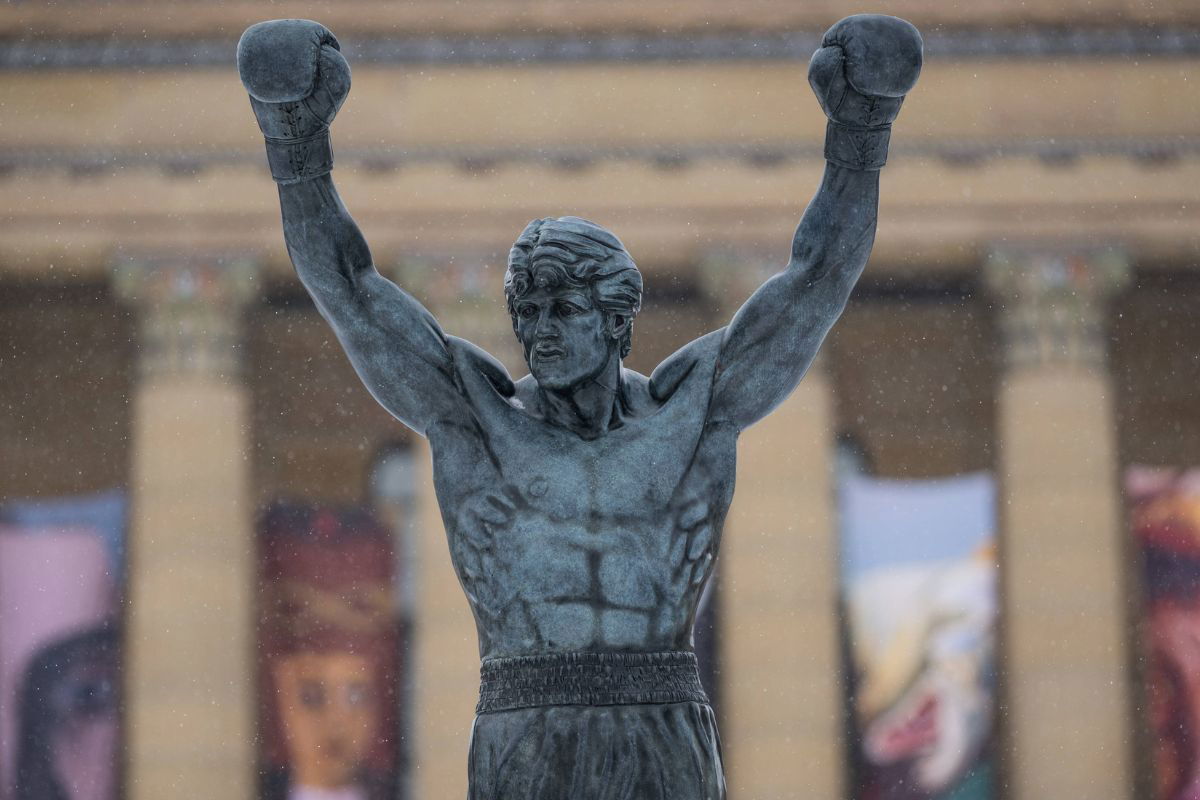
For decades, the steps of the Philadelphia Museum of Art have been tied to Rocky Balboa, the fictional underdog who became a cultural symbol. Now, with that statue shifting indoors for a while, the spotlight outside is turning toward a real fighter, Joe Frazier. A world champion, an Olympic gold medalist, and a man who fought and trained in the same city those steps overlook.


Suddenly, a long-running debate feels closer to a resolution. Because when you compare legacy to mythology, people in Philadelphia are asking a simple question: who actually represents the city? That’s where voices like Charles Gallagher come in. Speaking from Overbrook Park, he didn’t hesitate to draw the line while speaking to CBS News.
Watch What’s Trending Now!
“Smokin’ Joe Frazier was a real Philly fighter, a real guy, who really came up through the ranks,” Gallagher said. “He should be at the top, if anyone, because he’s a real Philadelphian. Rocky is make-believe.”
Joe Frazier didn’t just wear the city’s identity; he built it through fights, through wins, through moments like his 1971 victory over Muhammad Ali in the “Fight of the Century” and their legendary “Thrilla in Manila”.
As per reports, city officials seem to agree, at least in direction. Plans are already in motion to relocate Joe Frazier’s statue from the South Philadelphia sports complex to the museum steps, replacing Rocky’s long-held spot. And it’s not just about swapping figures.
View this post on Instagram
According to Creative Philadelphia’s public art director Marguerite Anglin, the move will include expanded exhibits, giving visitors context about Frazier’s career, the city’s boxing roots, and the impact he had locally. In her words, it’s “a long-awaited moment” and one that feels like the “right side of history.”
There’s also a personal layer. Frazier’s daughter, Jacqui Frazier-Lyde, spoke about seeing her father recognized in a place where he once trained, not as a symbol, but as a source of inspiration. That detail matters. For years, Frazier’s presence in the city felt almost secondary compared to a fictional character he helped inspire.
And that tension isn’t new. Even outside boxing circles, it’s been part of Philadelphia’s identity debate. Back in 2006, comedian Bill Burr famously called out the city during a hostile set, questioning why a fictional fighter was elevated over a real champion. Now, with the relocation underway and a potential unveiling timed around the nation’s 250th anniversary, Philadelphia has a chance to reset that narrative. Not to erase Rocky, but reframe what the city chooses to celebrate.
Rocky Balboa statue to remain a part of the Philadelphia Museum of Art alongside Joe Frazier
The Rocky Balboa statue has been part of Philadelphia’s identity since 1982, tied to Sylvester Stallone and the cultural wave of the Rocky films. It’s moved around over the years, but since 2006, it’s sat at the base of the Philadelphia Museum of Art steps, the exact place tourists flock to recreate that famous run.
Now, that changes. As we mentioned earlier, the statue has been moved inside the museum as part of a new exhibit. By August, the original Rocky statue returns, but not to the same spot. Instead, the base of the steps, arguably the most symbolic position, will belong to Joe Frazier.
And when you look at Frazier’s timeline, the contrast stands out. He last fought in 1981. Entered the International Boxing Hall of Fame in 1990. Passed away in 2011. Yet his statue didn’t arrive until 2015, and even then, it was placed near the stadiums, away from the city’s most visited landmark. That’s a 30-plus-year gap between career and recognition at that level.
The city is now investing around $150,000 to move that statue to the museum steps. But this isn’t just a relocation. It’s a repositioning of what visitors see first. As officials explained, the idea is simple: when tourists arrive, they encounter the real heavyweight champion before the myth. Not instead of, but before. And for the first time in decades, Joe Frazier isn’t in the background of Philadelphia’s boxing identity. He’s right at the front of it.
