
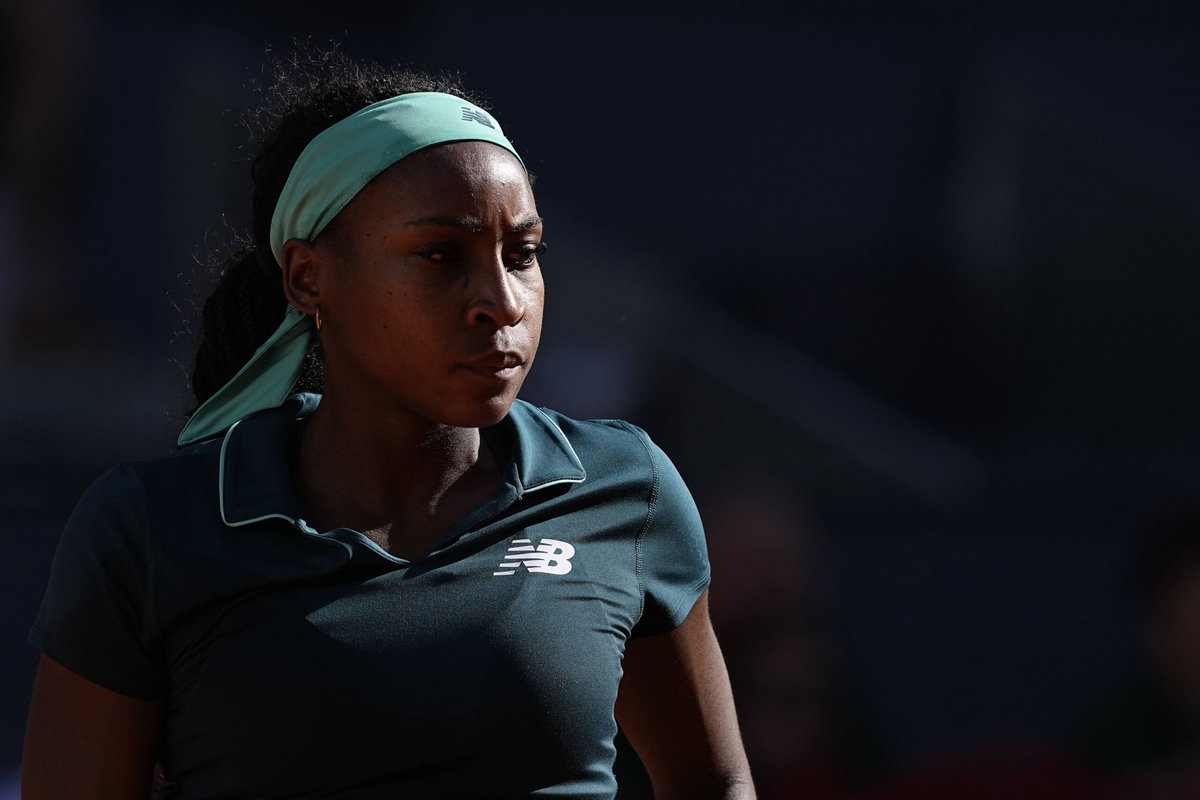
Ever since the WTA rolled out its new women’s eligibility policy last month, it has quickly become one of the biggest talking points in tennis. In fact, the mandatory genetic testing rule has already drawn responses from players like Aryna Sabalenka, Elena Rybakina, and Jessica Pegula. Now, Coco Gauff has also shared her thoughts, addressing both the policy and its impact on the transgender community.
Watch What’s Trending Now!
The American carefully acknowledged the reasoning behind the WTA’s new decision during her press conference at the National Bank Open. “I understand the reasoning behind it. I do think that this kind of conversation has created a lot of animosity towards the trans community, which I’m not really a big fan of, but I also understand the need to account for the biological difference and the need to protect that and preserve that. So I think it’s a conversation that is very nuanced,” Gauff said.
She went further in explaining her discomfort at the way this issue has been misused by people outside the sport, and she made a distinction between legitimate competitive concerns and bad-faith criticism. “I kind of agree with trying to protect the fairness in women’s sports. But I also do not like the attack that it is creating. People who don’t really care, but just want to use this as a reason to attack the trans community. So I’m not really a big fan of that either,” she added.
The 22-year-old acknowledged the difficulty of the question itself before summarizing her overall position. “I don’t really know how to answer this question in a way that people aren’t going to spin it. But as far as where I stand, I definitely support the trans community, but I also support the need of creating fairness in sport too,” the American concluded.
The policy Gauff was referring to came into effect on July 21. Under the new rules, every player wishing to compete on the WTA Tour must complete a one-time screening, which involves either a cheek swab, saliva sample, or blood test. The screening is designed to detect the presence of the SRY gene, a genetic marker associated with male biological development.
WTA became the first independent sports organization to implement this mandatory genetic screening process across its entire playing field. There are organizations such as World Athletics and the International Olympic Committee (IOC) that have also used similar measures, but they are not individual sports organizations.
In fact, the 2028 LA Olympics will use this screening process for all women’s competitions to ensure fairness. And if the reactions from the WTA’s top players are anything to go by, there seems to be broad support for the new policy.
Rybakina, Pegula, and Sabalenka stand in support of the new WTA policy
While Gauff addressed the broader impact of the policy, several other top players have largely kept the discussion centered on the testing process. Elena Rybakina, for example, took a neutral stance, saying she was ready to undergo the required screening regardless of whether she personally believed it was necessary.
“I mean, I don’t know what to comment. If we got to do it, we will do it. For me, I won’t say it’s unnecessary, but I think it was without these tests also fine. But if we need to do it, we will do it,” she said.
The world No. 3 Jessica Pegula offered a similar pragmatic take, framing the change as an internal governance update rather than a response to any specific controversy on tour. Speaking in Toronto, Pegula said the testing is set to begin once players reach Cincinnati, and noted that she had not encountered pushback from fellow players, even those serving alongside her on the WTA Player Council.
She described that the process was structured, including educating with an informational video and briefing materials made available to explain the need for the policy and what the testing would entail – it was not just handed down without any context. “It wasn’t just kind of laying on us that you have to do this. There was a lot of education and stuff in the background,” she said.
The world No. 1, Aryna Sabalenka, was the loudest to come out in favor of the policy on competition grounds. When questioned on the WTA’s move to make testing compulsory, she spoke about it in terms of fairness in the women’s game.
“I think it’s really important to keep the fairness in our tour. It’s obviously, biologically, the men are way stronger than women, so I feel like it would be not really fair for the woman to compete against biological man,” Sabalenka said.
“I believe it took them a little while to make this decision and, yeah, I support it. If they want to test us all, I’m happy to do that,” she added.
Despite approaching the issue from different angles, the message from the WTA’s top stars has been largely consistent. Gauff, Rybakina, Pegula, and Sabalenka all emphasized the importance of competitive fairness, suggesting that the tour’s new eligibility policy is a step they support.