
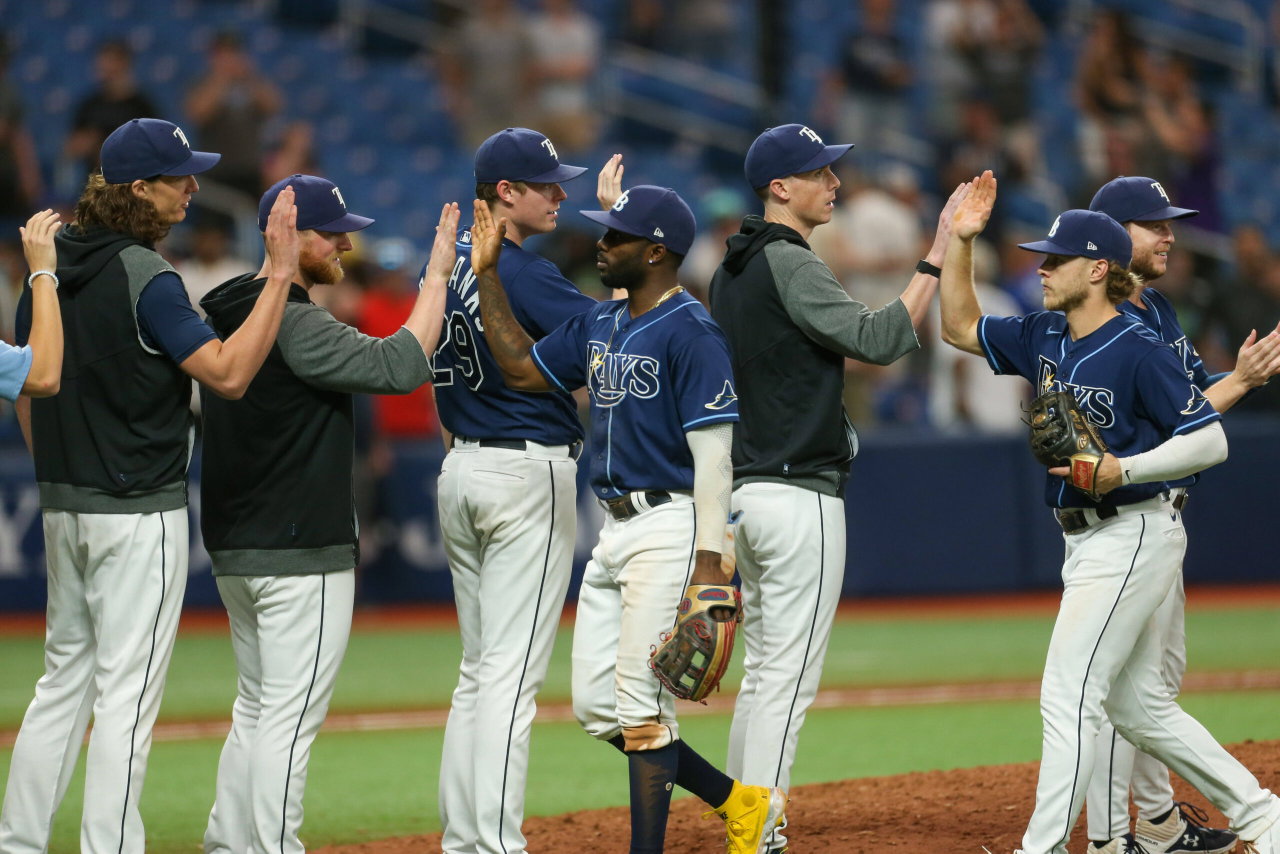
Claim: A Tampa city councilman is pushing a new Rays stadium plan requiring no new resident taxes, funded by property tax revenue from the team’s privately built development.
Watch What’s Trending Now!
Tampa Bay Rays have spent years searching for a new home as Tropicana Field aged. In 2023, the team proposed a $1.3 billion stadium in St. Petersburg, backed by significant public funding and a larger redevelopment of the Historic Gas Plant District. But disagreements over taxpayer funding, along with political and financial uncertainty, ultimately caused the deal to collapse in March 2025.
After the deal collapsed, the Rays shifted their focus to Hillsborough College’s Dale Mabry campus in Tampa. The new proposal calls for a $2.3 billion stadium and surrounding development, with the Rays contributing about $1.2 billion and local governments providing $976 million in public funding. Tampa’s $180 million share would come from existing tax sources.
But according to Spectrum News, Councilman Bill Carlson, who previously opposed the stadium, is now exploring an alternative after discussions with Rays CEO Ken Babby. Using new property-tax revenue generated by the Rays’ privately funded development to help pay for the infrastructure. This won’t require new resident taxes. It will instead be funded by property tax revenue from the team’s privately built development.
Still, the question remains: is that really the case? Here’s what we found.
Our Verdict: True
Carlson’s proposed approach would eliminate the nonbinding agreement requiring the city to contribute $80 million from the CIT. It would also separate the Drew Park Community Redevelopment Agency (CRA) from the stadium financing, allowing the neighborhood organization to manage its own future without tying its finances to the project. Carlson said his proposal would not take funding away from other sources.
“We’re taking it from two revenue streams to one,” he told Spectrum News. “Instead of using CIT, pulling money away from other projects, we would just use one revenue stream, and it’s what we’re calling tax revenue sharing, where we will look at the property tax and a TIFF — a tax incrementing mechanism that will generate taxes for the city, county, and a CDD.
“So, no money will go to the Rays,” Carlson added. “It will go into a community development district, and then it will be specifically tied to only being spent on infrastructure owned by the city, county, or the state.”
Carlson is now seeking public feedback on the proposal, which he plans to take to the Rays and the county. He could then draft an agreement as early as next week, with the City Council set to vote only after a final agreement is reached.
Carlson estimates that taxes generated by the entertainment district could reach $1.5 billion to $2 billion over 35 years, with the revenue going toward infrastructure requirements across the city.
Our fact-checking sources:
- Spectrum News, August 10, 2026. Could a new plan with no new city taxes be the key in Rays’ stadium funding?
- Axios, March 13, 2025. “I really thought we had it”: Disappointment inside city over Rays deal collapsing