
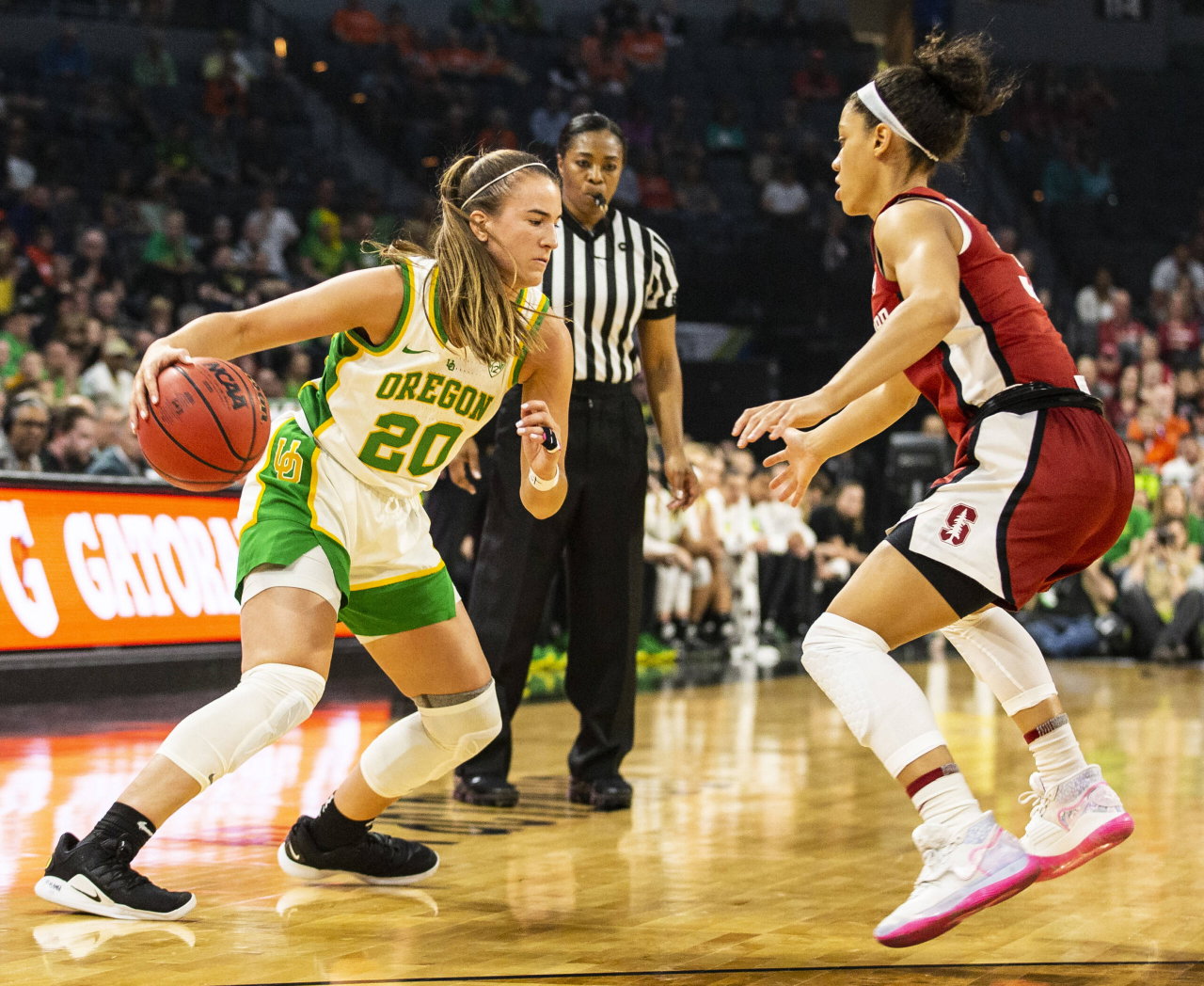
Claim: Oregon State’s women’s basketball team became the first college athletes in Oregon to file a petition to unionize.
Watch What’s Trending Now!
More than 100 women’s college basketball players began pushing for a formal way to collectively address issues affecting college athletes. The players sent letters to Big Ten and SEC leadership, calling for a collaborative process to give athletes a greater voice. When the conferences declined the request, the players continued organizing on their own.
That effort eventually evolved into the United College Athletes Association (UCAA). In late July, more than 100 women’s basketball players signed union authorization cards, signaling their desire for UCAA to represent them in collective bargaining. The organization then selected Oregon State as the first school where it would formally seek union recognition, in part because of Oregon’s relatively favorable labor laws.
The strategy was to begin at individual schools before potentially expanding into conference-wide bargaining units. But that raises an important question: Did Oregon State’s women’s basketball team become the first college athletes in Oregon to file a petition to unionize? Here’s what we found.
Our Verdict: Partially True
According to a report from OPB, Oregon State’s women’s basketball team became the first college athletes in Oregon to file a petition to unionize.
“The Oregon Board has a chance to make national news by potentially making Oregon a first mover in a much larger national wave of student-athlete organizing,” said Keith Cunningham-Parmeter, a professor of law at Lewis & Clark.
But while Oregon State’s case could mark a significant first for public-school athletes, private universities elsewhere have attempted similar moves before and run into very different legal hurdles.
Dartmouth’s men’s basketball team, for instance, hit a wall in 2024. Because Dartmouth is a private university, its players had to take their unionization bid to the National Labor Relations Board (NLRB). However, after the Trump administration filled the board with appointees viewed as unfriendly to organized labor, the players ultimately dropped their effort.
Northwestern faced a similar roadblock back in 2015. In that case, the NLRB declined to determine whether college athletes should even be considered employees. Cunningham-Parmeter believes that decision was telling.
“The key lesson from the Northwestern University experience is that even the Obama-controlled National Labor Relations Board did not want to touch this issue.”
As Cunningham-Parmeter explained, the underlying problem was the potential inconsistency: athletes at private universities could potentially unionize under federal law, while athletes at public universities would be governed by state labor laws. That divide, he said, was a major reason the NLRB chose to sidestep the Northwestern case.
Oregon State’s situation is fundamentally different. Because OSU is a public university, its players’ unionization effort falls under Oregon state labor law rather than the NLRB. That distinction sets the Beavers apart from previous unionization efforts at private institutions.
For now, however, Oregon State is pushing back against the players’ bid. The university told the Oregon Employment Relations Board (ERB) that it opposes the unionization effort, arguing that its basketball players are not university employees and therefore cannot form a bargaining unit under Oregon labor law.
That disagreement now moves into the formal legal process. An administrative law judge with the Oregon Employment Relations Board is expected to hold a hearing and issue a recommendation on whether the players qualify as employees and whether they can be recognized as a bargaining unit.
The recommendation will then go before the full Oregon Employment Relations Board, which will ultimately determine whether the athletes qualify as employees and are legally allowed to unionize.
Our fact-checking sources:
- ESPN, July 31, 2026. Over 100 college women’s basketball players join union effort
- AP News, August 1, 2026. Over 100 women’s college basketball players team up in unionization effort
- OPB, August 25, 2026. Oregon State University objects to women’s basketball team’s petition to unionize