Reuters
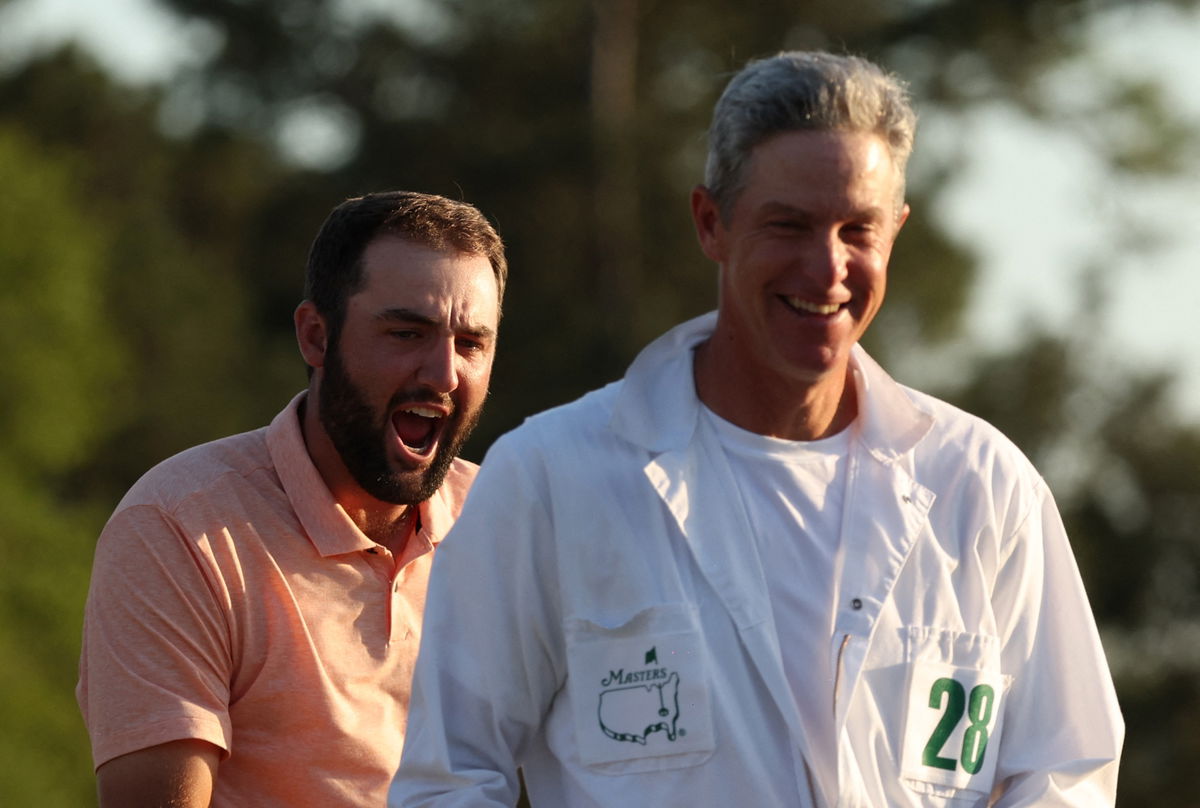
Golf – The Masters – Augusta National Golf Club, Augusta, Georgia, U.S. – April 14, 2024 Scottie Scheffler of the U.S. celebrates with caddie Ted Scott on the 18th green after winning The Masters REUTERS/Eloisa Lopez
Reuters
Golf – The Masters – Augusta National Golf Club, Augusta, Georgia, U.S. – April 14, 2024 Scottie Scheffler of the U.S. celebrates with caddie Ted Scott on the 18th green after winning The Masters REUTERS/Eloisa Lopez
Reuters
Golf – The Masters – Augusta National Golf Club, Augusta, Georgia, U.S. – April 14, 2024 Scottie Scheffler of the U.S. celebrates with caddie Ted Scott on the 18th green after winning The Masters REUTERS/Eloisa Lopez
Reuters
Golf – The Masters – Augusta National Golf Club, Augusta, Georgia, U.S. – April 14, 2024 Scottie Scheffler of the U.S. celebrates with caddie Ted Scott on the 18th green after winning The Masters REUTERS/Eloisa Lopez
Essentials Inside The Story
- How much are Caddies paid at the moment?
- Cons of the current system.
- How a standardized payment system will be beneficial?
People view professional golf as an individual pursuit. However, no golfer walks the fairways alone; a caddie always accompanies them. They help make decisions about club selection, reads on unfamiliar greens, and wind calculations, and also provide emotional support. These decisions shape every shot a golfer takes on the course. And yet, their paychecks depend on their partner’s swing. As such, it’s high time the tournament organizers started paying caddies on their end.
Watch What’s Trending Now!
The current pay model for caddies
The current pay model for caddies looks stable on paper but is fragile in actual practice. As we look at the top-level golfers and their caddies, the pay appears generous. But on all Tours, caddies typically earn a weekly base salary. This pay ranges from $1,500 to $4,000 per tournament.
Besides the standard pay, they also get performance bonuses based on golfers’ winnings. This is usually 5% of winnings for golfers who make the cut. For a top-10 finish, it is about 7%, and 10% for the win. With the performance bonuses in the mix, the pay gap increases significantly. Caddies of elite golfers like Scottie Scheffler and Rory McIlroy earn way more than those of average Tour golfers.
Consider the example of Rory McIlroy’s caddie, Harry Diamond. Many professionals and golf analysts criticized Diamond’s inexperience, as it caused challenges for McIlroy; however, despite that, he has already become one of the wealthiest caddies in the golf world. From the Northern Irishman’s Masters win alone, he made a whopping $420,000, with 10% of the winning fees. He also got the standard $3,000-$4,000 pay. With $870,000-$900,000 from previous McIlroy wins, he had a net worth of close to $2.5 million in 2025.

Imago
Mandatory Credit: Photo by Stuart Wallace/Shutterstock 14003901as Rory McIlroy NIR celebrates with his caddie Harry Diamond after holing a birdie putt on the 18th green to win the Genesis Scottish Open by one shot with a score of 15 under par after 72 holes, beating Robert MacIntyre SCO by one shot. Genesis Scottish Open, Day Four, Golf, The Renaissance Club, North Berwick, UK – 16 Jul 2023 Genesis Scottish Open, Day Four, Golf, The Renaissance Club, North Berwick, UK – 16 Jul 2023 PUBLICATIONxINxGERxSUIxAUTxHUNxGRExMLTxCYPxROUxBULxUAExKSAxONLY Copyright: xStuartxWallace/Shutterstockx 14003901as. Image Courtesy: IMAGO


Similarly, reports say that Scottie Scheffler’s caddie may have won more money than the average PGA Tour golfer. Scheffler won six events on the PGA Tour this year. Of these six events, he won $16.98 million. This means Ted Scott earned 10% of these, making $1,698,000 from just six starts. Of the 20 starts Scheffler had, he made $27.65 million in official earnings.
However, these numbers distort the broader picture.
Accountability runs one way
While golfers like Scheffler, McIlroy, and others who consistently make the cut do not worry about paying their caddies, issues arise among average golfers. Regardless of the result of an event, the golfer has to pay the standard caddie pay. If a player misses cuts repeatedly, the caddie still travels, still prepares, and still absorbs expenses. This expense comes from their pocket, pushing some golfers to hang up their clubs.
Paying caddies through tournaments would change that dynamic. If tournaments are to standardize caddie compensation, missed cuts would affect both the player and the caddie equally. The Tours will pay the caddies only when the golfers make the cut. Thus, the athlete does not have to worry about covering expenses from paying out of pocket. Similarly, if the Tour pro makes the cut, caddies rightly get their compensation, as they do half the work for the golfers.
The influence on caddies’ face value
A standardized wage set by the tournament will acknowledge the importance of caddies. It will also encourage average golfers and those on lower tours like the Korn Ferry Tour to play with a caddie. Currently, most golfers on the Korn Ferry Tour play without a caddie. This is mostly because of the financial aspect. Since the prize pool and the overall income on the Korn Ferry Tour and many other low-level tours are low for golfers, they try to avoid the additional expense by playing without a caddie. While this covers the financial side, it prevents golfers from getting a second set of eyes and a course perspective.
Some critics argue that such a shift could thin fields or strain tournament budgets. However, prize pools are continuing to grow, and sponsorship revenue remains strong. For instance, Cadillac recently became a sponsor for the Cadillac Championship, which will be a new signature event on the PGA Tour. The inaugural season is scheduled from April 27 to May 3, 2026.
Compared to seven-figure purses, paying caddies directly represents a marginal cost with a meaningful impact. Moreover, the Tours don’t even have to pay all the caddies. It could be only the ones whose partners have made the cut. Even with a standard $3,000 pay, this would cost only $210,000, even if 70 golfers made the cut at an event.
Golf prides itself on tradition. However, tradition should not shield inequity. While the current pay structure is not an issue for elite golfers, it is the average skilled pros who have to take the burden. If tournaments adopt this pay structure, it will be a win-win situation for both golfers and their caddies.