Imago
Image Credits: IMAGO
Imago
Image Credits: IMAGO
Imago
Image Credits: IMAGO
Imago
Image Credits: IMAGO
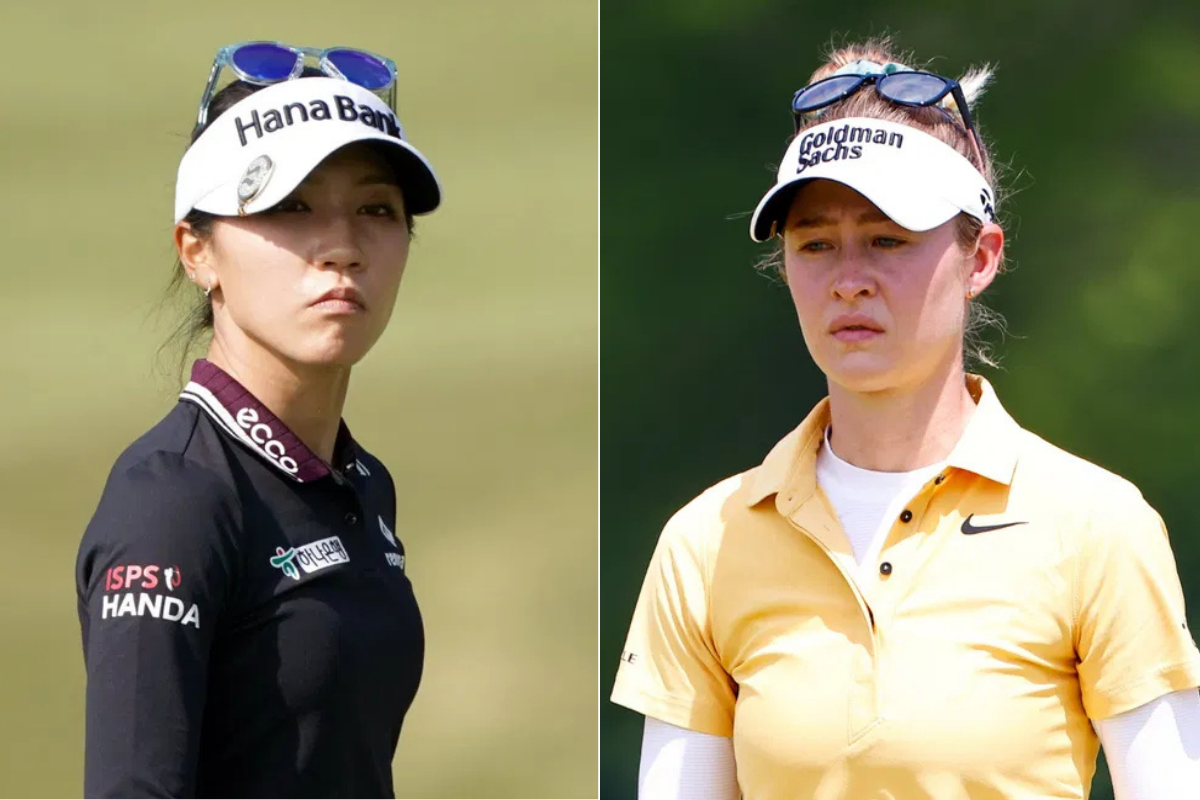
Okay, hear me out. LPGA players, Nelly Korda and the rest, are just as talented as any other athletes out there. They train relentlessly, compete against the best players in the world, and they win—simple as that. So why aren’t they as popular as their male counterparts, or even other major athletes in America? Media coverage can be the obvious answer. It’s also the most convenient one.
Watch What’s Trending Now!
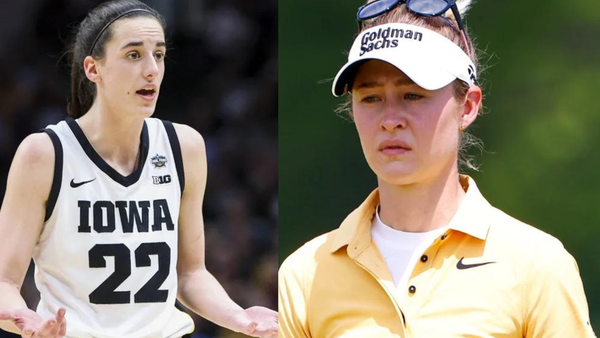
But in today’s digital age, can we really say that visibility depends only on traditional media or event coverage? Take Caitlin Clark, for example. And no, this isn’t about her WNBA career. She’s dangerously close to becoming the face of the league (or already is). So, when she teed it up at THE ANNIKA, people showed up to watch.
Was that just because she’s a great WNBA player? No. Not even close. This is what intentional visibility looks like. Clark has been subtly hinting at her interest in golf for a while now—through press conferences, social media, little breadcrumbs everywhere. So when the Indiana Fever guard actually picked up a club, the buzz was already there. Thousands turned up to watch her swing.
Caitlin Clark showing off with this putt 🤩@CaitlinClark22 | @theANNIKAlpga | @IndianaFever pic.twitter.com/TPGzZd4AXf
— LPGA (@LPGA) November 12, 2025
What the LPGA lacks now
Let’s be honest. We have good players. Nelly Korda, Lydia Ko, Jeeno Thitikul, Charley Hull, Brooke Henderson, Minjee Lee, the Iwai sisters… You get the point. But how many of them actually use social media consistently? Hull, for sure. Maybe a few retired names like Michelle Wie West and Jane Park, and of course Lexi Thompson, who sits somewhere in that semi-retired space. And that’s pretty much it. Which still feels strange in 2026.

Imago
Image courtesy: Imago
Outside of that, what do we really get? A photo drop once a month, if that. That is about the level of visibility we even get from the “face of the LPGA,” Nelly, as well. Right now, in the LPGA, there is no visible sense of community. Even if it exists behind the scenes, fans rarely see it. And that absence shows up most clearly in how little the players connect with audiences outside tournament weeks.
That is especially noticeable in a world dominated by podcasts, YouTube, and Instagram. These platforms are where communities are built today, and yet they remain largely unused in women’s golf. Not because the opportunity is missing, but because the effort is.
Imagine a podcast hosted by the Korda sisters. Conversations about family, competition, life on Tour, and even breaking down tournaments week by week. It’s hard to imagine it not finding an audience.We at Essentially Golf see it firsthand. Every time Nelly Korda posts a story, our readers click. It does not matter what it is. That alone proves the interest is real. Fans want more. Yet it is still not happening. Not because it cannot, but because it will not. And that is what needs to change if the LPGA wants to grow beyond its current bubble.
The LPGA pros can learn so much from the USWNT players
Being a fan is easy. Especially for a sport like soccer, that isn’t a mystery to anyone. You watch the game, get frustrated when your team messes up, swear you are not mad in front of rival fans, and then immediately prove otherwise.
On some weekends, it feels less like fandom and more like free group therapy. But that is usually where our involvement ends, and podcasts like The RE-CAP Show by Christen Press and Tobin Heath come in. Or A Touch More hosted by Megan Rapinoe and Sue Bird. Or The Women’s Game with Sam Mewis. These shows consistently draw tens of thousands of subscribers and a strong average viewership.
The difference isn’t hard to spot. These players know what really happens inside the locker room. They know what the coach says before kickoff, at halftime, and after full-time. They even know what is written on those small notes coaches send onto the field. These are things fans will never hear in the stadium or from TV commentators.
And that is what they are doing differently. They are not just talking about the game. They are giving fans access to the process and, in doing so, building a community. That is how you bring people in, especially in women’s sports.
For many women, fandom starts with context. Not to gossip, but to understand someone else’s world. That is one of the biggest differences in how fans connect with sports. Men can watch a single moment, get impressed, and instantly become fans. Women often respond differently. When we see an impressive moment on the field, the next instinct is to learn more about the person behind it. Who are they? Where did they come from? What is their story? What are they like away from the spotlight?
That is exactly what these legends are capitalizing on. They understand that mindset. And since traditional media has offered very little depth on their journeys, for reasons that do not need explaining, they realized they could provide that access themselves.
So they did. And the results speak for themselves. The audience showed up, the community followed, and the connection stuck.
Just do it, LPGA pros! Success will follow
Now Tobin Heath is not just talking on podcasts. She is part of FIFA’s Technical Study Group, working alongside people like Arsène Wenger, who also happens to be her role model. She even made history as the first woman to analyze a men’s tournament for FIFA.
Megan Rapinoe and Sue Bird are just as visible. WNBA games, major sporting events, and panel discussions. If something important is happening in sports, they are usually there. And then there is Sam Mewis. As CP23 once joked in one of the RE-CAP Show episodes, “[Does] she ever sleep?” Funny line, but also true. They are everywhere.
USA Today via Reuters
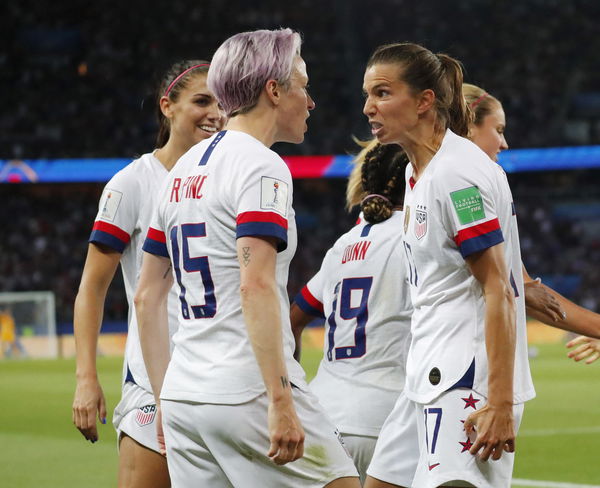
Soccer: Womens World Cup-France vs USA, Jun 28, 2019 Paris, FRANCE United States forward Megan Rapinoe 15 celebrates with forward Tobin Heath 17 after scoring a goal against France in the second half of a quarterfinal match in the FIFA Women s World Cup France 2019 at Parc des Princes. Mandatory Credit: Michael Chow-USA TODAY Sports, 28.06.2019 22:22:19, 12972846, Tobin Heath, France, United States, Megan Rapinoe, Soccer PUBLICATIONxINxGERxSUIxAUTxONLY Copyright: xMichaelxChowx 12972846
That is exactly what the LPGA is missing. The players already have everything they need. They can make golf feel less intimidating. They can explain the game to people who still think it is only for the rich, and can make it feel open and welcoming. These pros can also be the faces of the sport. And if anyone needs proof that it works, just look at the United States women’s national soccer team. The visibility brings fans, and yes, it brings sponsorship money too.
The era of just complaining and hoping someone else fixes it is over. The tools are in their hands. The stories are theirs to tell. They lived it. At this point, the barrier isn’t access or resources. It’s willingness.
Just pick up your phone and start recording.