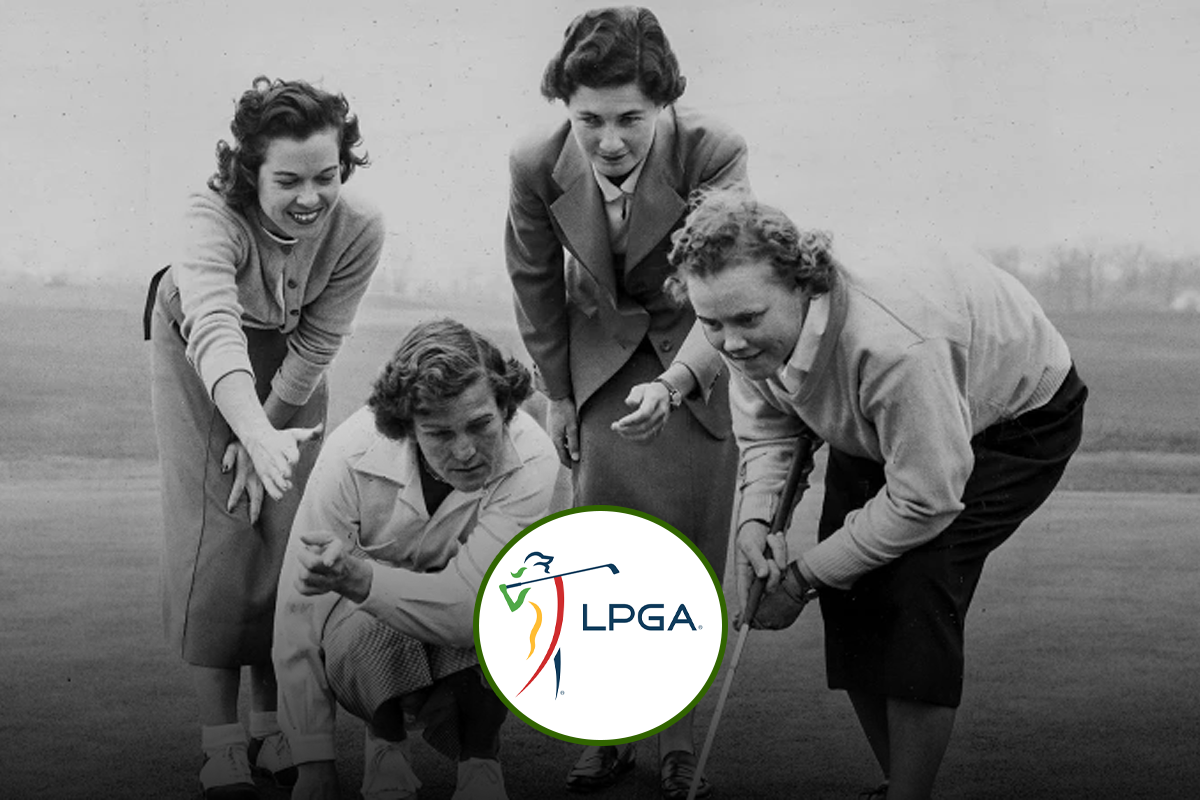
If the LPGA could ever be reduced to one big moment — and it is never that simple — it was the birth of the institution itself. The LPGA was first incorporated in August 1950. A month later, on 30 September 1950, the LPGA charter was officially signed by 13 golfers at the U.S. Women’s Open at Rolling Hills Country Club. It seemed like things were finally in place. After all, the oldest women’s professional sports league had officially come into being.
Watch What’s Trending Now!
But there was more work to be done, and the “Founders” — Alice Bauer, Marlene Bauer Hagge, Patty Berg, Bettye Danoff, Helen Dettweiler, Helen Hicks, Opal Hill, Betty Jameson, Sally Sessions, Marilynn Smith, Shirley Spork, Louise Suggs, and Babe Zaharias — took the responsibility.
The early struggle and uphill road to success
Funding for LPGA tournaments was so minuscule that the golfers doubled as their own event planners and grounds crew, tackling organizational tasks and course maintenance chores. The members traveled from city to city and tour stop to tour stop in order to compete.
As they crisscrossed America, these golfers seized every promotional spotlight to rally support for their budding circuit. That means it ranged from hurling the first pitch at minor league baseball games to making radio appearances.
Undoubtedly, it was slow. It was difficult, in fact, but it was working.
The 1950 season featured 15 official events with a modest $50,000 prize pool, kicking off at the Tampa Open in January and wrapping up with the Hardscrabble Women’s Invitational in October. The brilliant Zaharias claimed victory in eight of those 15 tournaments.
She pocketed $14,800 for the season, highlighted by the fattest purse of $5,000 at the 144-Hole Weathervane and her U.S. Women’s Open. In comparison, Nelly Korda earned $4.4M in her seven-win 2024 season.
Meanwhile, in its first 10 years (1950-1960), the LPGA ballooned from 14 events to 26, while prize money soared from $50,000 to $200,000.
Notably, the true groundwork for the LPGA was laid six years earlier with the birth of the Women’s Professional Golf Association (WPGA), founded by Hope Seignious, Betty Hicks, and Ellen Griffin. Despite financial headwinds, even with Wilson Sporting Goods stepping in during 1948, the WPGA folded after its 1948 season and officially shuttered in 1949. Yet in its short life, it showed the world needed a pro tour for women, and the signs were positive, especially after the failure of WPGA.
The first big win for a tour desperately seeking visibility came in 1963. This was the year when the league first gained national television coverage at the U.S. Women’s Open Championship.
Yes, indeed, it was only for the final round, but it was proof of success. The world wanted to see women golfers compete, having seen men compete since the 16th century.
Four years later, in 1967, the LPGA Hall of Fame, first established in 1951, finally had a physical premises in Georgia. Its charter members were the powerhouse quartet: Jameson, Suggs, Berg, and Zaharias.
By the late 1960s, the league’s prize money had climbed to $600,000 across 34 scheduled events. By 1979, it rocketed to $4.4 million annually.
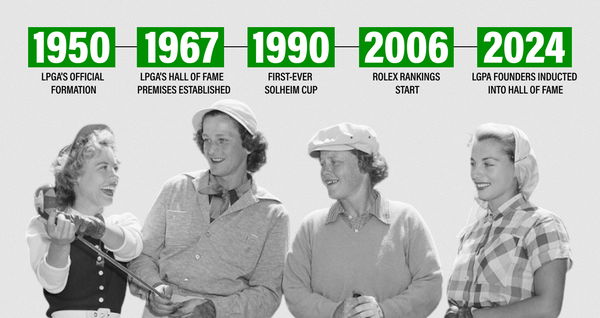
Comparatively, this season the LPGA will host 33 events with a record-shattering prize fund exceeding $132 million, the fattest in Tour history. On the TV front, though crowds remain a work in progress, every event and round will air live across America for the first time since 1995 (via Golf Channel).
Twelve events boast elevated purses, over 15 promise minimum payouts to all competitors, and nearly 20 offer perks such as hotels, flights, and/or transportation. All of this was possible because of them.
And if you think the achievements of Founders need more validation, it resides in the what-might-have-been bin.
A brief history of the LPGA founders and everything else in between
Last season, the LPGA marked its 75th year.
Two years prior, on May 16, 2023, the last surviving Founder, Marlene Bauer Hagge, passed away at 89. No doubt, all 13 Founders, including Hagge, accomplished mighty feats. Unfortunately, none of the members survived to witness the entire group’s induction into the World Golf Hall of Fame in 2024. But they’re the reason you and I see young golfers of every nationality, religion, and skin color competing and thriving on the LPGA today.
The world wasn’t always kind to the Founders, though.
Babe Zaharias, who dominated nearly every sport imaginable, drew fire from writers who tried to shame her for not being “feminine” enough. Joe Williams of the New York World-Telegram once wrote, “It would be much better if she and her ilk stayed at home, got themselves prettied up and waited for the phone to ring.”
But that hardly deterred Zaharias, who went on to win 10 LPGA majors. She also competed against male golfers, successfully making the cut at the 1945 LA Open, becoming the first woman to do so. The 5-foot-5 Zaharias understood what was at stake. She loved the limelight, and she loved charming people.
Once, she famously quoted, “As long as I am improving, I will go on, and besides, there’s too much money in the business to quit.”
She passed away in 1956, aged 42, of cancer.
Sally Sessions, a Michigan native, was a state champion tennis player before diving into golf at 16. She rocketed to prominence, tying for second at the 1947 U.S. Women’s Open as an amateur. Sessions, the first woman ever to shatter men’s par with a 69 at Pinehurst Country Club that year, was elected the LPGA’s inaugural secretary at the Wichita organizing meeting.
However, she played for just one season. Sessions taught in Detroit’s schools until retiring in February 1966, months before her death from lukemia at 43.
And the world would be glad neither Zaharias nor “her ilk” took the advice from William. All they needed was the love for the game, which, thankfully, was cultivated in their early years.
In 1950, a group of 13 women signed a charter forming what is now the oldest continuous women’s professional sports league, the LPGA Tour.
This week at the Cognizant Founders Cup, we honor the past, present and future of the LPGA Tour. 👏 pic.twitter.com/CfkhzOQWp0
— LPGA (@LPGA) October 5, 2021
In the case of Marilynn Smith, it began at age 12, as punishment from her father for a post-softball tantrum, dragging her to Wichita Country Club. A University of Kansas standout, she turned pro in 1949, joining the struggling Women’s Professional Golf Association. The next year, Smith helped the other Founders launch the LPGA.
She racked up 21 wins, including back-to-back Titleholders Championships (a major then). She broke barriers as the first female broadcaster in men’s golf telecasts at the 1973 U.S. Open Championship. Reportedly, Smith taught around 250,000 golfers throughout her lifetime.
Meanwhile, Alice Bauer, sister to co-Founder Marlene Bauer Hagge, met a similarly tragic end as Zaharias. Though she never notched an LPGA win, as the elder half of the Bauer sister sensation, she played a pivotal role in steadying the nascent tour.
Marlene claimed 26 LPGA wins. But Alice carved her own path, raising two children and prioritizing family. She passed away in 2002 from colon cancer.
Shirley Spork aimed to keep teaching and coaching at Bowling Green State University when Zaharias summoned her aboard before the Chicago Weathervane at Skycrest Country Club, where Zaharias was the new head pro.
However, Spork kept teaching until she secured a sponsor. Still, the money was so scarce that in Waterloo, Iowa, Spork once slipped her check into the Mass’s collection plate. Unfortunately, the monsignor mailed it back.
Along with a note and a church cookbook.
“I enjoyed playing in the pro-am with you. You didn’t do so well in the tournament, and I think you need this more than the church does,” the priest wrote.
The times were hard, undoubtedly. For a spell, “female professional” wasn’t the label; they were dubbed “business women golfers.” Patty Berg and Zaharias flipped that narrative. While Zaharias piled up title after title, Berg stepped up as president, alongside amassing 60 LPGA wins, including a record 15 majors.
Bettye Danoff, the “Mighty Mite,” was a decorated amateur. After her husband’s sudden death from a massive heart attack, she played a light schedule. Even so, Danoff’s early presence laid crucial groundwork for the tour’s success. Her youngest daughter, Debbie, recalled how Danoff sometimes drew slow-play warnings for chatting endlessly with the gallery.
Helen Dettweiler became the third LPGA founder to sign on as a pro for a golf club manufacturer, trailing pioneers Betty Hicks and Opal Hill. But competition wasn’t her forte, she said once. She savored interacting with the people far more. No wonder the pros are asked to engage more, even now.
Post-competition, Dettweiler blazed trails as Southern California’s first teaching pro, with a star-studded client list topped by President Dwight D. Eisenhower. A smart businesswoman, she also ran a retail shop on Palm Springs’ El Paseo.
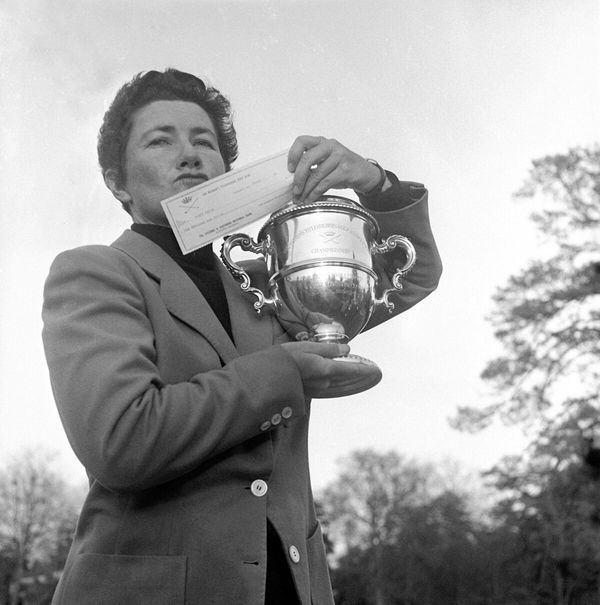
Louise Suggs was the first woman golfer to claim a career Grand Slam. With 61 victories and 11 majors, she’s among the all-time elite in women’s golf, adored by peers, if less so by the public. Her Hall of Fame run predated the 1950 LPGA founding, including wins at the Western Opens, Titleholders, and the U.S. Women’s Open, among other tournaments.
In the LPGA’s early days, Suggs’s skill often languished in the long shadow of Zaharias’s razzle-dazzle showmanship. It was a rivalry Suggs never warmed to, partly because Zaharias was the public’s pick for women’s golf greatness. But still, when it came to developing women’s golf, she was hardly behind Zaharias.
There’s one particular story that we must return to. Suggs was playing in a mixed event in Florida against male golfers. One of them happened to be Sam Snead, who infamously hated losing to women. When Suggs won, Snead couldn’t swallow the bitterness. Suggs once recalled that Snead complained and complained in the clubhouse later. At some point, however, Suggs had had enough of him insulting female golfers.
She couldn’t take it anymore.
In retaliation, an annoyed Suggs chimed, “Sam, what are you bi*ching about? You didn’t even finish second.”
Imago
Horace Cort/The Associated Press
Sadly, that was the environment the Founders and fellow female golfers were playing in.
Betty Jameson racked up 14 amateur victories, including back-to-back U.S. Women’s Amateur championships in 1939 and 1940. She turned pro in 1945, inking a three-year, $5,000-a-year deal with Spalding sporting goods. It was a handsome upgrade from her $25 weekly reporter gig at The San Antonio Light.
Betty Jameson tallied 10 professional wins, including the 1947 U.S. Women’s Open in Greensboro, N.C., where her 72-hole score of 295 marked the first time a woman broke 300. Her lifetime earnings hit a solid $91,470. It was, no doubt, an impressive haul in an era when women caravanned between tournaments, often tackling far rougher, less pristine courses than the men’s tour enjoyed.
Today, just for comparison purposes, the winner of the ongoing 2026 Blue Bay LPGA event will earn $390,000 from a $2.6M purse.
But the impact remains. According to a report by the National Golf Foundation in 2024, there were approximately 7.9 million women on-course, accounting for some 28% in America alone. Initiatives like LPGA-USGA Girls Golf, no doubt, encourage further participation among kids. In fact, according to the same report, girls now make up 34% of all junior golfers, up from 15% in 2000.
No doubt, that is far more valuable than money.
Now, another story.
How Helen Hicks became one of LPGA’s founding members
Fred Corcoran, the author of “Unplayable Lies,” was also employed by the men’s PGA. But in the winter of 1949, he had been called upon by the likes of Berg, Suggs, and Zaharias for an organizational meeting. He was also the one who suggested calling the women’s league “Ladies’ PGA.” Eventually, “LPGA” was born.
When Corcoran’s lawyer drafted the tour papers in New York, state law demanded that at least one signer be a local resident. That’s how Helen Hicks joined as a founder, though the Long Islander’s spot was no legal accident.
Hicks blazed trails in 1934 as the first woman hired by Wilson to promote gear and run clinics, paving the way for mentee Berg. In her career, Hicks went on to win the 1937 Women’s Western Open and the 1940 Titleholders (then, a major).
One of the LPGA’s lesser-known founders, Opal Hill, was 58 when the tour launched in 1950, earning her the media moniker of “matriarch of women’s golf.” In fact, she was 31 when she started playing golf.
Diagnosed with a dire kidney infection and given just three years to live, she took up golf on the doctor’s orders for exercise. It saved her life. Hill racked up two Western Open titles, three Western Amateur crowns, and three Trans-Miss championships. She passed away in 1981.
There’s much to learn from these pioneers, and these words hardly do them any justice. However, they also keep them alive for a world increasingly obsessed with moving forward.