
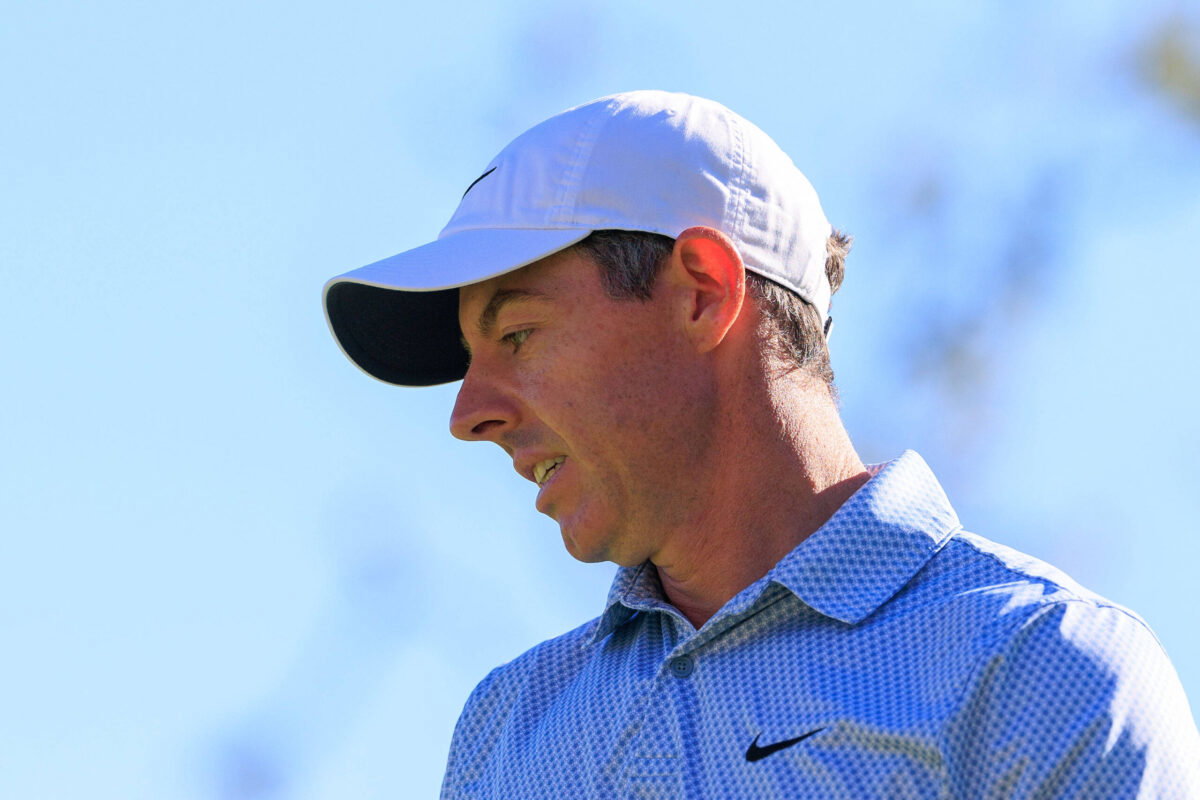
One can only imagine how beset with problems the 2016 U.S. Open was. Aside from the champion Dustin Johnson‘s ruling incident that year, only four players broke par in the week. That and a culmination of disappointments of previous years incited such a surprising reaction that some 10-15 players, including Johnson and Rory McIlroy, were prepared to boycott the major the following year.
Watch What’s Trending Now!
The incident, or the potential of it, was first reported by Golf Digest in 2019, which interviewed 57 players, including 16 major champs. In the interview, an anonymous multiple-time PGA Tour winner was reported as saying, “We had about 10–15 guys who were willing to sit out after 2016. Some of them were big names—Dustin was one, Rory was another.”
Although it was the 2016 U.S. Open that convinced players to do something (boycott) about the USGA, this report came into light a year after the USGA “went too far” at Shinnecock Hills, the host of this season’s U.S. Open, which has already raised some concerns. In 2018, in R1, the scoring average was 76.47, almost touching the high-water mark of the R1 score of 1986 (77.55). Not to mention, Phil Mickelson was so done with the setup that he hit a moving ball and eventually incurred a two-shot penalty.
But the one at the Oakmont Country Club in 2016 was what made everyone upset. Putting the stats aside—including everyone except Johnson carded a combined 1,537 shots over par—the ruling incident on Sunday confirmed the USGA was running on a system too old. Or, at least, it was having a tough time keeping up.
In R4, on the fifth, Johnson was taking practice strokes when his ball appeared to move ever so slightly. It appeared to move again when he prepared to hit it. He stepped back and asked for an official, who didn’t give him any penalty. Instead, they said they’d check the footage after the round. Eventually, on the 12th, an official, unimpressed by Johnson’s explanation, said he might incur a one-shot penalty.
For the next few holes, Johnson and the fans were unsure where everyone stood. It wasn’t until he registered a four-shot win that he was assessed a one-shot penalty, with his score moving from 68 to 69. The setup, the lackadaisical ruling, and the delay caused great upset. The USGA’s Jeff Hall did say Johnson accepted the ruling, “and that was the end of the conversation.”
Not really.
In the Golf Digest report, a multiple-time PGA Tour winner said that if Tiger Woods had been playing that week, the plan might have gone through. Another player, who was identified as a former World No. 1 and a major winner, said he was ready to boycott the tournament.
The backlash following these U.S. Opens was so intense that in 2019, ahead of the U.S. Open at Pebble Beach, the USGA contacted McIlroy to help them with the… setup.
Imago
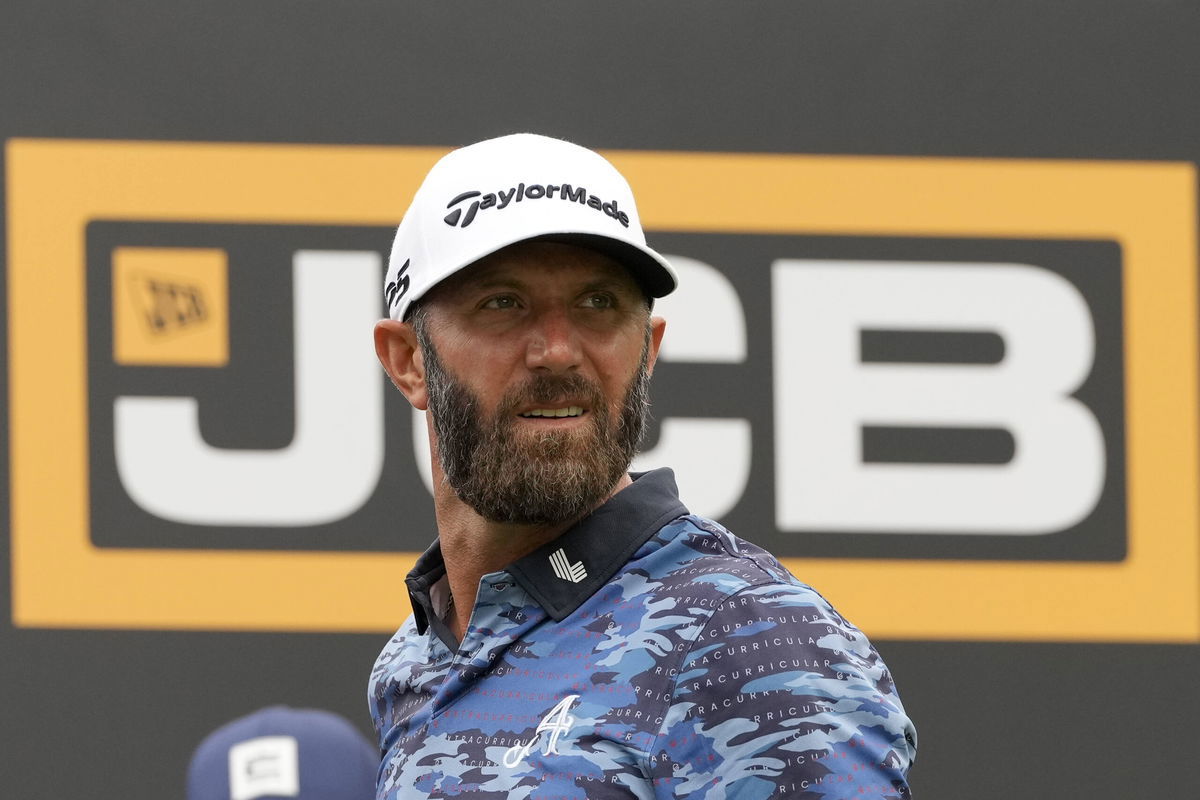
25th July 2024 JCB Golf & Country Club, Rocester, Uttoxeter, England LIV UK Golf League, Pro-Am Day Dustin Johnson of the Aces GC plays from the 10th tee during the Thursday Pro-Am PUBLICATIONxNOTxINxUK ActionPlus12671658 StevenxFlynn
For years, the course setup at the U.S. Open has drawn criticism. It is undoubtedly the most ruthless of all four men’s majors. Thank the merciless greens, punishing rough, and ruthless bunkering for that. Still, it’s hard to call the test unfair when every pro has to handle the same conditions and one pro does it slightly better than the rest.
In 2015, Henrik Stenson said putting at Chambers Bay was like “putting on broccoli.” Gary Player went a step further, saying the course was designed by “a man who had to have one leg shorter than the other.”
According to a report on Golf Monthly, 29 players finished under par after the first round, the highest since the 1992 U.S. Open. The final-round scoring average of 71.29 was also the lowest ever recorded at the championship. Moreover, around 16 players hit over 75% of greens in regulation. That doesn’t mean Chambers Bay lacked challenge.
Excellent drives and approach shots were frequently punished, while some errant shots found fortunate bounces because of severe slopes across the fairways and putting surfaces. The USGA even had to mark with small white dots around each green to show where the fairways ended and the putting surfaces began. Meanwhile, in 2014, at Pinehurst, the course did not have any rough at all, as it had to rely on a central irrigation system to preserve water.
So, is it really a black and white situation? Not really. But some of the concerns of the players are legit, including money distribution.
The uneven distribution of USGA’s revenue has long faced scrutiny
In the Golf Digest interview, a multiple-time PGA Tour winner said, “I still don’t know where it goes. I’ve tried a thousand times to get an answer. The USGA is making about $100 million a year that we know about—that’s just U.S. TV revenue, not international TV money, merchandise, sales, and so on.”
Another multiple-time PGA Tour and DP World Tour winner stated, “They came to us a year later and gave a fifth-grader’s pie-chart breakdown of where the funds were going. We counted $23 million that was under “other.””
Now, the USGA does not disclose where the money goes, but a generally accepted narrative is that it all goes for the good of the game.
In 2013, Fox agreed to a 12‑year, roughly $1 billion broadcast deal with the USGA that was set to begin at the 2015 U.S. Open. The partnership, however, never fully clicked, and Fox pulled out after just six years, a decision tied in part to the 2020 U.S. Open being postponed to September because of the pandemic. Regardless, the USGA was paid some $93M annually when the deal was in place.
NBC then assumed U.S. Open broadcast rights beginning with the 2020 tournament, which will run through 2032. Of course, during this time, multiple things changed within the U.S. Open. In 2017, the winner earned over $2 million for the first time in U.S. Open history. Last year, J.J. Spaun pocketed $4.3 million as the winner.
Little is known about what happens to the remaining money, however. But as the reported Rory McIlroy-Dustin Johnson incident showed, another wrong move and players might decide to follow through with their plan.