
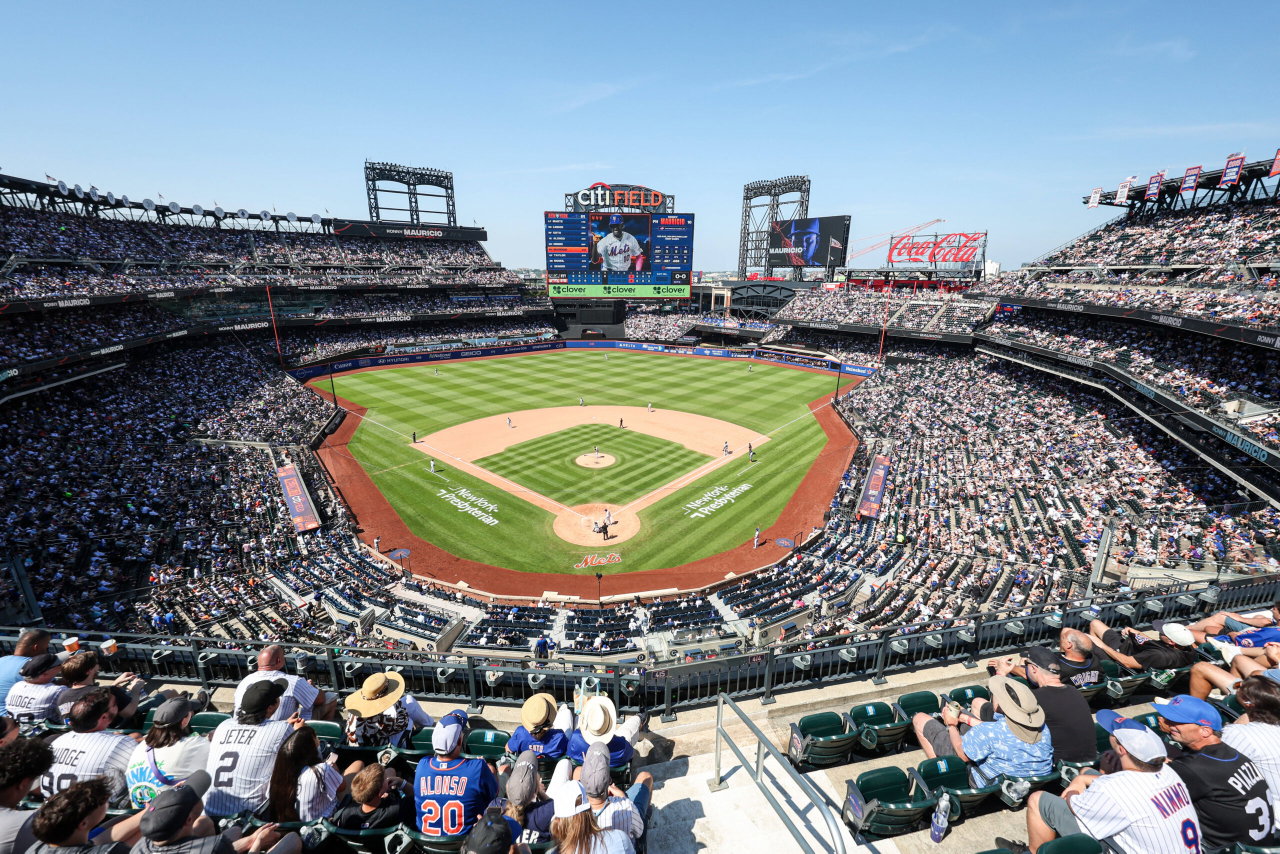
Six months, 2,430 games, all lead to one goal: October baseball. While the shiny Commissioner’s Trophy and intricate World Series rings are certainly a plus, the postseason’s impact extends well beyond them in MLB.
Watch What’s Trending Now!
The postseason has evolved vastly since its inception in 1903, when only two teams played for the championship. Today, the playoffs begin with 12 teams and culminate with the final two competing in the World Series. Before reaching the Fall Classic, teams can also compete in the Wild Card Series, the ALDS, and the ALCS or their National League counterparts. The impact of an expanded postseason is directly tied to the thriving economy the league has built over the decades.
How the MLB postseason becomes a business goldmine
The league has built the postseason’s USP around its scarcity. It’s not any random game day in the middle of the week when multiple different teams are playing at once. A postseason game happens once, or may not happen at all if a series ends early. The urgency to catch a rare game drives the stakeholders, including fans, broadcasters, advertisers, and sponsors, to pay premium pricing.
After competing all season with the fast-paced NFL, NHL, and NBA, it’s baseball’s turn to command attention in October. And here, we can explore some of the areas that are most affected.
Ticket prices: October baseball allows teams to charge a premium
The most straightforward option to increase profit margins is elevated ticket prices. But why is a fan willing to pay more for a playoff game? The secret lies in the lack of alternatives. A team hosts 81 regular-season games in its home park. A fan can easily attend another if they miss one. But the odds are not the same in the playoffs; the chances are limited in October.
For example, if the New York Yankees host the ALCS at Yankee Stadium, a fan can get a maximum of 7 opportunities to attend. However, the series may end prematurely if a team secures the series without needing 7 games. Like in the 2024 ALCS, the Yankees defeated the Cleveland Guardians 4-1.
This uncertainty drives fans to buy tickets early, even if the prices are high. Teams offer several postseason ticket plans, as is evident on the Yankees’ official 2026 postseason pricing page. A full postseason strip can cover as many as 14 potential games, although licensees are charged only for games actually played. The prices vary widely based on the package, depending on premium seating and the games included.
The postseason is a whole experience, and a visit to a ballpark is not limited to buying tickets and watching games. Fans are often found paying $15–$20 more for food, $10–$15 more for drinks, purchasing merchandise, and paying for parking.
And this happens at the same stadium, where the regular-season rates are far cheaper.
The biggest advantage: MLB gets more revenue from the same stadium
Same stadium, same fans, same seats, but the ticket price has doubled. Neither the league nor the club is incurring additional costs, yet the revenue generated has also doubled.
In 2024, the average ticket price of a regular-season game at Yankee Stadium was $68 approx. Yankee Stadium has 46,543 seats. So the math is simple:
1 packed regular season game= 68 x 46,543= $3,164,924.
In 2024, the price of ALCS tickets ranged from $99 to $172. So if watching a game costs at least $99, then:
1 packed ALCS game at Yankee Stadium: 99 x 46,543= $4,607,757
The vast difference in revenue generated per game is what makes October important.
Concessions are another hidden postseason winner
Usually, a postseason game does not merely include buying a ticket, watching the game, and going back home. A fan can spend money on food, drinks, souvenirs, merchandise, and premium hospitality.
If the average fan spends just $25 inside the stadium: 45,000 × $25 = $1.125 million. That’s a hypothetical illustration, not an MLB-wide average.
Moreover, there are charges for parking, suites, and corporate hospitality.
MLB doesn’t simply keep all the postseason gate revenue
MLB has a postseason pool system that determines how postseason gate revenue is divided. According to MLB’s official explanation, players receive a percentage of postseason gate receipts based on how far their team advances:
- 50% of wild card gate receipts
- 60% of the first three Division Series games
- 60% of the first four League Championship Series games
- 60% of the first four World Series games
The remaining postseason revenue is distributed according to MLB’s postseason rules and agreements, and the size of this pool has become substantial.
In 2025, the postseason players’ pool was approximately $128.2 million. The Dodgers’ championship shares were worth $484,747.57 per full share, while Toronto’s World Series runner-up shares were worth $354,118.39.
Media coverage is substantial in the postseason, and television broadcasts are the biggest revenue generators.
Television and its role in the postseason
The playoffs naturally garner more viewers than a regular-season game. During the regular season, the fandom is distributed into small groups, each watching only their favorite teams play, but the postseason brings all baseball lovers together. Everyone is excited to watch the World Series.
Live matchups are one of the few television programs viewers watch in real time. MLB reported that last year’s postseason games averaged 6.33 million domestic viewers per game, making it MLB’s most-watched postseason in eight years. FOX also recorded its best postseason average since 2017. The streaming partner recorded approximately 8.1 million viewers per game.
However, it’s the 2025 World Series that crossed every threshold. The championship recorded 16.1 million U.S. viewers across all platforms.
From this season, however, the streaming partners will look different. MLB has signed a three-year media rights deal with ESPN, NBC, and the streaming giant Netflix.
The distribution is as follows:
- ESPN has acquired rights to MLB.TV and a midweek game package
- NBCUniversal secured rights for NBC, NBCSN & Peacock to Sunday Night Baseball, Sunday Leadoff and the entire Wild Card Round
- Netflix carried T-Mobile Home Run Derby, Opening Night Exclusive, and Special Events, including in 2026: MLB at Field of Dreams Game and World Baseball Classic in Japan
The advertising business becomes enormous
Broadcasters sell commercial inventory around postseason games at premium rates because they know advertisers are buying access to a much larger audience.
Historical industry reporting has placed World Series 30-second advertising rates around the $500,000 range, although actual pricing varies considerably by year, placement, package, and advertiser.
Moreover, postseason championships, especially the World Series, solve the problem of a fragmented audience for advertisers. Live sports with a single broadcaster bring the audience to one place; they are not scattered across YouTube, Netflix, cable TV, etc. The nail-biting Game 7 of the 2025 World Series peaked at 33.1 million viewers on FOX Sports. A field day for advertisers!
Postseason also creates a merchandise boom
Every fan loves merchandise, whether it’s a hat with the Yankees logo or a jersey with Shohei Ohtani’s name on the back. However, these items are available throughout the season and don’t usually go out of stock. Championship hats, commemorative merchandise, pennants, collectibles, and World Series memorabilia, on the other hand, can sell out quickly after a team wins the title. Fans are likely to rush to purchase these items, giving merchandise sales a significant boost within minutes.
But MLB and its teams are not the only ones to enjoy the benefits.
The local economy also benefits
When a team hosts a postseason game, fans travel from different parts of the country to enjoy America’s favorite pastime. It automatically provides an economic boost for the host city.
During the Arizona Diamondbacks’ postseason run in 2023, a study commissioned by Downtown Phoenix found that seven postseason home games at Chase Field generated approximately $107.6 million in economic impact.
According to the study, the major areas of gain were:
- Playoff game nights generated substantially more restaurant activity than non-playoff nights.
- 336,370 ticketed fans attended
- 21.3% of ticket holders came from outside Arizona
- Downtown bar and restaurant revenue increased
- Hotel revenue increased.
For a city, this is incredibly rewarding.
International markets become particularly valuable
The 2025 Fall Classic showed just how much international viewership MLB can get if it has the right players and the right teams playing. Japanese superstar MVP Shohei Ohtani can alone attract a substantial number of viewers. Not to mention, the Dodgers also have Yoshinobu Yamamoto on their roster, too.
Furthermore, with the Toronto Blue Jays playing in the World Series, Canadian viewers were equally eager. Game 7 of the 2025 World Series recorded 10.9 million Canadian viewers on Sportsnet. On NHK-BS, the Japanese viewership averaged at 12 million in Game 7.
The postseason helps generate interest among newer fans across the globe and attract younger fans as well. It helps extend the baseball community further. While business must thrive to keep MLB running like a well-oiled machine, October baseball is also a century-old legacy whose impact is greater than economic gains.