
In September 2025, the Golden State Valkyries clinched a playoff spot in their first season, with Janelle Salaun grabbing the microphone and shouting, “Let’s goooooo!” as teammates pulled on playoff T-shirts. It capped a season where every home game sold out. But the real hustle is turning that one night’s success into a yearly tradition.
Watch What’s Trending Now!
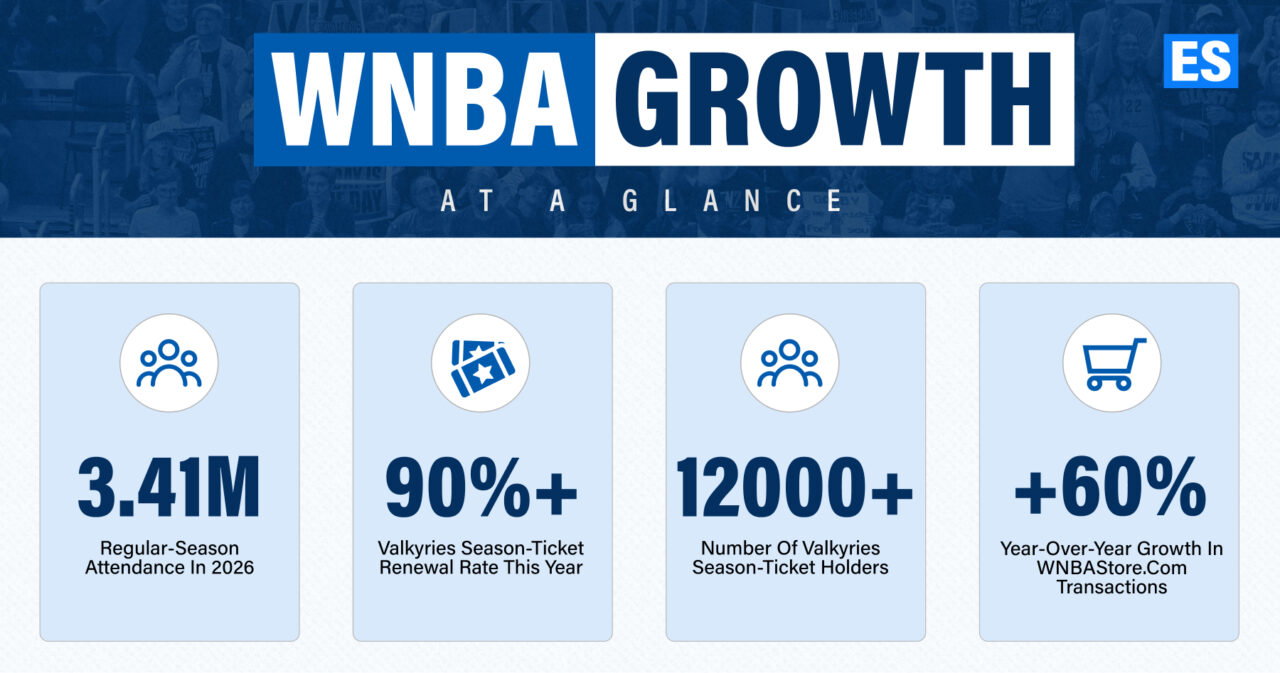
- The WNBA is having serious attendance success in 2026. The league has already pulled in a record 3.41 million fans before the regular season even wrapped up.
- The league shifted 25 high-profile matchups from smaller home arenas to larger NBA venues, bringing in more than 191,000 extra fans.
- Average crowds for those relocated games also jumped 40% to 15,743. Bigger arenas clearly helped the WNBA fit more fans through the doors.
And it’s not just the games that generate money. Playoff brings in sponsors, merch, premium seats, and TV deals, adding to the pot. But the bigger question is, can the league turn those packed seats into fans who keep coming back?
The Playoffs Are the WNBA’s Biggest Conversion Opportunity
In 2025, the WNBA postseason averaged 1.2 million viewers across 24 ESPN games, while the Finals averaged 1.5 million—an indicator of fan excitement. Playoffs have fewer games, which means fans are willing to spend more. That’s when the premium and luxury seats come into play.
Why do you think the Atlanta Dream offered fans a $50 deposit for early access to more playoff tickets last year? Or, why did Minnesota list courtside packages starting at $1,000? A packed playoff game can bring in quick money. But teams need to win in order to keep that money machine running.
A deep playoff run gives a team more chances to cash in, with every game offering another chance to sell premium experiences. But there’s a catch.
Playing more games costs money too. Staff, travel, arena operations, and production all add up, so it’s a risky gamble. Not for Valkyries, however, who have mastered it.
The Valkyries Blueprint
The Golden State Valkyries sold out every home game in both 2025 and 2026. In fact, they are the unofficial leader in the WNBA in terms of fan engagement and fan activation.
- In 2026, the Valkyries led the league with 18,064 fans per game and 397,408 total fans.
- Across their first two seasons, 794,816 fans came to Chase Center.
- They also became the first WNBA team to average more than 18,000 fans in a full season.
Then came another big sign of loyalty. The team reached more than 12,000 season-ticket holders in 2026, up from the 10,000 it had before the 2025 season. And they are also coming back. More than 90% of season-ticket holders renewed for 2027.
That is why other teams can steal the model: better fan experiences, stronger ticket packages, and keeping in touch with fans. With on-field success, it’s also a massive chance to boost broadcast revenue.
The Media Multiplier
Think about this: In 2025, the most-watched regular-season game between the Chicago Sky and Indiana Fever drew 2.7 million viewers. Meanwhile, Caitlin Clark’s return against the Dallas Wings pulled 2.1 million audience. In 2024, the postseason averaged 1.1 million viewers, up 139% from 2023.
Why would not media moguls want to expand the WNBA coverage? This year WNBA games are being shown through ESPN/Disney, NBCUniversal, Amazon Prime Video, CBS Sports/Paramount+, Scripps/ION, and USA Network.
But expanding media rights deals tells only one part of the story. The playoffs offer the WNBA the opportunity to maximize merchandise sales and generate more sponsorship revenue. The math is simple. The buzz around playoffs remains sky-high, and sponsors love eyeballs.
- In 2025, transactions on WNBAStore.com were up 60% year over year.
- WNBA sponsorship spending rose from $72.5 million in 2024 to $105 million in 2025. [SponsorUnited]
- Sponsorship deals increased from 643 to 751, while the number of unique brands also grew from 448 to 519. [SponsorUnited]
But with increasing demand, fans’ pockets can take a hard toll.
The Pricing Dilemma: How Much Demand Can Teams Monetize?
Growing interest is helping WNBA teams charge more for tickets.
- Vivid Seats found that the average WNBA ticket price was 49% higher than the year before.
- Fans were also traveling farther to watch games, with the average trip reaching 346 miles, up 12%.
- The Indiana Fever appeared in four of the five most in-demand games based on average ticket prices.
- Their game against the Golden State Valkyries had an average ticket price of $519, while the 2025 WNBA All-Star Game was the most expensive on the list at $533.
- Regardless, hits on Vivid Seats’ WNBA page jumped 251% on Draft night.
But there is another side to this trend. If prices become too high, some fans might not be able to afford the tickets. So, higher prices have the risk of alienating loyal fans.
Naturally, the real test for the WNBA starts after the playoffs end. The playoffs can create a big jump in business, but can the WNBA turn that short-term excitement into fans who keep watching, buying, and supporting the league?
If someone watches their first playoff game, will they come back to watch regular-season games next year? If a fan buys one playoff ticket, will they later buy season tickets? Will sponsors renew their deals, and will fans continue buying jerseys after the championship excitement is gone?
The blueprint to success is there, but solid action is needed to make it all happen.