
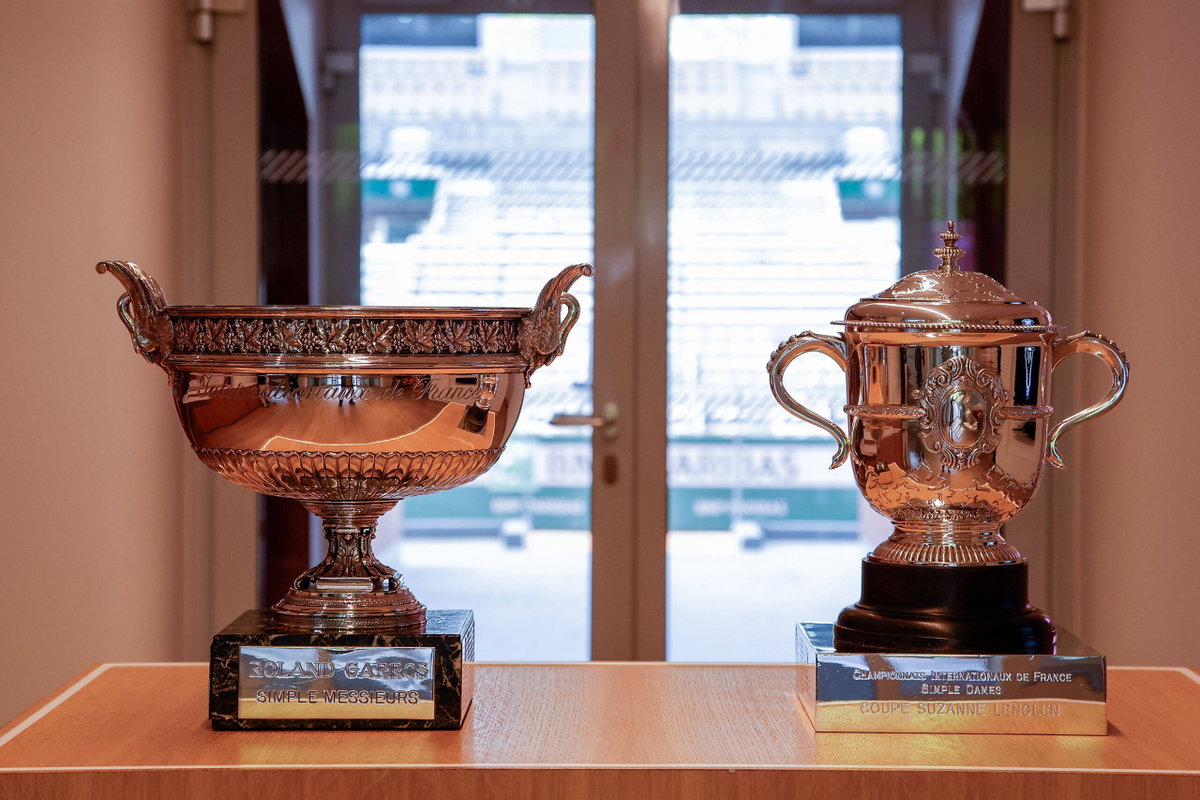
Who would have thought that a chaotic start would give such positive results? The 2026 French Open began in Paris with a lot of problems. From Carlos Alcaraz missing the game because of injury, to Novak Djokovic’s early knockout, and Jannik Sinner and Coco Gauff’s shocking upsets, it was not a great year for fan favorites. Plus, the prize money debate just made things worse. Normally, all these issues would have hurt a sports event, but Roland Garros is on the verge of making more than €400 million in revenue.
Watch What’s Trending Now!
Roland-Garros is seeing massive commercial growth as the tournament is expected to surpass €400 million in 2026, as per Insider Sport. This is a massive growth in numbers as compared to four years record. In 2022, the revenue was about €250M ($291M), which later increased to between €370 million ($430M) and €395 million ($460M) in 2025. This is because the tournament isn’t just running a tennis competition anymore, but rather attempting to make it a premium entertainment business.
The French Open has reached 220 countries, attracting major partners like Renault, Emirates, Rolex, Infosys, Perrier, and many others. The event also offers a prize pool of €61.7 million ($71.77 million). Many expected the numbers to fall drastically with all the negative PR the tournament was facing, but the numbers made it clear that they made the event bigger than the players.
The Chaos: A Perfect Storm
The opening week of the 2026 French Open was nothing less than chaos and drama. Arguably, the biggest shock of the tournament came with Jannik Sinner. He came into the second round match against Juan Manuel Cerundolo as the clear favorite to win. Carlos Alcaraz, who had beaten him in Paris last year, was out injured. Plus, he had already won 30 matches in a row and had already captured all five ATP Masters 1000 titles in 2026. Things started in favor of Sinner as he won two sets, 6-3 and 6-2, and even took a 5-1 lead in the third set.
When he was just a few points away from victory, the Paris heat started affecting him. Sinner started suffering from cramps, which made it difficult for him to continue, and turned the tables in Cerundolo’s favor. The Argentine dominated his way to the win thereafter.
Now, after Sinner’s shocking exit and Alcaraz’s absence, Novak Djokovic was the only Grand Slam champion remaining in the men’s singles draw. He started the third-round game against Joao Fonseca and won the first two sets effortlessly. But Fonseca didn’t give up and turned the match around, eventually securing a hard-fought win against Djokovic. This was the first time a teenager beat Djokovic at a Grand Slam in his 22-year career.
Djokovic’s loss didn’t just come as a shocker, but also broke a record that no one ever wanted. For the first time since 1968, no former Grand Slam champion reached the men’s singles round of 16.
Coming to women’s singles, Coco Gauff, who won the French Open last year, fell short against Anastasia Potapova in the third round. The final score was 4-6, 7-6(1), 6-4. All in all, it was the worst nightmare for all tennis legends.
With these losses, players also raised questions about prize money and player welfare before the French Open. So, men’s tennis players like Jannik Sinner and women’s Aryna Sabalenka held a protest to reduce media time. Normally, players spend 60–90 minutes talking to reporters and taking pictures, but now they want to go by the rules that say one press conference and one interview.
Sabalenka had said, “I think at some point we will boycott it. I feel like that’s going to be the only way to fight for our rights. Without us, there wouldn’t be a tournament, and there wouldn’t be that entertainment.”
This was done because of the prize money. The four Grand Slam tournaments give players 15% of the money from their events. But players believe they deserve more for the efforts they put in, and want it increased to 22%.
They even pointed out that the ATP and WTA already give players around that percentage of revenue. After the protest, the French Tennis Federation met with players’ representative Larey Scott, and their discussion also went positively. But there’s no final verdict as more meetings are to be held.
So, now you know why the success feels unreal after such a messy start. But what led them to such massive success?
The Revenue Engine: Locked-In Capital
The biggest source of that money is broadcasting rights. This accounts for 40% of total revenue, which means the tournament could earn nearly €160M ($186.2M) from broadcasting alone. All this comes under their broadcasting agreement with France TV and Prime Video, which runs till 2027.
Their U.S. rights deal with Warner Bros., which started last year and will run for 10 years for $65 million per year, is also one of them. Through this, fans will get the chance to watch the match on TNT Sports and HBO Max.
The French Open’s success has opened the gates for various sponsors like Rolex, Emirates, and Renault. 22 commercial sponsors and partners will contribute and bring around €80 million ($93M).
Then comes the ticket sales and hospitality, which bring in about 33% of revenue, around €130 million ($151.3M). Under this comes ticket prices, VIP packages, food, etc.
Merchandise will also contribute about 10% to the total revenue. Fans buy the tickets months before the matches, and are unlikely to cancel them later. That’s exactly why the internal chaos didn’t impact their revenue.
However, one question remains: how did French Total make it so far?
The Luxury Strategy: Selling Paris, Not Just Tennis
Legendary players have struggled at the French Open. Players like John McEnroe, Pete Sampras, and Venus Williams have won various Grand Slam titles but never a French Open title. It’s because of its clay court surface that it’s tougher to win.
Unlike the grass courts at Wimbledon or the hard courts at the Australian Open and US Open, clay slows the ball down and gives out higher bounces. So, it’s tough for legends, too. And that’s what makes the game interesting, as it tests the strongest ones.
This is what makes the tournament interesting to fans, so whether top performers lose or stay, the hype is still pretty high. For years, the French Open chased Wimbledon’s blend of history and luxury, and today, they have finally achieved it.
From building luxury experiences to getting high-profile sponsors, they did it all. Now they don’t just host tennis matches but also sell Paris luxury to the fans. To make sure that happens, they turned Roland Garros into a luxury lifestyle brand. They partnered with premium brands like Lacoste and BNP Paribas in the 1970s. This made it a blend of sports and French elegance.
For example, Lacoste used Stade Roland Garros as a venue for Paris Fashion Week in 2024. So it’s no longer just a tennis stadium. Plus, the place offers premium hospitality and VIP packages to give fans a better experience. More than the tournament, fans go there to experience the luxury that the venue offers.
Business Lessons from the Clay
Now it all comes to one conclusion: every entrepreneur must learn from the French Open to build a strong brand that doesn’t have to rely on players’ names. Everyone knows how much fan following players like Jannik Sinner, Novak Djokovic, and others who are already out of the tournament have. But despite that, fans are paying more attention to the experience rather than to a particular player.
This is a powerful business lesson. Many businesses depend on their star employee or founder, or their executive, which puts them in a weird position when that person leaves. But Roland Garros has moved past that stage. From a clay court that was fighting for relevance, it has become a tournament that is set to earn upwards of €400 million. This is a perfect example of years of planning, bringing in solid sponsors, and building a name beyond sports.
However, a new challenge awaits them, as the French Open is set to earn $465.6 million, and players are demanding a bigger piece of that pie. So here comes the bigger question: does this mean the organizers lose the money totally or continue to keep the most revenue with themselves?