
June 29, 2014. The Netherlands took on Mexico in the Round of 16 of the FIFA World Cup at the Estadio Castelão, Fortaleza, Brazil. It was a heated match that saw late-stage heroics from Wesley Sneijder and Klaas Jan Huntelaar send the Orange Army through to the quarter finals. But history was made long before the opening goal from Giovanni dos Santos in the 48th minute. No, history was made at the 30-minute mark when the game paused for the first-ever water break in the history of a FIFA World Cup. Twelve years later, that ‘cooling break’ is worth a seven-figure check.
Watch What’s Trending Now!
FIFA introduced the hydration break in the 2014 World Cup as a way of ensuring player safety. The first time they did it, it was 38.8°C (102.2°F) at Fortaleza. That day, the world saw Dutch coach Louis van Gaal use the second break (at the 75th minute) to confer with his players and switch up tactics that made their comeback possible. But where van Gaal saw a tactical opportunity, someone else saw a financial one.
The two mandatory pauses in each game, one in each half, are intended to protect players from the heat of a typical North American summer during this year’s FIFA World Cup. The tournament is already projected to generate $8.9 billion of the estimated $11 billion revenue of FIFA’s 2023-2026 commercial cycle. As a result, broadcasters and the governing body now have an opportunity to capitalize on these water breaks.
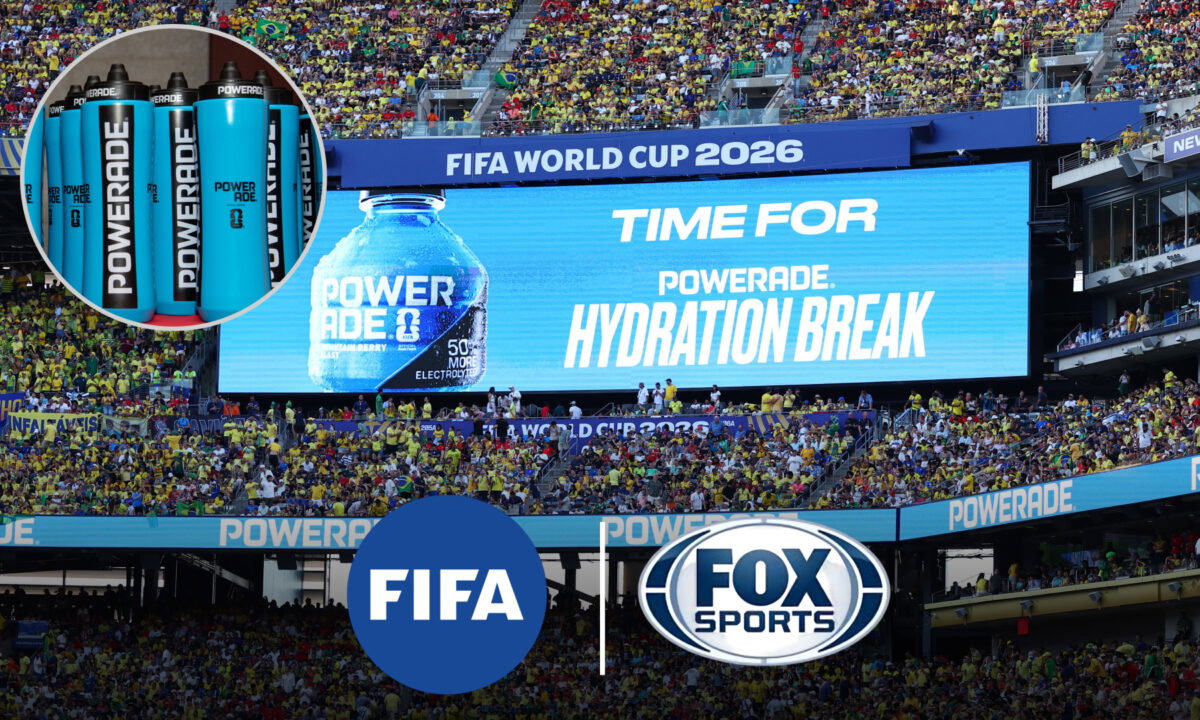
It was no coincidence that Fox, the US broadcaster with English-language rights to the World Cup, switched to commercials during Mexico’s first match against South Africa. The game came to a halt around the 22nd minute at Mexico City’s Estadio Azteca, which has been renamed Mexico City Stadium.
The commentators then informed viewers that Powerade sponsored the break, and Fox aired about two minutes of commercials featuring four brands: AT&T, Michelob Ultra, Lowe’s, and FanDuel. By the time the second half break arrived, Fox had returned from commercials too late, with the ball already in play, breaking FIFA’s own rule that broadcasters must return 30 seconds before play resumes.
Needless to say, fans were enraged. In fact, Jurgen Klopp, the former German player and coach, was largely critical of the hydration break. However, the numbers reveal a different picture of what FIFA and its broadcast partners are actually building.
Out of FIFA’s expected revenue this year, broadcasting rights account for 44%. If Fox maintains its current strategy of airing four commercials per half during each break for all 104 World Cup games, it could generate more than 800 additional advertising slots throughout the tournament.

Jurgen Klopp has slammed the 2026 World Cup hydration breaks, claiming the sport is being "held hostage" by commercial interests 💧 Read more 🔗 goal.com/en/lists/jurge…

S&P Global research analyst Michael Johnson, who covers the US sports industry, told Reuters that the breaks could be “extremely valuable” and “potentially command Super Bowl-level prices in the $7 million to $9 million range.” He added, “US viewers are used to the NFL-style model, the NBA-style model, and four quarters. They’re used to in-game breaks. This World Cup is essentially a mirror to those style models.”
At the 2014 World Cup in Brazil, hydration breaks were used sparingly, only during matches played in extreme heat with temperatures exceeding 89°F. In 2026, hydration breaks are a feature of every game, regardless of weather and whether the match is played in closed-roof stadiums and air-conditioned venues such as AT&T Stadium and Houston’s NRG Stadium or not. That has put FIFA’s claim of player safety under the scanner, and quite naturally, it is viewed as a deliberate strategy to increase revenue through advertising.
Telemundo, which owns the Spanish-language broadcasting rights in the United States, took a different stance.
It remained on the live feed during both of the first match’s hydration breaks. Telemundo, however, acknowledged Coca-Cola’s sponsorship while the cameras focused on players rehydrating on the field with Coca-Cola branding on screen. The decision was praised by fans and industry observers alike. The contrast with Fox was obvious and deliberate.
The numbers behind the narrative
Given the magnitude of what FIFA stands to gain from 2026, the hydration break debate is inextricably linked to money. With a $3.76 billion budget, this World Cup is the most expensive in history due to the expanded 48-team format.
IFA expects the tournament to generate $8.9 billion, accounting for the majority of its $13 billion revenue target. The total prize money now stands at $871 million, a record. The winners will take home $53.5 million. In addition, for the first time, a World Cup will feature dynamic ticket pricing.
According to Ampere Analysis, media rights revenues could reach $3.8 billion, a whopping 22 percent increase over the last four editions. To justify the hefty price tag, FIFA has found new ways to help its partners generate a return on investment. During hydration breaks, broadcasters can switch to ads and show picture-in-picture creatives featuring FIFA partners. However, some broadcasters have chosen to remain on the match feed during the breaks.
The 2022 World Cup final drew a total global audience of around 1.42 billion. Advertisers recognize the value of that reach. The hydration breaks have provided broadcasters with a means to monetize them. It is being accomplished in a way that was not previously possible during continuous soccer.