
The FIFA World Cup is back, and for the soccer fans, this is holy. They have waited four long years since Lionel Messi lifted the cup with Argentina in Qatar. This World Cup should be the last dance for the arguable GOATs of the sport and a field for the younger stars to shine. Yet, that’s not the case. Instead of generating any buzz, the World Cup this year is mired with controversies and backlash.
Watch What’s Trending Now!
The league’s focus this year isn’t on fan experience, like it was so far until Qatar. This time, it’s about generating $13 billion revenue in the quickest way possible. If that means pricing the tickets at unaffordable rates, so be it. This World Cup has somewhat become unreachable for fans to attend the games, given the ballooning travel costs adding to it.
So, is FIFA even caring about the fans this time or are they treating them like assets?
Soccer (aka football) was never a rich person’s game. In medieval England and France, men in the countryside used to play this game, venting their frustration against wealthy landlords. In 1638, English peasants organized a football game to damage the dykes that took away their lands. Sooner than ever, modernization hit the game of soccer.
The game started getting codified into rules, developed by elite British schools like Eton. In the 19th century, football clubs that we now know as Manchester United, Liverpool, and Arsenal started to emerge from communities of dock workers, factory workers, and miners.
The game’s modern origin has always been connected to the ground, which keeps fans rooted. Some dedicate their whole lives into supporting their favorite teams, investing both financially and emotionally into them. Only if modernity in football wouldn’t have been such a travesty.
The street sport has now become a way to attract more people and earn more money. Because of the popularity the soccer has gained, it’s no longer the same accessible sport it once was for the common people.
2026 World Cup ticket prices spark backlash
The FIFA World Cup might have made this move for expansion, but it’s taking a hard hit on fans’ pockets. The 2026 World Cup is set to generate $80.1 billion in gross output, including $30.5 billion in the US. And the revenue money of around $13 billion will go to the game itself, as FIFA president Gianni Infantino confirmed.
But all of this revenue is coming at what cost? The move seems purely based on generating more revenue, not on giving fans the experience of their life. Fans who waited four years can no longer even see their favorite players’ games because the league wants to generate money, not keep their fanbases satisfied.
Imago
Image Courtesy: IMAGO
FIFA released its World Cup ticket prices for the 2026 tournament in the US, Mexico, and Canada, and the prices are not sitting well with the fans. The cheapest ticket for the finals, which will take place on July 19th at the MetLife Stadium, is set to cost $8,680.
Group stage match tickets will cost around $140 to $2,735. Round of 32 tickets are between $190 and $790; then round of 16 tickets are between $220 and $980. Quarterfinals range between $535 and $1,775, semifinals are around $905 and $3,295, and finals are between $4,185 and $8,680. This was reported back in December. But now, as per May’s updates, the final prices range between $10,990 to $32,970.
The Dallas semifinal ticket went ranging between $2,705 to $11,130, whereas the Atlanta semifinal cost $2,725 to $10,635. That’s a striking surge in numbers as compared to Qatar’s $1,600 finals price in 2022. The ticket prices have increased by almost 500% across the board compared to the World Cup in Qatar three years ago.
And fans aren’t taking this lightly. The Football Supporters’ Association (FSA) has already called on the FA to challenge the FIFA World Cup’s increased prices, describing it as a “scandalous” and “laughable insult” to fans. A common fan can never afford that kind of money.
That makes sense, as in 2026, fans might have to travel to Mexico City, Dallas, and New York. They will have to travel three countries, four time zones, and thousands of miles. All that already includes a lot of expenses. Traveling to accommodation from ticket prices. All this will drain an average football fan completely, as they aren’t traveling from one city to another.
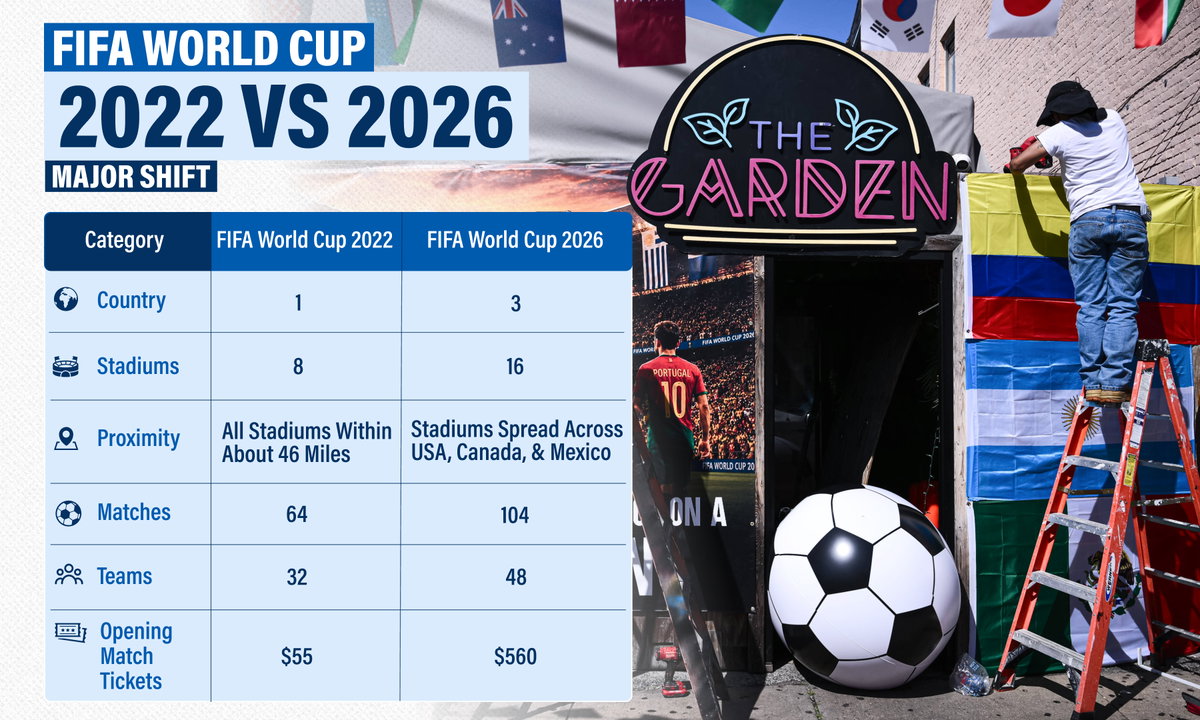
This is the first time three countries are hosting the World Cup together. Back in 2022, it took place in Qatar, around Doha. But the interesting thing was that all eight stadiums were within 46 miles of each other. That made traveling very easy for them. Everything is so close and in one country. But this year, 3 different countries and 16 stadiums are spread across them.
Now, the FIFA World Cup might argue that they are using dynamic pricing as 48 teams increase fan bases and demand, plus 104 games over 39 days with around $7 million worth of total tickets. But that doesn’t justify the fact that normal fans can’t afford that kind of money. Yet the concern is not that but bringing a change that’s influenced by American sports.
The Americanization of the World Cup
The FIFA World Cup is starting to be influenced by American-style dynamic pricing; the prices change based on demand, and the 2026 prices are a testament to that. They are trying to follow the same blueprint as American sports leagues. Take the example of the NBA Finals between the New York Knicks and the San Antonio Spurs. The ticket prices for the games are seeing a massive surge.
In Game 3, the cheapest tickets were for $11,461. The Knicks also announced that their courtside ticket for game three was auctioned for $1 million. So, it’s clearly no longer about the game but a race towards how much fans can spend.
American sports are built around premium seating, giving fans luxury experiences with VIP tickets and with entertainment hubs. This way, they generate more and more money. FIFA is cleverly pepping its eye into the same blueprint.
FIFA has now introduced their hospitality packages by introducing premium seats, the FIFA Pavilion, private suites, and a pitch-side lounge. There will also be Super Bowl-style live music and celebrity appearances. For the first-time in it’s history, FIFA is hosting a halftime show, with Madonna and BTS reported to perform.
This kind of experience also warrants a heavier burden on fans. Since the last World Cup, ticket prices saw a dynamic surge. In 2022, the opening match in Qatar cost $618 for Cat 1, but this year it’s $2,735. Even food and beverage prices are pretty high. The Houston (NRG Stadium) meal price is $10.29, and beer costs around $2.79. For San Francisco (Levi’s Stadium), the meal price is around $20, and the beer price too goes up to $14. This makes it a total of about $34, pretty high for a simple meal and a beer. For Toronto (BMO Field), the price for a meal is $18.43, and beer is $15.07.
The mess doesn’t just stop there. FIFA World Cup put the last nail in the coffin by banning reusable water bottles from all 2026 World Cup stadiums from June 2nd, 2026. It’s done for players’ safety, and fans often throw stuff on the field, but then in hot weather that ranges from 26 degrees Celsius to 28 degrees Celsius, not bringing water bottles isn’t ideal. Now it’s a safety move or marketing move because fans will be forced to get water from the stadium.
Well, all these measures show that American sports culture is taking a toll on the FIFA World Cup, but they are missing one thing. American sports run through affordable access and fanbases who fill the stadium with excitement. But here, looking at the prices, that seems tough. They might attract corporate guests and famous personalities like celebrities to the stadium, but they won’t be generating the same buzz and atmosphere as regular fans.
Plus, fan value is now considered zero as the FIFA World Cup overlooks the fact that fans themselves create value. They post on social media, create videos, take pictures, hype their favorite players, give their honest opinion, and generate engagement, too.
What made it happen is that entering stadiums is no longer important, as the FIFA World Cup can also generate money through TV or streaming services, like their deal with FOX. Plus, fans buying teams’ jerseys helps them earn money. And 180,000 empty seats on the resale market show it clearly. Fans are now just an asset, who are there to generate revenue.
But what about their emotions and sentiments that are associated with the game? Well, looking at the prices of the tickets, it’s pretty clear that it’s not a concern anymore.