
Networks like ESPN, Fox, and CBS are not just paying billions for the rights to show games; they are also spending millions on the broadcasters who bring those games to life. But that raises a bigger question: why are networks willing to spend so much on the person behind the microphone?
Watch What’s Trending Now!
The money spent on sports broadcasting is getting bigger every year. S&P Global estimates that companies around the world will spend about $67.34 billion on sports media rights in 2026, nearly 10% more than the previous year. North America will make up more than half of that amount at $34.9 billion, with the U.S. accounting for $32.8 billion.
Major events are a big reason behind this growth. The 2026 Winter Olympics are expected to bring in more than $1 billion in broadcasting fees for the first time, while the 2026 FIFA World Cup could generate around $4 billion from media rights.
That’s how expensive the market is.
But media outlets also need familiar voices they can rely on, because simply bringing in a new person doesn’t guarantee the same connection with viewers.
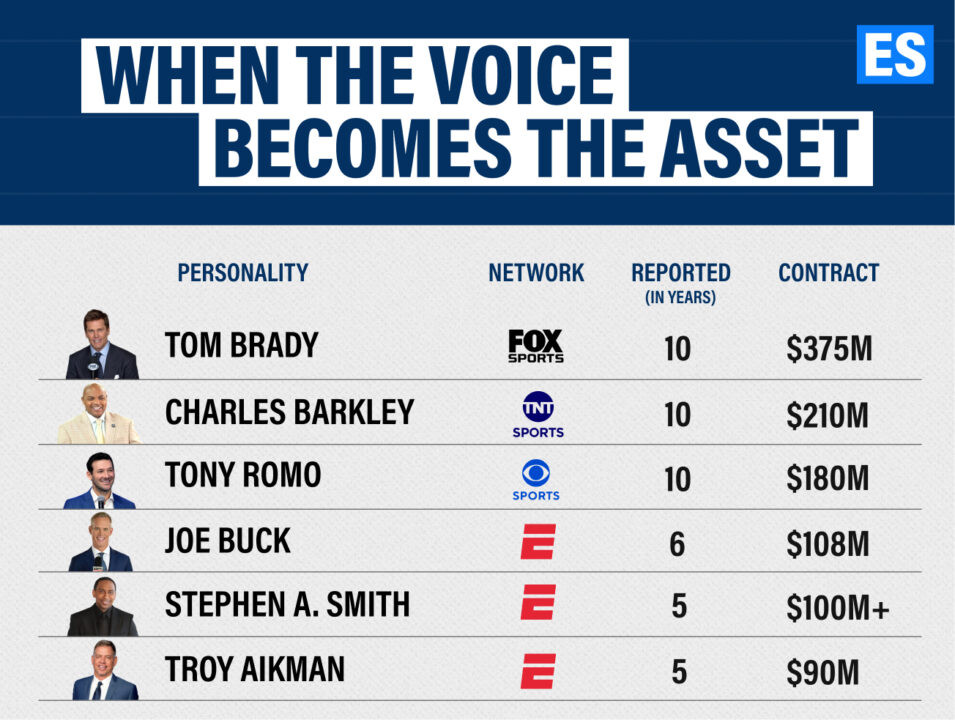
Joe Buck’s new six-year, $108 million ESPN deal, worth about $18 million a year, is a solid example of this. Buck brings years of experience, a familiar voice fans already know, and credibility.
And more than anything, there is the chemistry he has built with Troy Aikman. Buck and Aikman have been working together since 2002, and their familiar voices and chemistry have become closely linked with big NFL games.
So, breaking that connection can also be a major setback. Plus, there are other solid reasons why media outlets are spending millions on broadcasters.
A recent study by Yong-Seok Jang, Jae-Moon Lee, and Sun-Young Lim of 514 sports media viewers found that a broadcaster’s job is about more than simply explaining what is happening on the field. Researchers looked at things like a sportscaster’s voice, logic, timing, appearance, expressiveness, and overall appeal. They found that these traits can help viewers feel more connected to broadcasters, almost like they are familiar personalities rather than just voices in the background.
And here’s the interesting part: that connection can also shape how people watch sports. That gives networks another reason to value familiar broadcasters as part of the overall sports product, not just as people calling the action.
That’s exactly why they are willing to pay more.
Troy Aikman’s next contract is especially interesting because his current five-year ESPN deal is worth $90 million and expires after Super Bowl LXI in February 2027. So, another extension might be on the way.
Then there’s Tony Romo’s reported $180 million CBS deal for 10 years, which gives some context for how much networks have been willing to spend on top voices.
And it’s not just the voice anymore.
The face card is becoming an important asset too
Sports are no longer tied to just one TV network. ESPN is reaching fans through traditional TV and streaming, while Amazon, Netflix, and YouTube are also getting deeper into live sports.
With so many platforms fighting for viewers, a broadcaster’s name is something that can help pull fans’ attention. Pat McAfee is a great example of it. ESPN brought The Pat McAfee Show over in 2023, and it immediately showed results. His show generated 242 million total views in its first four weeks.
Plus, it also reached an average of 1.4 million viewers per show across TV and YouTube.
By September 2025, the show crossed 1 billion social-media views in one month. This shows how dedicated audiences support their favorite broadcaster.
But here’s the question: do big names always bring in big money and views?
When does $108M stop making business sense?
Joe Buck’s new ESPN deal is worth $108 million over six years, or about $18 million a year. Put that next to ESPN’s roughly $2.7 billion annual NFL rights bill, and Buck’s salary is a relatively small slice of the pie. But ESPN still needs to make sure that investment pays off.
That doesn’t necessarily mean ESPN will immediately make a specific amount of profit from Buck’s deal. A hefty contract is an investment that can take time to grow and create value.
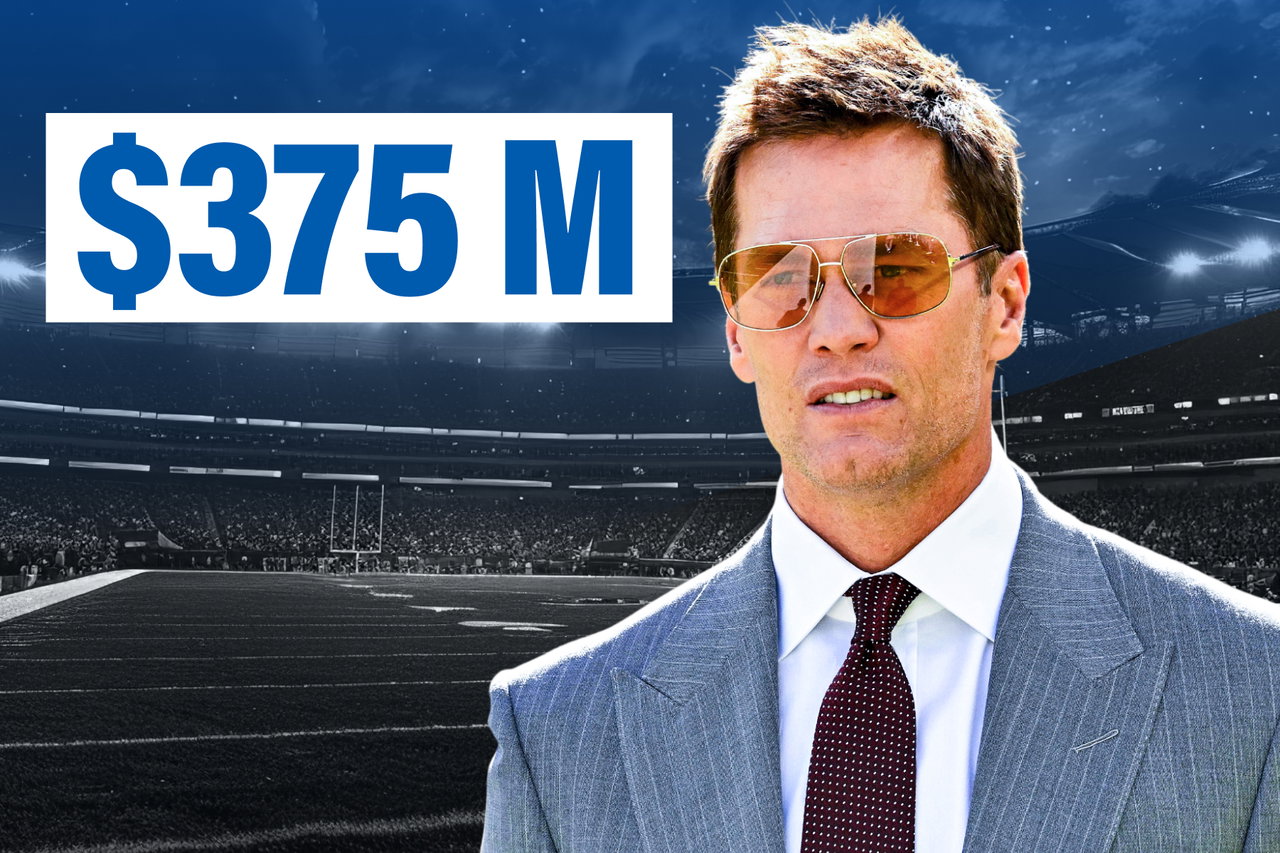
We saw something similar with Fox and Tom Brady when the network gave him a $375 million deal for 10 years. Fox wanted a star who could bring value to its NFL coverage, and Brady was the kind of name that could help it do that.
As CBS Sports executive Jay Rosenstein explained to Yahoo Sports back in 2022:
“The opportunity to have a super celebrity like Brady do meet-and-greets is important because it can help solidify a deal… Does it turn a $10 million buy into a $20 million buy? No, but there’s still value in his presence.”
So, a superstar broadcaster may not bring more viewers directly, but they can add value through fame, trust, and the relationships they bring to the network.
That raises a bigger question: What exactly pushes networks to invest so much in these personalities?
The bigger shift: broadcasters are becoming talent IP
Sports media is no longer just about the players on the field. Athletes have built their own brands, teams have created media businesses, and now broadcasters are getting similar treatment.
Their voice, personality, and on-air style can become part of the value they bring to a network. In other words, the person behind the microphone can become part of the product.
Tom Brady is a good example of this shift. Seven Super Bowl wins, three-time MVP, and a minority stake in the Raiders give him the kind of profile that can help build fan trust and create a connection with audiences.
So now, the battle is not just to show the games but to bring in voices fans can relate to. The right broadcaster can add personality, familiarity, and chemistry to a broadcast.
That explains why media outlets are spending such a hefty amount on the analyst. But is it really necessary? Well, the numbers say so.