
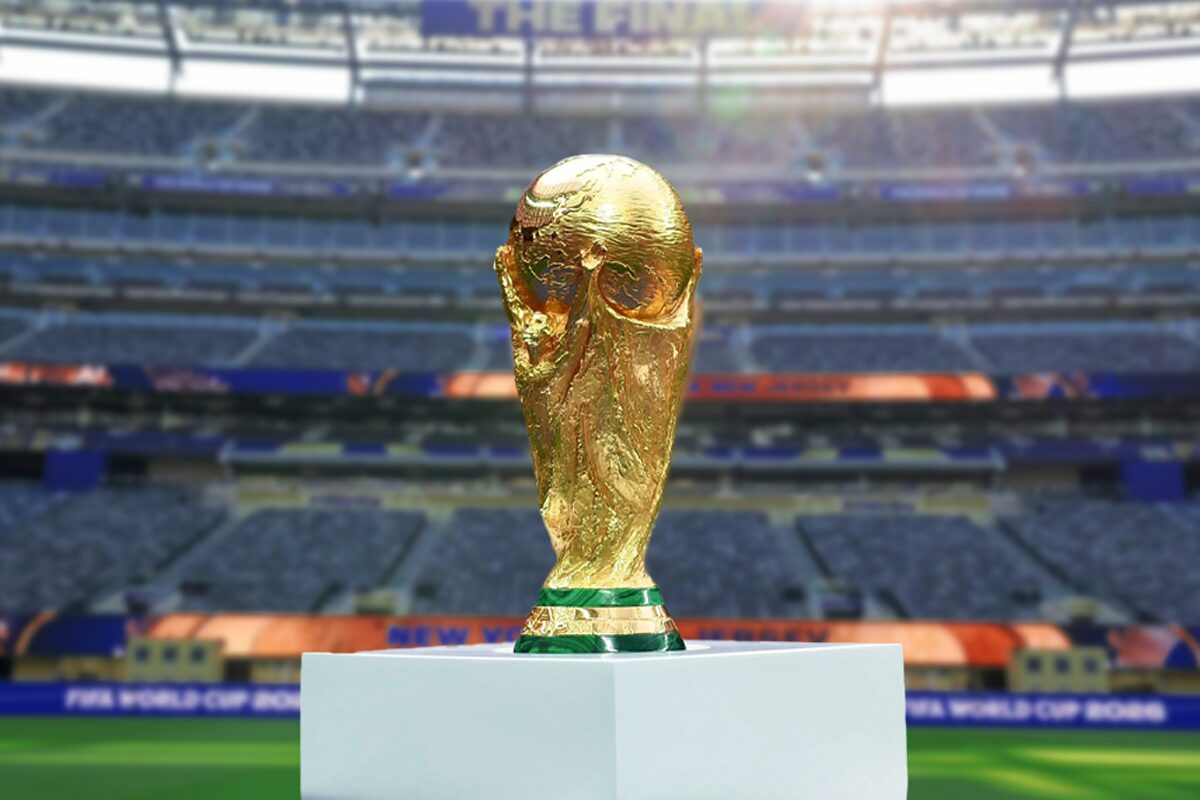
Either Spain or Argentina will lift the 2026 FIFA World Cup final trophy on 19th July, but that trophy carries far more weight than just an honor. Players wait four long years to become champions of the world, a story that began in 1930, when FIFA launched its first tournament under President Jules Rimet. Before the final begins, let’s dive into the history to know more about the trophy’s significance and its value.
Watch What’s Trending Now!
The first FIFA World Cup trophy was named Victory. But to honor Rimet, whose idea was to create the World Cup tournament that reshaped the entire soccer world in 1946, it was later renamed to the Jules Rimet Trophy.
The Jules Rimet Trophy vs. the FIFA World Cup Trophy
Jules Rimet Trophy (1930–1970)
French sculptor Abel Lafleur designed the Jules Rimet trophy, with a Nike logo and the ancient Greek goddess of victory, holding a cup above her head. The trophy was made of gold-plated sterling silver and stood on a blue lapis lazuli base. Apart from being the most prestigious honor, the trophy also had various stories associated with it.
During World War II, Italian football official Ottorino Barassi wanted to keep the trophy safe from the Nazis. To protect it, he secretly hid it inside a shoebox under his bed in Rome, where it stayed safe until the war ended. But they ultimately lost it to theft.
Imago
Image Courtesy: IMAGO
A few months before the 1966 FIFA World Cup in England, someone stole the Jules Rimet Trophy while it was on display at a public exhibition, but it was also later recovered by a dog named Pickles in South London. Then in 1970, Brazil kept the trophy with them after winning the World Cup thrice. Then, in 1983, it was stolen from the Brazilian Football Confederation headquarters in Rio de Janeiro.
This time, no one could find it, and the new trophy was introduced.
Current FIFA Trophy (1974–Present)
Before the original Jules Rimet Trophy was stolen in 1983, FIFA had already created a new World Cup trophy. Italian artist Silvio Gazzaniga designed the current trophy, which was first presented at the 1974 FIFA World Cup.
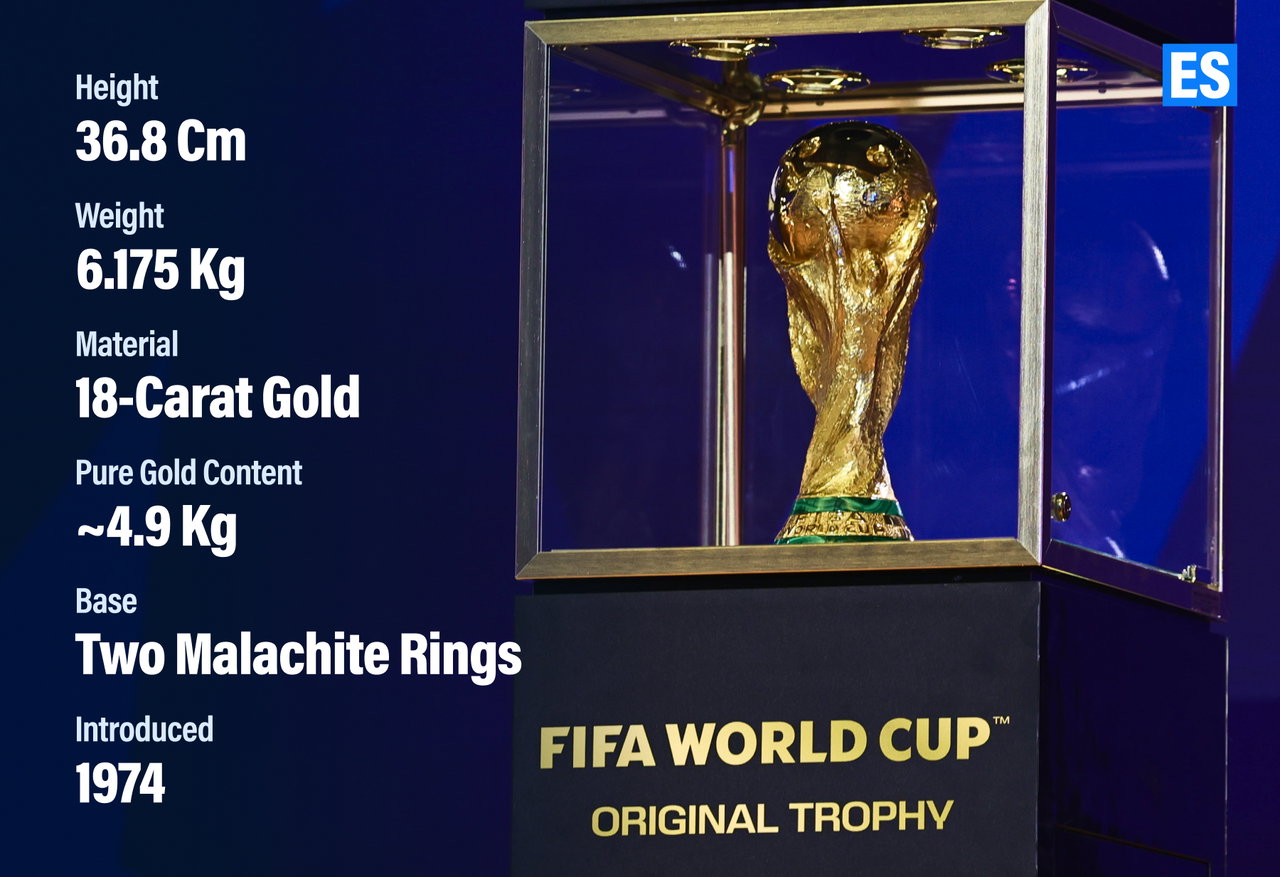
The trophy is 36.8 centimeters tall, made from 18-carat gold weighing around 6.175 kgs. The trophy design represents two people holding up the Earth, the idea that football brings people and countries together. It also has a gold design and a green malachite base with an estimated 4.9kg of pure gold.
But since then, FIFA became more cautious about the trophy and, to keep it safe, they never allowed any winning team to keep it. After the final, the winning team lifts the original trophy during the celebration. Later, FIFA takes the original trophy back and gives the champions a gold-plated copy, called the FIFA World Cup Winners’ Trophy, to keep.
FIFA keeps the original trophy safe and allows only a few people to touch it, including heads of state, FIFA officials, and former World Cup winners. The only time someone got the original copy to keep was after the 2010 World Cup in South Africa, when Nelson Mandela received an official replica. The theft changed FIFA’s philosophy forever, and now they want to preserve the honor.
The price of football’s greatest prize
FIFA has shared details about how the Jules Rimet Trophy was designed, what it was made of, and its history. However, FIFA has never revealed or published how much money it costs to make the trophy.
Talking about the new trophy that’s designed by Stabilimento Artistico Bertoni, at that time, it reportedly cost about $50,000 to make. For many years, fans believed that it was purely made of gold, but in practice, that was not possible. Going by size, if it were completely gold, the weight of the trophy would be around 60 to 70 kgs, but it’s just 6.175 kgs, so it’s pretty clear that it’s hollow and covered with a yellow gold plate.
Looking at its weight and the approximate weight of gold, around 4.6kgs, 77 Diamonds’ managing director Tobias Kormind estimated that the malachite would cost about $700, while the gold would be worth a little more than $240,000. He also said skilled craftsmen would need around 40 hours to make the trophy, adding about $2,000 in labor costs.
After adding together the cost of the entire thing, he gave a figure of $243,363. This price might seem very low, but when compared to the Super Bowl, the cost is pretty high.
The Vince Lombardi Trophy costs about $50,000 to make, but the value of the materials used in the trophy is only about $10,000. Luxury jewelry company Tiffany & Co. makes a new trophy by hand every year. The trophy is made entirely from sterling silver, which is why it is less expensive than the FIFA World Cup Trophy, which contains a large amount of gold.
Then, if you compare it to the Larry O’Brien trophy, which is given to the NBA final winners, even that costs less than the FIFA World Cup trophy. The material used to make it is sterling silver, which makes it cost around $13,500 per year and is made by Tiffany and Co. Both trophies hold very deep value, which makes them priceless, but when you compare both of them to the FIFA World Cup Trophy, the material cost differs.
The FIFA World Cup Trophy does not cost a huge amount to make, but it helps FIFA earn billions of dollars through TV rights, sponsorships, ticket sales, tourism, and other business deals.
One trophy, billions in commercial value
The 2026 FIFA World Cup is also different from past tournaments. Instead of one country hosting the event, the United States, Canada, and Mexico are hosting it together. The tournament has also expanded from 32 teams to 48 teams. By sharing the event, the three countries can split the costs, stadiums, travel, and other work needed to host such a large tournament. And with increasing games, the revenue is also increasing.
- FIFA expects to earn about US$3.925 billion by selling the TV and broadcasting rights for its tournaments during the 2023–2026 period.
- Many of the world’s biggest companies have partnered with the 2026 FIFA World Cup, coming from different industries.
*Food and drinks: Coca-Cola, Anheuser-Busch (Budweiser/Michelob Ultra), Diageo, Frito-Lay (Lay’s), Mengniu Dairy, DoorDash, and McDonald’s.
*Sports: adidas.
*Consumer products and retail: Unilever (Dove Men+Care) and The Home Depot.
*Cars: Hyundai-Kia.
*Energy: Aramco and Valvoline.
FIFA makes money by selling official World Cup products like jerseys, footballs, clothing, souvenirs, and other collectibles.
The World Cup also brings millions of fans to the host countries, and they spend money on hotels, flights, restaurants, shopping, and local attractions, which boosts tourism.
The trophy is more than just a sports prize. It is also a valuable work of art, and now either Spain or Argentina will lift it this year.