
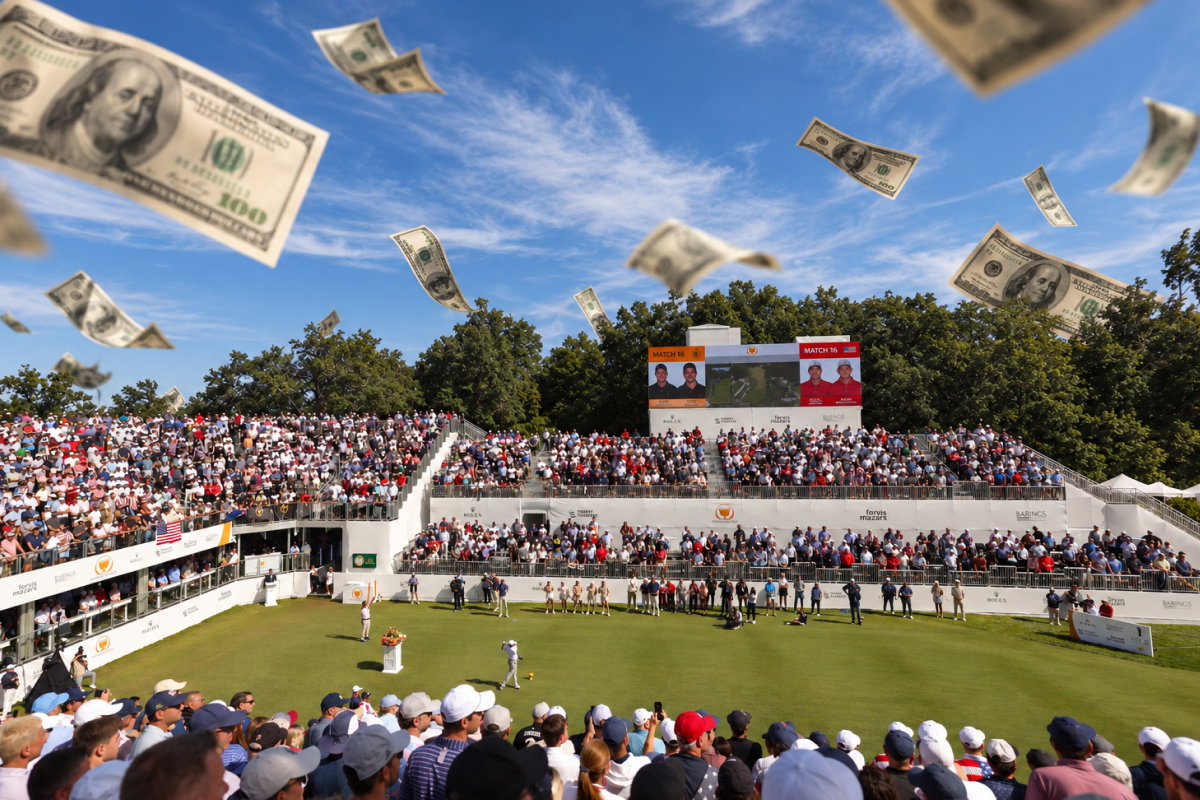
This year’s Presidents Cup has been in the headlines for several reasons, and the payout is certainly one of them. Available reports suggest that the total stipend paid to players, captains, and assistant captains could cross the $25 million mark. The breakdown of it is interesting.
Each participating player, captain, and assistant captain at the biennial team golf event is set to receive $250,000. With an annual combined stipend of $8.5 million for both teams, the total payout could reach $25.5 million. But the Presidents Cup is about more than just the money handed out to those involved.
The event also has a strong charitable side. According to official data, the PGA Tour has raised more than $56 million for charity since the competition began in 1994. Beyond the charitable contributions and player stipends, the Presidents Cup also brings a notable economic impact to its host region. That impact extends across local businesses, tourism, hospitality, and other parts of the economy.
The PGA Tour’s biggest advantage is that it owns the event
The Presidents Cup has been owned and run entirely by the PGA Tour since it began in 1994. That is very different from the four major championships. Augusta National, the USGA, the R&A, and the PGA of America run those events separately.
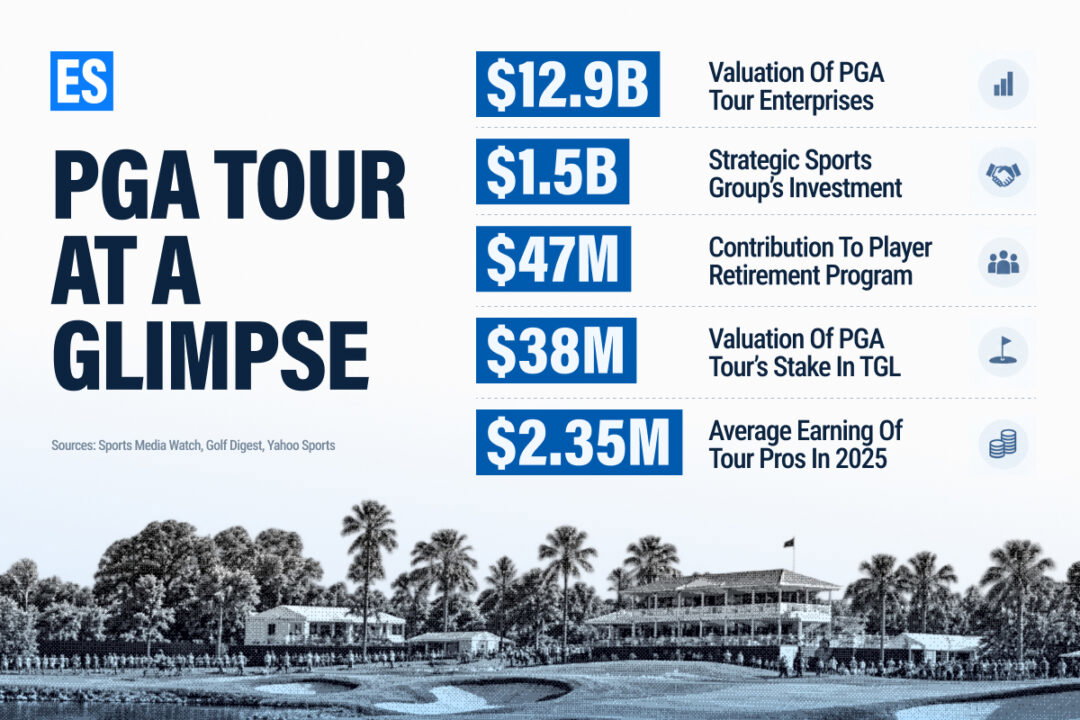
The Ryder Cup also has a different structure, as it is jointly managed by the PGA of America and DP World Tour. So, why does owning the Presidents Cup matter?
- The PGA Tour controls the business. It can set sponsorship deals, ticket prices, hospitality packages, and media rights without having to share those decisions with another owner.
- It can take the event to new markets. The International Team includes players from outside Europe, giving the Tour a chance to reach different countries and fan bases.
- It controls player eligibility. Players must meet PGA Tour membership requirements to qualify. That is also why LIV Golf players have not played in the last two editions.
- There is a downside to having full control. At Medinah, International Team captain Geoff Ogilvy called for more separation between the two teams. He argued that having both teams operate from the same building creates tension that the Ryder Cup’s separate ownership structure avoids.
The bigger point is simple: the ownership of the event gives the Tour a long-term sports property that it can change and develop over time.
The importance of hospitality in business
Getting fans through the gates is only one part of the Presidents Cup’s business. The bigger opportunity comes from hospitality.
For the 2026 event, one of the main premium options is the 1924 Club, named after the year Medinah was founded. It offers premium service and a prime location around the course. Michelob ULTRA also has its own hospitality space called the Captains’ Club, combining brand exposure with premium access to the event. There are also signs of strong demand:
- The official 2026 ticket page showed the International Club sold out for Thursday, Friday, and Saturday.
- Organizers expect around 200,000 spectators across four days.
- The event is drawing fans from outside the United States, adding to its international appeal.
For companies, hospitality is about more than food, drinks, and a better view of the golf sport. It gives businesses a place to meet clients and partners. That personal interaction is valuable, especially for companies trying to build relationships with important clients.
And because there are only so many hospitality spaces around a golf course, the limited supply can make them even more valuable.
The sponsors’ profit
The Presidents Cup’s 2026 Global Partners include Rolex, Barings, and Forvis Mazars, along with other partners such as Energy Transfer. These companies come from very different industries, including luxury watches, wealth management, accounting and consulting, and energy. Their goals also go beyond simply putting a logo on a golf course.
- Barings, a $481 billion alternative asset manager and MassMutual subsidiary, became the Official Wealth Management Sponsor and a Global Partner in April 2026. The company is looking to reach wealth advisors and their clients.
- Forvis Mazars, one of the largest accounting firms in the U.S., is also using the event to connect with a business-focused audience.
- The U.S. versus International Team format gives sponsors a strong story to build around and brings fans from different countries into the event.
- Since the Presidents Cup takes place only once every two years, sponsors get a concentrated marketing opportunity rather than having their brand appear at dozens of regular-season events.
The publicly available information does not reveal how much these sponsorship deals are worth. So any estimate of sponsorship revenue would be speculation.
Huge opportunity for the host city to make money
The PGA Tour is not the only organization that benefits from the Presidents Cup. The host region sees a major boost in tourism and business activity.
- For the 2026 event, tournament organizers project $175 million in economic impact for the Chicago region.
- That is around 30% higher than the $135 million figure linked to the 2022 Presidents Cup in Charlotte, which was the previous U.S. record.
- Meet Chicago Northwest, which represents eight nearby suburbs, expects at least $3 million in hotel revenue from the week.
Previous editions also show how the event has grown. Before the 2013 Presidents Cup in Columbus, Ohio, organizers projected more than $22 million in visitor spending and more than 10,000 hotel room nights. The money generated around the event goes to several types of businesses:
- Hotels benefit from visiting fans, players, media members, and sponsors.
- Restaurants and bars see more customers throughout the week.
- Transportation companies get more demand for rideshares, rental cars and shuttles.
- Retailers benefit from merchandise sales and visitor spending.
- Event suppliers and temporary workers are needed for construction, security and hospitality operations.
But there is an important difference between economic impact and tournament revenue. The projected $175 million does not mean the PGA Tour receives $175 million. Most of that money goes to local businesses.
There is another point to consider. Economic-impact estimates generally do not show all the costs involved in hosting a major event, such as public infrastructure, traffic management, and other local services. So the $175 million figure should not be treated as pure profit for the Chicago region.
The charity model has worked for the Presidents Cup
The Presidents Cup also has something that separates it from many other golf events: there is no prize money. Players on the U.S. and International teams are not paid for competing. Instead, each player, captain, and captain’s assistant receives an equal share of the money raised, which they can direct to a charity of their choice.
The event’s charity numbers are significant:
- More than $56 million has been raised for charity since the Presidents Cup began in 1994, according to official event materials.
- By the end of 2017, the total had already passed $49.1 million.
- The 2017 event alone raised a then-record $10.7 million.
- By that time, the event had supported more than 450 charities across 16 countries.
However, the public does not get a complete financial breakdown.
The PGA Tour reports how much money has been distributed to charity, but it does not provide a detailed breakdown of total event revenue, operating expenses, and the amount that ultimately goes to charitable causes.
That makes it difficult to determine what percentage of the event’s total revenue goes toward charity.
How different are the models of the Presidents Cup and Ryder Cup?
The Presidents Cup and Ryder Cup may look similar, but their business structures are very different.
- Ownership: The Ryder Cup is jointly run by the PGA of America and Ryder Cup Europe. The Presidents Cup is owned entirely by the PGA Tour.
- History: The Ryder Cup began in 1927, giving it almost a century of history. The Presidents Cup began in 1994.
- Economic impact: The 2023 Ryder Cup in Rome generated a record €262 million, or roughly $300 million, in economic activity and attracted more than 271,000 people from 100 countries.
- Bethpage Black: The 2025 Ryder Cup was projected to bring $160 million to the Long Island economy, while organizers suggested the total New York impact could pass $200 million.
- Ryder Cup revenue: The 2018 Ryder Cup in France reportedly generated around $90 million in revenue for Ryder Cup Europe.
Still, these numbers need to be compared carefully. While economic impact measures spending generated around an event, revenue refers to money earned by the event organizer.
So comparing the Presidents Cup’s $175 million economic-impact projection directly with the Ryder Cup’s reported revenue would not give a fair picture.
The Ryder Cup also has a major advantage in terms of history and global recognition. The Presidents Cup is younger but has its own identity because of its U.S. versus International format.
The actual business card
The Presidents Cup cannot be judged by one number. Attendance, sponsorships, and economic impact all tell different parts of the story. The event’s business can be broken into five areas:
- Event revenue: Ticket sales, hospitality, sponsorships, and merchandise. The PGA Tour does not publicly provide a full dollar breakdown.
- Event costs: Course preparation, staffing, security, logistics, and broadcasting all require significant spending.
- PGA Tour value: Because the Tour owns the event, it has complete control over a major international sports property and can change the event, expand into new markets, and create new sponsorship opportunities.
- Host-city impact: Chicago is projected to receive $175 million in economic impact from the 2026 event, although most of that money will go to local businesses rather than the PGA Tour.
- Charity: More than $56 million has been raised for charitable causes since 1994, making philanthropy an important part of the event’s identity.
So, is the Presidents Cup a commercial success?
The available numbers do not provide a clear answer because the PGA Tour has not published the event’s complete revenue and cost figures.
What is clear is that the Presidents Cup has significant value for the PGA Tour because it owns the event outright. It also creates a major boost for the host region and has raised tens of millions of dollars for charity.
The biggest asset may be the event itself. The PGA Tour controls the entire property, from sponsorships and hospitality to ticketing and future host locations. That gives the Presidents Cup something many other golf events do not have.