
$2.3 trillion. That’s how much the World Economic Forum estimates the global sports economy generated last year. By 2030, that figure will be $8.8 trillion. Is it hard to imagine that the sports that make up our weekends are a part of something so big? If it is, take a look at your credit card bills and see how much you’ve spent on supporting your favorite teams. The numbers will clear up any doubt you had.
Watch What’s Trending Now!
In the U.S., where almost all the leading sports are minting money like never before, the financial burden of this success has fallen on the ground-level fan. From LeBron James to Carmelo Anthony, everyone has said, ”It’s a business.” The cost to watch your favorite player has increased. Teams need money to run, pay athletes, and make sure they give out the best experience in their stadiums.
Here’s the breakdown of the top 10 most expensive teams to support, according to a study by Foresight Sports.
| Teams/Club | League | Tickets Total($) | Streaming ($) | Team Jersey ($) | Stadium Food & Drinks annually ($) | Annual total |
| New York Knicks | NBA | $3,195 | $549 | $140 | $390 | $4,274 |
| Detroit Lions | NFL | $3,088 | $580 | $149 | $194 | $4,011 |
| Philadelphia Eagles | NFL | $2,552 | $580 | $150 | $262 | $3,544 |
| Arsenal | EPL | $2,717 | $220 | $120 | $346 | $3,403 |
| Los Angeles Lakers | NBA | $2,190 | $549 | $150 | $368 | $3,257 |
| Las Vegas Raiders | NFL | $2,248 | $580 | $130 | $216 | $3,174 |
| Chicago Bears | NFL | $2,104 | $580 | $149 | $176 | $3,009 |
| Toronto Maple Leafs | NHL | $2,100 | $240 | $130 | $342 | $2,812 |
| Golden State Warriors | NBA | $1,800 | $549 | $80 | $375 | $2,804 |
| Chelsea | EPL | $2,128 | $220 | $120 | $306 | $2,774 |
The New York Knicks top the chart and are the most expensive team to support across all sports. An average Knicks fan spends nearly $4,300 every year to support their favorite team. What’s surprising is that it’s way higher than NFL or soccer teams. The tickets alone cost them $3,195 for the season, with 15 home games at Madison Square Garden costing over $200 per seat.
This year, the prices saw an extraordinary surge. The Knicks entered the NBA finals for the first time since 1999, and that wait made fans so curious that it triggered a shocking ticket price at MSG. Their Game 3 ticket prices went to $10,000 because of the presence of Donald Trump and New York’s mayor, Zohran Mamdani.
The cheapest resale ticket price for Game 3 was first set at $4,247, but with all the hype, it went up to $9,995 as per TickPick. Now, many who are unable to see the game in person opt for streaming platforms that cost around $549 and add to the team’s revenue. It’s all about emotional connection that’s bringing fans to the stadium, and with increasing demand, the prices are also increasing.
NFL fans are spending on the same lines as well
In the top ten most expensive teams to support, there are four NFL teams: Detroit Lions, Philadelphia Eagles, Las Vegas Raiders, and Chicago Bears. After the Knicks, the second most expensive team to support is the NFL’s Detroit Lions. Fans spend over $4k annually just to watch games, stream them online, and buy their jerseys. Each seat at Ford Field averages $386, and $580 goes for streaming. And the jerseys cost around $149.
Then comes in the Eagles. Every fan spends around $3.5k yearly just to follow the team. The season ticket costs around $2,552 for eight home games. Just $500 less than what Detroit charges, but the prices are still high. Streaming costs the same as Lions, which is $580. In addition, Philadelphia Stadium charges $260+ for hot dogs and drinks.
Following the Eagles is Tom Brady’s Las Vegas Raiders, whose annual total goes to $3,174. The total ticket price is around $2,248, and the streaming cost is the same as the other two, $580. The jersey costs around $130, and food and drinks go up to $216 annually.
Last but not least, the Chicago Bears, whose annual cost goes up to $3,009. The tickets cost around $2,104; the streaming is the same as others, $580; the jersey price too is set at $149; and food and drinks are a bit cheaper compared to others, but still high at $176.
But why are prices seeing such a massive surge??
First, the market works on simple logic and demand principles. Most NFL stadiums can hold between 60,000 and 80,000 fans, which creates a fixed supply of seats, because of which prices see a surge, with fans willing to pay more to get in.
Then come in secondary markets where ticket resellers purchase so many seats and list them on sites like StubHub, SeatGeek, and Vivid Seats, because of which prices see a massive surge. And let’s not forget that booking tickets has additional charges like tax, parking cost, merchandise, service charges, and transaction fees.
In the end, NFL fans get very few home games to watch their favorite teams play, as the league typically plays only 8 or 9 home games. Whereas leagues like the NBA have 41 regular-season home games out of their total 82-game schedule. Now, let’s dig into the part that brings more chaos to these increasing prices.
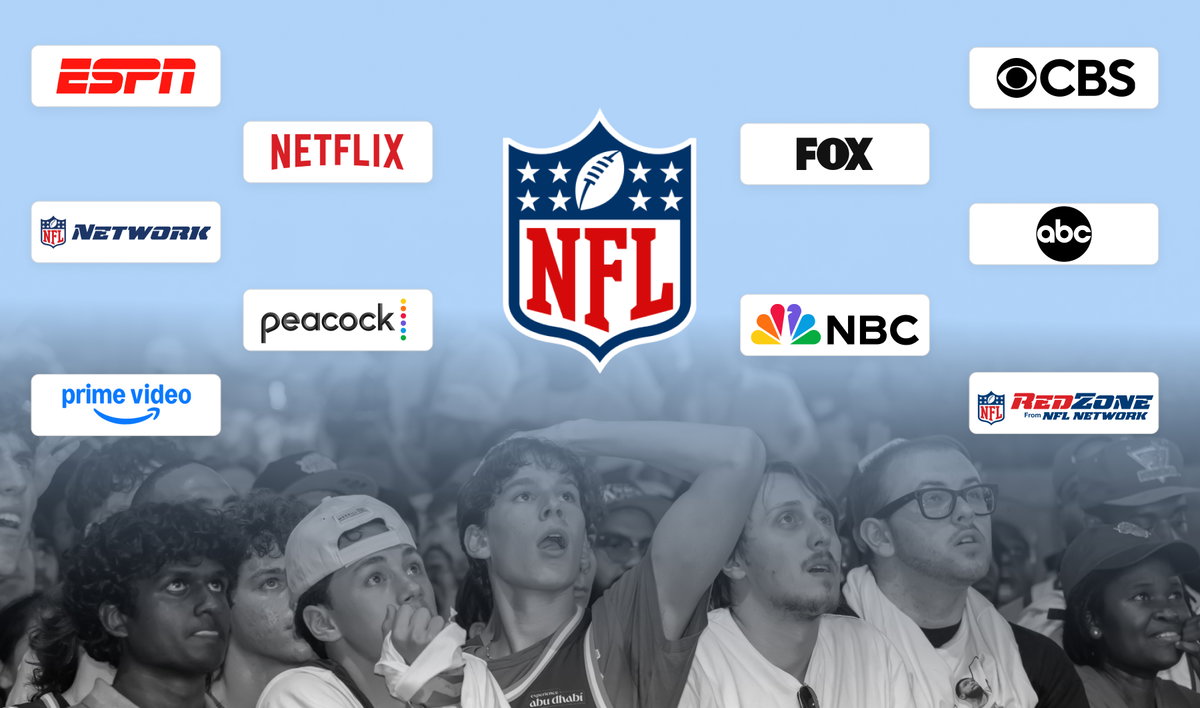
One of the major additions to this rapid surge is the streaming platforms. Cable TV is no longer the priority option; subscriptions are very expensive with so many options. Apple TV+ streams exclusive Friday night MLB games and Formula 1 beginning in 2026. Then there’s Netflix that carries NFL Christmas Day games and WWE Raw.
Prime Video offers Thursday Night Football and NBA coverage. Peacock streams exclusive NBA and college sports content. Paramount+ carries the NFL, college football, UFC, and UEFA Champions League.
If you break down the costs, the ESPN Unlimited plan is $29.99 a month or $299.99 a year, and the Select plan is $11.99 a month or $119.99 a year. The Unlimited Plan includes access to all ESPN networks, including ESPN+, which offers events like the NFL, NBA, NHL, MLB, tennis, and golf majors. But it’s still expensive for fans to follow them all.
There’s another streaming option available, which is Fox One + ESPN Unlimited, which costs $39.99 per month for both. Both will have the FIFA World Cup 2026, college football, NASCAR, UFL, LIV Golf, NFL, NBA, NHL, MLB, and WWE.
If you come to Prime Video, a full membership will cost around $14.99 per month. And fans who want complete NFL coverage can no longer rely on TV, as Thursday night games now need a Prime subscription. For Peacock, a premium subscription costs $10.99 per month, while Premium Plus costs $16.99 per month. So if a fan wants to follow the Olympics or soccer, they have to shell out.
If a fan wants to follow two or more sports, the price can easily go over $1000 per year. Pretty expensive. The options are plenty, but buying all of them is not possible for fans. On one side, the ticket prices are increasing, and on the other side, the streaming platforms are seeing a massive surge. Both ways, fans are doomed.
Sports are increasingly becoming a luxury; the more you spend, the more facilities you get, whether it’s on-field or off-field. Just take the example of the Knicks game, where fans have to spend $549 for streaming. The same goes for Lakers fans who are forced to spend the same amount. The streaming platforms do give options, but they drain fans financially.
Prices don’t stop fans from spending
- Many fans do not see their team as just entertainment. They feel the team is part of their identity. Look at the Knicks fans this year. The 27-year drought finally ending brought fans to the stadium, even with high ticket prices.
- Fans enjoy being part of a larger group. They know thousands or even millions of people support the same team. This creates a strong feeling of belonging and connection.
- Giving up their family legacy also keeps fans hooked. The childhood memories of coming into the stadium with parents or grandparents stay with them till the end. And that connection is hard to break.
- Games create common experiences where fans share happiness and excitement together. Remember how the Kansas City Chiefs breaking the 50-year Super Bowl drought in 2020 against the 49ers became a major topic of discussion among fans? They live for such experiences.
The sports world earns a lot through ticket prices, streaming subscriptions, and merchandise. But this success might not be long-term, as leagues are now just thinking about money, not fans’ emotions.
Ordinary fans can’t afford the kind of price tags these game tickets come with. Games earned loyalty because of how affordable they were, but now, just to watch a single game, the amount goes up to $2000-$3000.
So, here’s the bigger question: will the madness for money continue, or will leagues actually start thinking about fans’ emotions?