
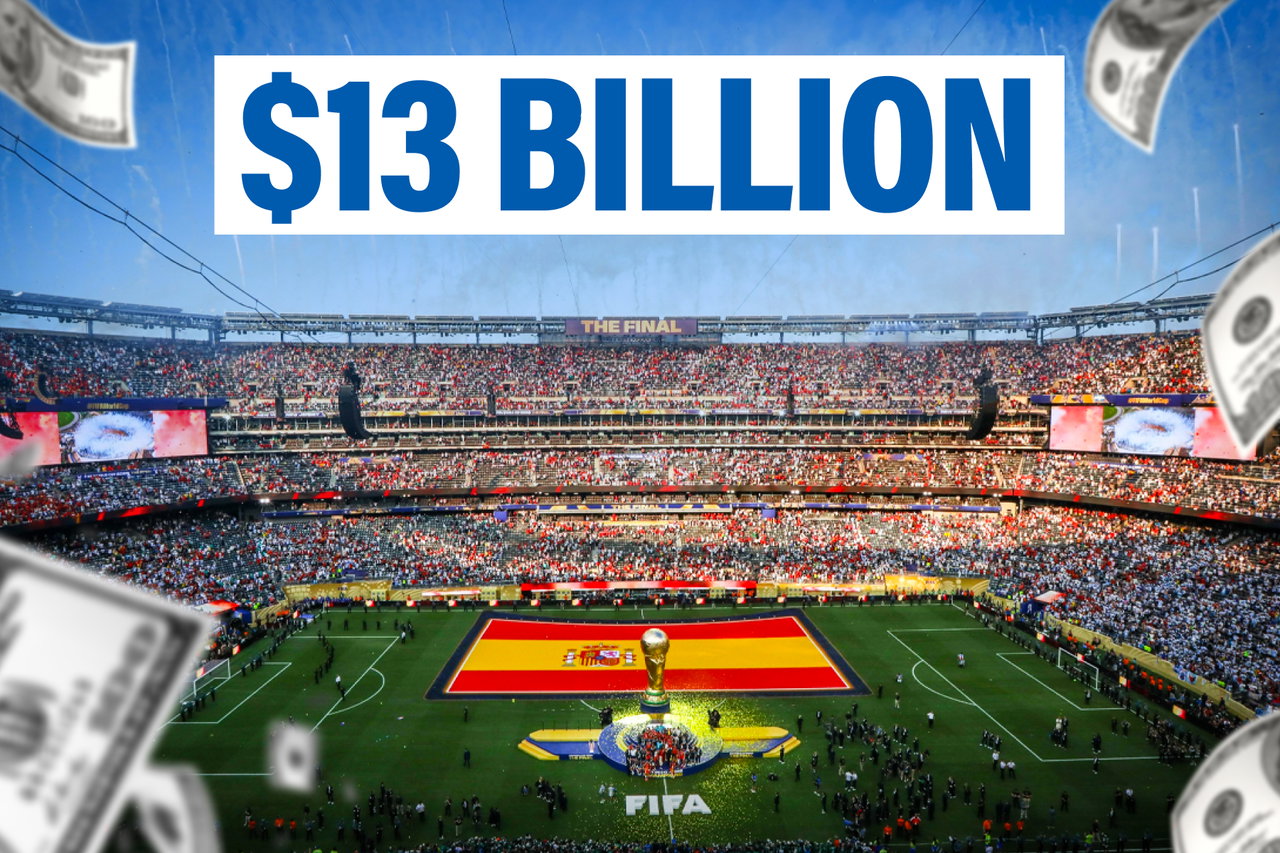
The 2026 FIFA World Cup featured 48 teams, 104 matches, and was hosted by three different countries: the United States, Canada, and Mexico. After expanding the tournament from 32 to 48 teams, the number of matches increased from 64 to 104, and that resulted in massive revenue growth this year. FIFA is projected to earn $13 billion in revenue for the 2023-2026 cycle. Let’s dig in and know what added up to this massive income flow.
Watch What’s Trending Now!
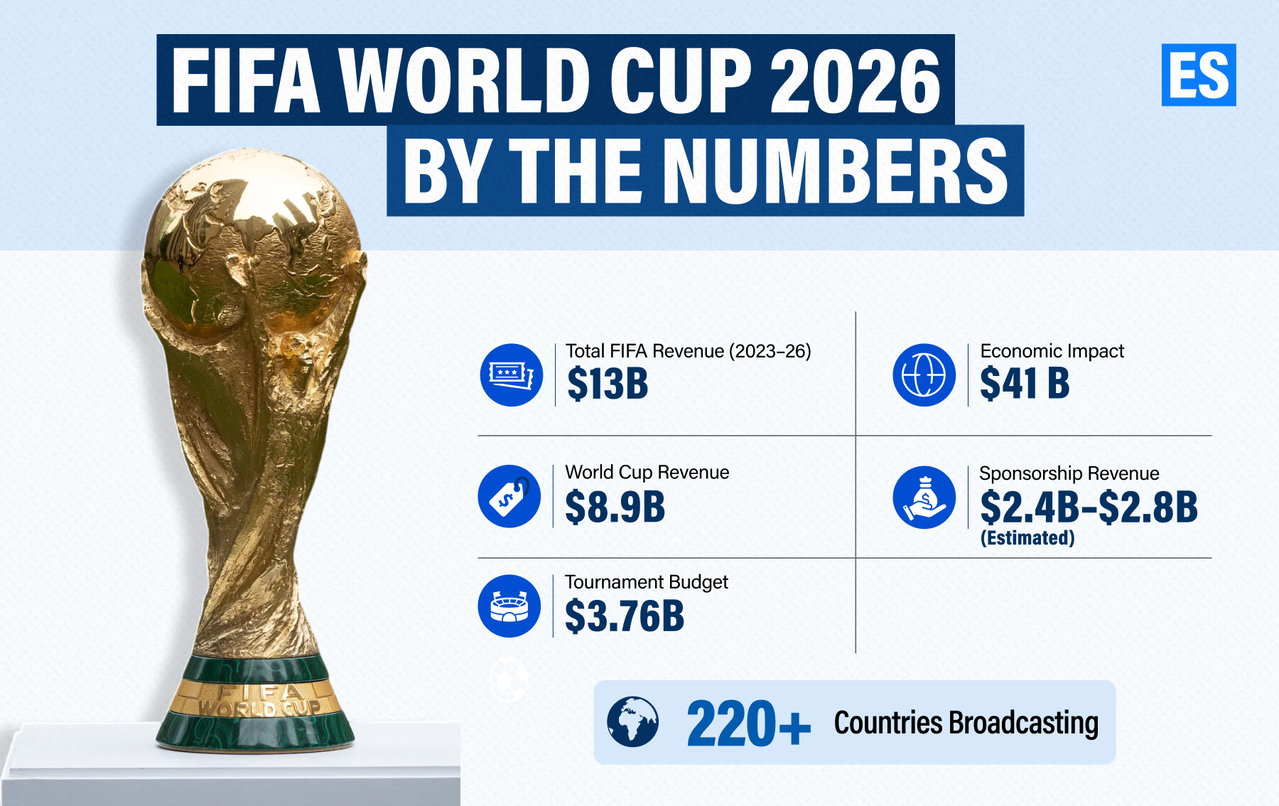
More games gave FIFA 40 additional live matches to sell to broadcasters, advertisers, and sponsors. That brought them massive revenue growth. It set a tournament budget of $3.76 billion but projected US$8.9 billion in revenue from the 2026 World Cup alone. That would help FIFA reach its overall goal of $13 billion in revenue during its 2023-2026 financial cycle.
FIFA also increased the prize money to a record $871 million. Every team was guaranteed at least $12.5 million, which was $2 million more than teams received at the 2022 World Cup. The team that won the 2026 World Cup could earn up to $53.5 million, which was $11.5 million more than Argentina received after winning the 2022 tournament.
Now, let’s break down these numbers in detail.
Media rights became the tournament’s financial backbone
TV broadcasting rights are FIFA’s biggest source of income. For 2026, FIFA expected to earn about $3.925 billion from TV broadcasting rights alone. This made up 44% of all the money FIFA expected to earn, making it the tournament’s biggest source of revenue. The matches were shown in more than 220 countries and territories.
Before the 2026 World Cup, FIFA made a deal with TikTok under which 10 minutes of live action from each match on TikTok was shown. Live World Cup clips from official broadcasters received more than 465 million views. FIFA’s official World Cup TikTok account got over 24 billion views, while fans posted nearly 20 million videos using World Cup hashtags. TikTok also created special World Cup pages that attracted more than 413 million visits.
Along with media rights sponsorship, it helped them to earn more money.
Sponsorship reached unprecedented levels
FIFA changed the way it sold sponsorships for the 2026 World Cup to give more companies a chance to join. Instead of having only one group of global sponsors, FIFA created three levels. FIFA Partners became the top-level sponsors with the biggest global rights. FIFA World Cup Sponsors received tournament-specific global sponsorship rights. Regional Tournament Supporters could sponsor the World Cup only in certain countries or regions.
Imago
Image Courtesy: IMAGO
Each of the 16 World Cup host cities could choose up to 10 local companies to become official city sponsors. These companies did not have to pay for expensive worldwide FIFA sponsorships. For example, Cox Enterprises became an official sponsor in Atlanta, and NRG Energy became an official sponsor in Houston.
Back in March 2026, FIFA announced that it had sold all 16 global sponsorship packages for the 2026 FIFA World Cup. Some of the sponsors are Lenovo and Verizon (technology), Qatar Airways (airline), Visa and Bank of America (financial services), Coca-Cola and AB InBev (beverages), McDonald’s and Lay’s (food), Hisense (electronics), Aramco (energy), Hyundai-Kia (automotive), and Unilever (consumer goods).
The tournament earned record sponsorship money. FIFA originally expected to make about US$1.8 billion from sponsorship rights, but Ampere Analysis estimated the final sponsorship revenue could reach between US$2.4 billion and US$2.8 billion because of the strong demand from global brands.
During the 2026 FIFA World Cup, brands got a chance to meet and interact with millions of football fans at FIFA Fan Festivals. More than two million people visited these fan events in cities like Vancouver, New York, and Toronto.
In New York, LEGO let fans add small pieces to a giant mosaic through its “Add a Piece, Leave Your Legacy” activity and also design their own football jerseys. In Toronto, Adidas set up a fun mini football game for fans to play. Sport Chek built Canada’s first floating futsal pitch on the water at Harbourfront Centre, where people could play real football instead of just watching it.
Now, along with that, host cities also saw a massive influx of tourists who came in to watch the games.
Tourism turned host cities into economic beneficiaries
Unlike previous FIFA World Cup games happening at one place, this year it was distributed to 16 different cities in three different countries. This distribution impacted a lot of local revenue for the cities. An increase in tourism increased various earning sources for them.
- Hotel occupancy surges.
- Restaurant and retail spending.
- Transportation revenue.
- Temporary job creation.
- Long-term tourism promotion.
Boston is one of the successful examples of it. The city hosted seven matches, with the last game being France’s 2-0 win over Morocco in the quarterfinals. A total of 447,283 fans watched the matches at Boston Stadium, and those who travelled to the city from outside spent loads on restaurants, hotels, and food.
From June 12 to June 27, the average hotel room cost $410.44 per night, which was 20.7% higher than in 2025. Hotels also earned $357.36 per available room, up 20.3% from the previous year. About 87% of hotel rooms were full, and on several match days, more than 90% of rooms were occupied.
Hotels performed even better on match days. The average room price increased to $445.45, which was 26.8% higher than the previous year. Hotels earned $405.50 per available room, a 28.3% increase. Some matches brought even bigger gains. The France vs. Norway game increased hotel revenue by almost 40%, while the Scotland vs. Morocco match increased it by almost 30%.
On top of it, Dutch fans stayed in Kansas City, filling many hotel rooms, and French fans visited Philadelphia and spent money on famous local foods like Philly cheesesteaks. Now, along with cities, FIFA kept a massive amount for itself too.
FIFA’s profit model is fundamentally different
Unlike many sports leagues that share a large part of their money with teams, FIFA keeps most of the money it earns from the World Cup. FIFA made money from TV broadcasting rights, sponsorships, ticket sales, licensing, and hospitality. Fox Sports reportedly paid $485 million for the U.S. TV rights and earned money by selling advertisements during matches.
A 30-second TV ad during the World Cup usually cost between $200,000 and $300,000, while ads during big U.S. matches reached $750,000.
Reuters reported that Fox Sports saw very strong demand from advertisers during the tournament. During some knockout matches, a 30-second TV commercial sold for as much as US$1 million.
FIFA also introduced hydration breaks, where players stopped briefly to drink water during hot-weather matches. These short breaks gave broadcasters extra time to show advertisements. Reuters reported that Fox was expected to generate about US$250 million in additional advertising revenue.
The tournament also boosted the wider economy. FIFA estimated that the 2026 World Cup would add about $41 billion to the global economy, including $17 billion in the United States.
The World Cup also helped many companies make more money. Nike said sales of its national team jerseys were more than twice as high as during the 2022 World Cup. England’s jersey sold the most, followed by France, Brazil, the Netherlands, and the United States. Adidas said Mexico’s jersey became its best-selling national team shirt. JD Sports also recorded its best-ever year for England shirt sales, while Scotland’s jersey became its overall best-selling football shirt.
Betting companies also benefited as fans placed around $50 billion in bets during the tournament, averaging about $500 million per match, according to financial services firm Macquarie.
Fans spent huge amounts of money to attend matches, with official tickets for the final at MetLife Stadium reaching $32,970, while some resale tickets climbed above $2 million because of extremely high demand. Now, through all of it, FIFA gained massive financial growth this year, preparing to come even stronger after four years.