

Who would have thought that stadium occupancy would become a major topic of concern for the WNBA? The league drew around 3.8 million fans across 330 regular-season games in 2026, up about 21% from 2025, and its average attendance reached 11,474 per game, a record. But with increasing fan interest, seat demand is also rising, which is becoming a major problem.
Watch What’s Trending Now!
Well, it turns out they are already dealing with the issue. The Atlanta Dream faced this problem during the 2026 Finals against the Valkyries. Their regular arena, Gateway Center Arena, can hold around 3,500 fans. But State Farm Arena, where the Atlanta Hawks play, holds around 17,000.
Now, because of the sellout, the Dream will have to play their Finals home games at the bigger arena.
However, the Hawks also had a game scheduled against the Cavaliers at State Farm Arena on the same evening as Game 6 of the Finals. To avoid the clash, the WNBA moved the Dream’s game to 12:30 p.m. ET instead of its original evening time, which was 8:00 p.m.
Now, this adjustment of moving the game from prime time affects not only the teams but also the fans. Weekday afternoon games can be harder for fans to attend and complicate their plans.
This clearly shows that the WNBA doesn’t have arenas big enough to meet fan demand, and its adjustment is also failing.
Larger venues can bring in more ticket sales and offer better experiences for fans. However, sharing arenas with NBA teams and concerts can create scheduling conflicts, making it harder to find a suitable time and place for games.
The Cost of Playing in Arenas That Are Too Small
In order to meet fans’ demand, the Atlanta Dream had to make major scheduling changes.
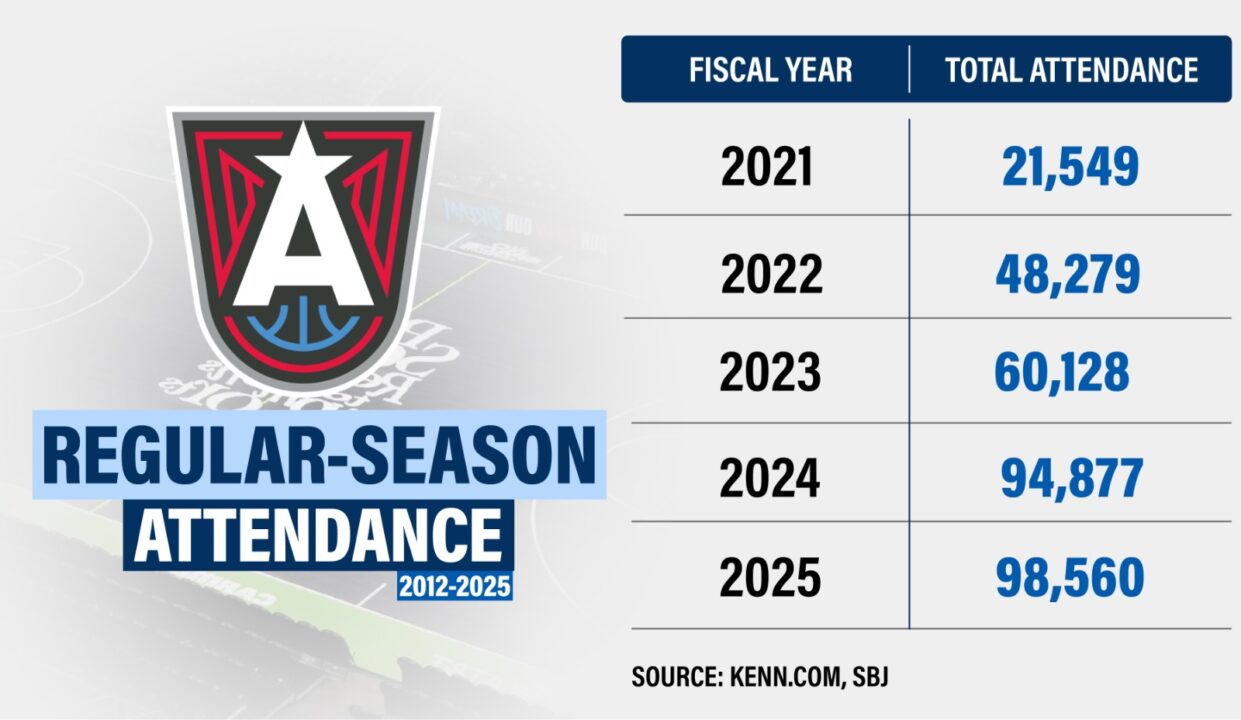
According to Front Office Sports, the Atlanta Dream’s average attendance jumped 55% in 2026, from 4,480 fans per game in 2025 to nearly 7,000. But their regular home arena, Gateway Center Arena, can hold only around 3,500 people, so to bring in more fans, the Dream moved six regular-season games to State Farm Arena, which can accommodate around 17,000 people.
Imago
Credits: IMAGO
But with more fans, small stadiums also lose other opportunities to earn money, like:
- Fewer tickets to sell.
- Limited premium options.
- Less spending inside the arena.
- Fewer opportunities for sponsors.
A small arena may also limit the different ways a team can make money when interest in its games grows. Now, this increases the demand for a bigger arena.
But the team is taking steps to tackle the situation.
Atlanta Is Already Making the Infrastructure Move
The Atlanta Dream will move all their home games to State Farm Arena in 2027 under a new multiyear agreement announced on October 6, 2026. The WNBA’s expanded season will have 50 regular-season games for each team, meaning the Dream will play 25 games at their new home.
The team’s popularity has grown a lot over the past five years. Its season-ticket membership has increased by more than 400%, and fans from all 50 states have bought tickets. The Dream have also sold out every game at Gateway Center Arena over the last three seasons.
Moving to the bigger arena will give the Dream more seats to sell and help more fans attend games.
The Dream’s move to State Farm Arena could help them sell more tickets and attract bigger sponsors, but playing in a larger venue also brings extra costs for staffing, security, and running game-day events.
The New York Liberty chose a different path in 2018. Instead of playing at Madison Square Garden, they moved to the much smaller Westchester County Center to reduce costs. Playing at MSG was nearly 20 times more expensive. So, moving to a bigger stadium is not always the better choice.
So, clearly it’s not going to be an easy move. But Atlanta Dream is not the only team facing this issue.
Atlanta Is Not the Only Team Facing the Capacity Question
The Atlanta Dream are not the only WNBA team dealing with arena capacity issues. The Washington Mystics play at CareFirst Arena, which can hold around 4,200 fans.
According to Front Office Sports, their attendance fell by 16% in 2026, partly because they played fewer games in larger arenas than they did the previous season.
However, the Golden State Valkyries show the other side of the issue. They play at Chase Center, which can accommodate 18,064 fans, and sold out every home game for the second season in a row.
The Golden State Valkyries averaged 18,064 fans per game, filling every seat at Chase Center. This shows how strong fan demand can push even a large arena to its limit.
However, the WNBA does not need every team to play in a huge arena. Playing in an NBA arena gives a team more seats to sell, along with premium seats, suites, and other facilities that can bring in extra money.
The downside is that NBA games, concerts, and other events also use these venues, which can make it harder for WNBA teams to choose their game dates.
However, building new arenas just for women’s basketball is another option. These venues could give teams more control over their games, branding, and fan experience. But building an arena costs a lot of money, and teams cannot be sure that they will attract enough fans to fill it regularly. Each option comes with its own trade-offs:
- Shared NBA arena: More seats and ways to earn money, but less control over scheduling.
- Smaller dedicated arena: More control and a closer fan experience, but fewer seats.
- New arena: More freedom to run games, but greater financial risk.
The right arena depends on how many fans a team attracts and how much money it can spend.
Each team needs a venue that suits its current fan base and budget while giving it room to grow. This way they can expand when the demand increases. Teams can then welcome more fans and earn more money without taking on costs they may struggle to afford.