
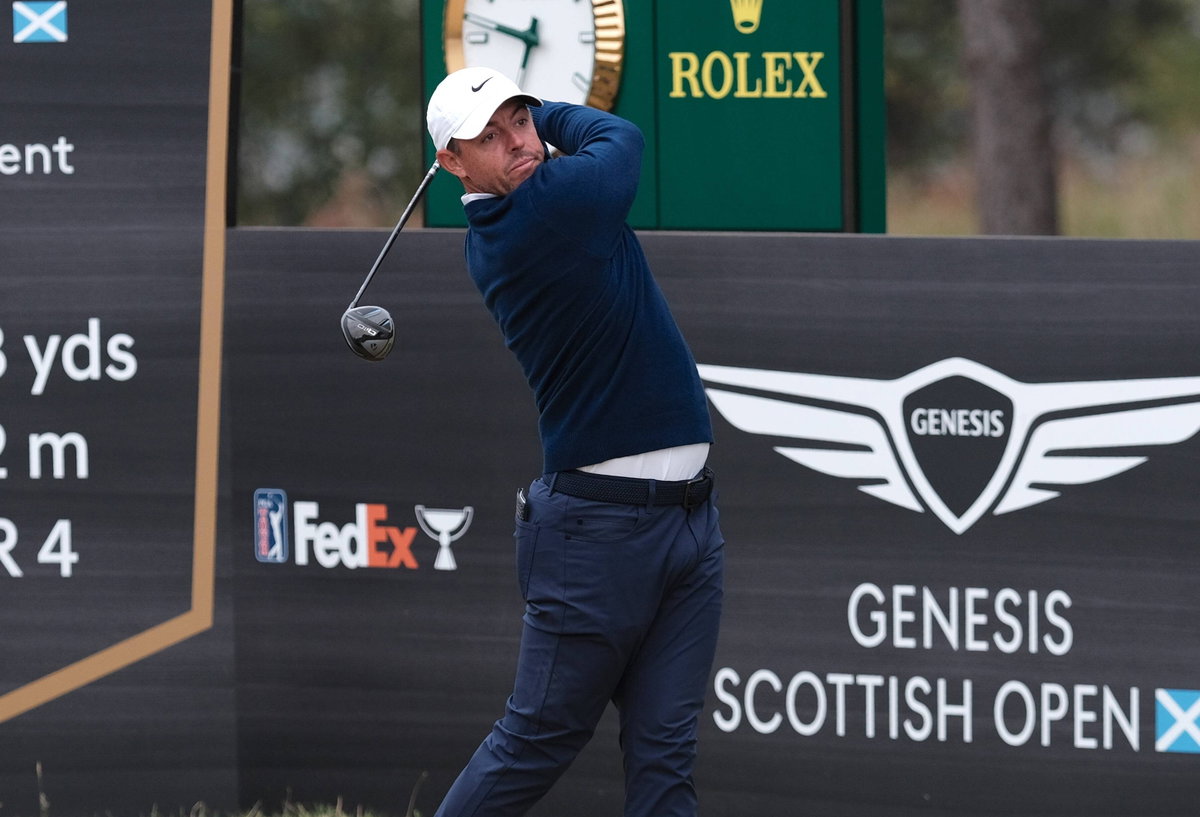
When the Genesis Scottish Open first got underway in 1935 at the King’s Course at Gleneagles, it did not feature on the European Tour. Percy Alliss won the championship by four strokes and was offered a prize purse of £750. Over the years, the total prize purse rose from £10,000 in 1972 to a mammoth £3 million in 2008. It was the highest purse ever offered by an event not sanctioned by the PGA Tour. More than 90 years later, the tournament has become one of the richest weeks on either side of the Atlantic.
Watch What’s Trending Now!
The purse has climbed steadily at the Genesis Scottish Open for years. In 2017, it became a part of the European Tour’s Rolex Series, and the purse jumped to $7 million. In 2022, the championship became co-sanctioned by the PGA Tour, pushing the purse to $8 million. Xander Schauffele collected $1.44 million that year as the winner’s payout. In 2023, the purse rose again to $9 million, with Northern Ireland’s Rory McIlroy winning the tournament. It remained the same through Robert MacIntyre’s emotional home victory in 2024 and Chris Gotterup’s breakthrough in 2025.
The 2026 Genesis Scottish Open offers a total prize purse of $9 million at The Renaissance Club. Tom Kim took home $1.575 million, amounting to 17.5% of the purse. The cut was made after 36 holes. According to the DP World Tour, a total of 71 pros made the cut from a 156-player field. Here’s a breakdown of the prize purse for all the players who made the cut by position: –
| Position | Prize Money |
| 1 | $1,575,000.00 |
| 2 | $985,500.00 |
| 3 | $590,850.00 |
| 4 | $441,000.00 |
| 5 | $373,500.00 |
| 6 | $322,200.00 |
| 7 | $287,550.00 |
| 8 | $253,800.00 |
| 9 | $233,100.00 |
| 10 | $213,300.00 |
| 11 | $197,100.00 |
| 12 | $182,250.00 |
| 13 | $168,300.00 |
| 14 | $155,700.00 |
| 15 | $148,500.00 |
| 16 | $141,300.00 |
| 17 | $134,100.00 |
| 18 | $126,900.00 |
| 19 | $120,150.00 |
| 20 | $113,850.00 |
| 21 | $107,550.00 |
| 22 | $102,600.00 |
| 23 | $97,650.00 |
| 24 | $92,700.00 |
| 25 | $87,750.00 |
| 26 | $82,800.00 |
| 27 | $80,100.00 |
| 28 | $77,400.00 |
| 29 | $74,700.00 |
| 30 | $72,000.00 |
| 31 | $69,300.00 |
| 32 | $66,600.00 |
| 33 | $63,900.00 |
| 34 | $61,425.00 |
| 35 | $58,950.00 |
| 36 | $56,475.00 |
| 37 | $54,450.00 |
| 38 | $52,650.00 |
| 39 | $50,850.00 |
| 40 | $49,050.00 |
| 41 | $47,250.00 |
| 42 | $45,450.00 |
| 43 | $43,650.00 |
| 44 | $41,850.00 |
| 45 | $40,050.00 |
| 46 | $38,250.00 |
| 47 | $36,450.00 |
| 48 | $34,830.00 |
| 49 | $33,300.00 |
| 50 | $32,040.00 |
| 51 | $30,870.00 |
| 52 | $29,700.00 |
| 53 | $28,620.00 |
| 54 | $27,540.00 |
| 55 | $27,000.00 |
| 56 | $26,460.00 |
| 57 | $25,920.00 |
| 58 | $25,380.00 |
| 59 | $24,840.00 |
| 60 | $24,300.00 |
| 61 | $23,760.00 |
| 62 | $23,220.00 |
| 63 | $22,680.00 |
| 64 | $22,140.00 |
| 65 | $21,600.00 |
| 66 | $19,800.00 |
| 67 | $19,620.00 |
| 68 | $19,440.00 |
| 69 | $19,260.00 |
| 70 | $19,080.00 |
| 71 | $18,900.00 |
Beyond the financials, there’s plenty the championship has to offer. The winner earns 500 FedEx Cup points and Official World Golf Ranking points based on the field strength. Moreover, the winner will earn elevated Race to Dubai points as one of the Rolex Series’ marquee events.
The field had seven of the top 10 players in the world, including Scottie Scheffler, Rory McIlroy, and Wyndham Clark. Robert MacIntyre will bear the flag as the only top Scot taking to the course. Besides the perks, here is some interesting history you must know about the championship.
Interesting Facts to Know about the Genesis Scottish Open
As mentioned earlier, the Scottish Open was first teed up in 1935, with Percy Alliss winning the inaugural tournament. But the story after that is much more interesting to know. After 1935, the R&A objected to a privately organized event that used the word “championship,” and the tour faded away after a couple of years. It wasn’t until 1972 that a modern version was born.
The Sunbeam Electric Scottish Open was launched at Downfield Golf Club in Dundee, and Neil Coles won the sudden-death playoff for a £2,000 first prize. The tournament later found its long-term home at Loch Lomond in 1996, where it stayed for 15 years. But soon, financial troubles at the course forced it out in 2011. The championship was held at Castle Stuart, Royal Aberdeen, Gullane, and Dundonald Links for most of the following decade.
The Renaissance Club, which became the tournament’s permanent base in 2019, has its own unlikely original story. It was built not by Scots but by an American family. Jackson Hole businessman Jerry Sarvadi fell in love with the land next to Muirfield during a visit to the 2000 Open Championship. After 22 visits to Scotland to negotiate with the estate’s trustees, he signed a 99-year lease in 2005.
He brought architect Tom Doak, best known for Pacific Dunes at Bandon Dunes, to build a links-style course from scratch on the 300 acres of pine forest. Locals now call the stretch of coastline home to Renaissance, Muirfield, and North Berwick, which is together known as “Scotland’s Golf Coast.”
It’s rare for a modern build to be spoken of in the same breath as centuries-old neighbors.
The venue itself has evolved with the event. Earlier editions drew criticism from players over the setup that felt more like parkland than links. Over the years, the course has changed, having cleared trees to open up sightlines. It has now become closer to the game that the tournament was designed to prepare players for. Last year’s edition drew a record crowd of nearly 89,000, reflecting its success and fame.