
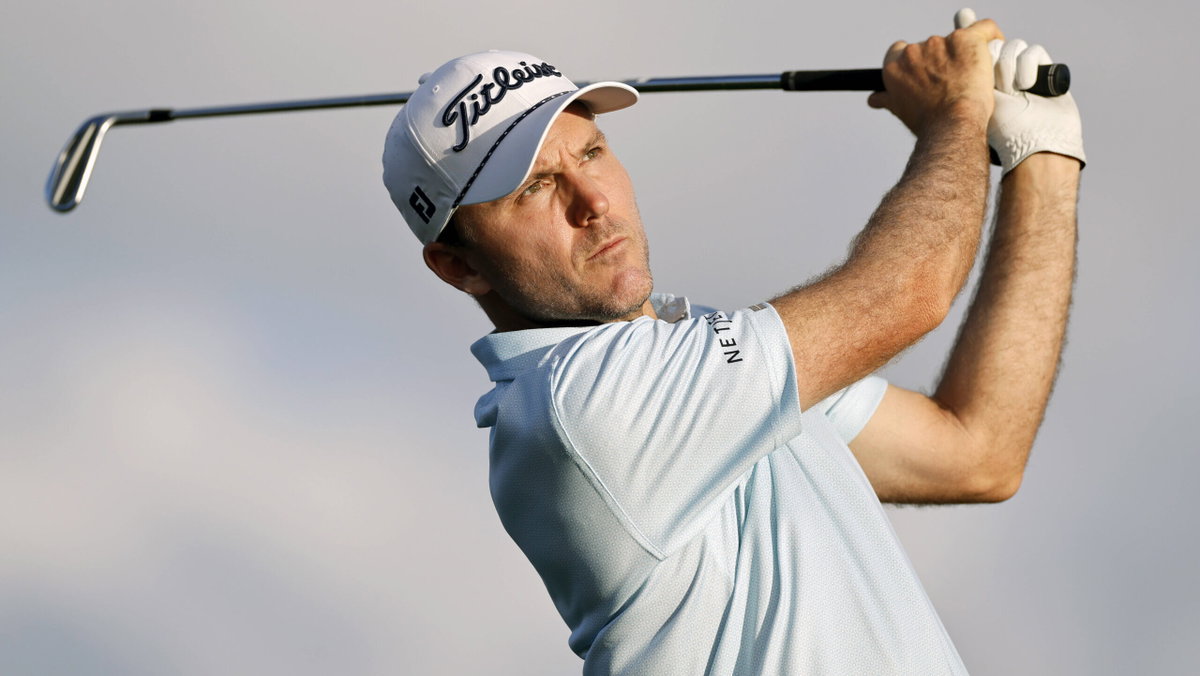
Russell Henley has been one of the most outspoken voices on Tour when it comes to structural change. Speaking on The Shotgun Start podcast during Travelers Championship week, the six-time PGA Tour winner offered his take on the Tour’s sweeping new competitive model. And while his support for the direction was genuine, his hesitation about the details was just as clear.
Watch What’s Trending Now!
“Yeah, I mean, I still haven’t had a second to sit down and look at the exact details. I feel like the schedule has been an ongoing question mark in terms of the signature events and where they should be on the schedule. Sometimes we’ve had them bunched around majors, and I think that’s just been kind of a constant thing the Tour has been going through.” Henley said on the podcast.
“I would say my reaction at this point in my career is I want to play against the best players as much as I can, and I want to see how good I can get at this crazy game. It’s so hard, and I love the challenge of it. Anytime I can have more opportunities to do that, I’m excited about it. That’s kind of my general opinion on all of it.”
The announcement Henley was questioned about came on June 23rd, when PGA Tour CEO Brian Rolapp, flanked by Tiger Woods at TPC River Highlands, unveiled the Tour’s most significant structural overhaul in decades.
Starting in 2028, the PGA will split into two concurrent tiers. The Championship Series, a 23-24 event, is the premier circuit for the world’s best players, with minimum purses of $20 million. The Challenger Series is a smaller circuit of 20 events with minimum purses of $4 million.
A formal promotion and relegation structure will connect the two, with at least the top 90 players from the Championship Series retaining their spots each season, while a minimum of 20 Challenger Series players earn a promotion.
Henley’s broad reaction, aired on Friday, was positive. At this stage of his career, he has won the Charles Schwab Challenge in May 2026 for his sixth PGA Tour title. For him, competing against the best matters more than anything else on the schedule. And for the same reason, he favors the new structure.
On the promotion and relegation system specifically, Henley drew on a personal experience to explain why he thinks it will work. He pointed to his 2012 Korn Ferry Tour season, where he finished in second place in Kansas City, but it wasn’t enough to earn his card. The setback worked as a motivation for him as he pushed for a win. In fact, he won twice that year, at the Chiquita Classic and the Winn-Dixie Jacksonville Open.
Thereon, he went on to win the 2013 Sony Open in Hawaii in his Tour debut. With that, he became the first rookie to win on debut in 12 years.
That urgency that he once craved and used as a motivation, he said, is exactly what a promotion pathway creates and is the best way to increase and enhance the competition.
However, Henley was equally candid about where the framework would fall short for him right now. He flagged two specific gaps. First, what happens to players who have already won? Does the Tour victory carry automatic championship protection? Or does everything run through the points list?
Second, the Fall Series still feels unresolved. He highlights that the players who don’t retain championship series eligibility will compete in a “last chance” series of four to six events after the regular season. But the Tour has not confirmed the full structure of how that series will work.
Russell Henley is not the only one in uncertainty at the moment. When pressed on eligibility questions at the TPC River Highlands press conference, specifically around career achievements and whether past champions would receive automatic access, CEO Brian Rolaap was honest.
“I think all those eligibility questions we are in the middle of answering, I think it would be premature to speculate or to give you part of the answer.”
Other players aren’t waiting for the fine print
While Henley’s opinion came with caveats, some of his peers at the Travelers Championship had a much simpler read on the announcement. Scottie Scheffler, the World No. 1, addressed the changes directly ahead of the tournament’s first round.
“I’m excited about it,” Scheffler said. “I think the competition will get better. Playing good golf courses against the best players in the world, for a player, I don’t think you could really ask for much more.”
Although Scheffler agrees it will become much harder to win tournaments, and it’s going to be a lot more different than the old days on the Tour. He adds that winning those championships will have a higher significance and be much more rewarding to the players.
Fresh off winning his second U.S. Open title at Shinnecock Hills, Wyndham Clark was equally direct.
“I think it’s going to be easier for fans to understand. When you’re watching a PGA Tour Championship series, you’re going to see all the best players.” Clark’s opinion is more towards bringing clarity to the players. He further added that he loves the idea of relegation and promotion.
Clark also called the match-play Tour Championship the highlight and credited Rolapp and the advisory board for the direction the Tour is heading.
That said, most of the players broadly sit in favor of the vision but are waiting on the details that will determine whether the system actually works for everyone inside the ropes.