
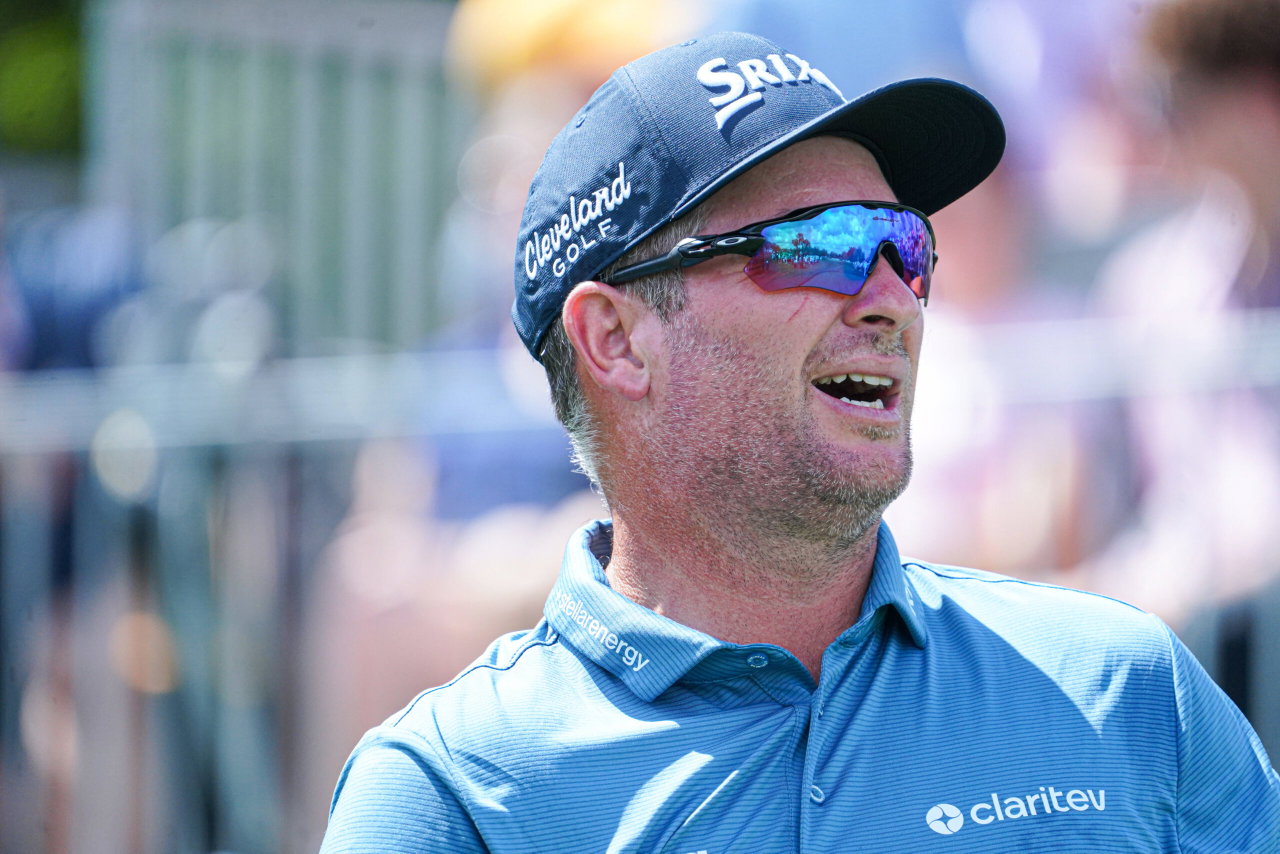
Slow play has been a big problem on the PGA Tour, drastically slowing everything and causing rounds to stretch into unbearably long durations. Take, for example, The Open last week. It took Scottie Scheffler’s group and Cameron Smith’s group roughly 5.5 hours to complete the first round. While it generally gets attributed to a larger field and tough course conditions, 154th Open winner Ryan Fox feels that the underlying problem is different. Speaking on the Fore Play podcast, he pinpointed exactly what frustrates him.
Watch What’s Trending Now!
“My biggest pet peeve, and I think a lot of guys on tour would say the same thing, especially the guys that are fast, is just not being ready. Like there’s too much of that on tour, and that annoys the hell out of me,” said Fox, who took just 22 seconds to nail the Open Championship winning putt. “It’s someone’s turn to go, and they haven’t even talked to their caddie about what they’re going to do. Or they haven’t had a look at the putt when they had a chance to, and then they go and do their whole routine, and it takes two minutes to do the whole thing. You’re like, ‘You can get around that.'”
Fox’s frustration stems from a simple reality: players have ample time to prepare—talk to their caddies about club selection or strategy, read the green, or think about their next shot—before their turn. But most don’t seem to do so. It’s important to note that Fox is not advocating for players to rush. Rather, he wants slow players to cut down on the time they waste without doing anything. His frustration spilled over in the next few words.
“There are times when you’ve got no choice, and you’re in someone’s way, and you just have to let them go, and then you’ve got to go do your own thing. But for the most part, in case you know this well, as you can do, you can do your work when someone else is doing something and just be ready when it’s your turn.”
Fox draws a line: 40 seconds over the ball is fine if you’re ready. A minute to get ready, then 40 seconds? That’s the problem. Fox is a fast player, and he has always been that way. When he was a kid and was playing with his father in corporate events, Ryan Fox was mindful of not holding up his playing partner. In fact, he is so quick that Scottie Scheffler, once playing in the same group, joked that Fox was not part of his group.
Fox also believes deliberation takes way more time than necessary.
“It’s not that difficult to pick a shot and pick a club,” the Kiwi golfer was quoted as saying by Golf.com. “It’s always going to be between one or two clubs and into the green, and I just see the shot quickly, pick a shot quickly, and the less time I have to think about it, the fewer bad things can creep in there.”
That was the philosophy behind Fox’s career-defining putt at Royal Birkdale. After Sam Burns saved par on the 72nd hole, Fox just went up, lined up his 11-footer birdie putt, and holed it. All within 22 seconds. So it’s quite natural that the Kiwi golfer wants everyone to pace up and stop wasting time. It makes things more palatable for viewers at home too.
There are also, of course, policies to prevent players from taking forever to take their shots. Arpichaya Yubol was handed a pace-of-play penalty, which was a one-stroke penalty, on May 30, 2026, during the second round of the ShopRite LPGA Classic in New Jersey. Despite that, the rule doesn’t come into effect often.
That’s exactly what frustrated Colin Montgomerie during the Open Championship. Speaking about the slow pace of play, he explained, “They say there’s a huge deterrent for slow play. 5 hours 40, was anybody penalized yesterday? No. Something’s gotta be done because it’s too slow.” Even former World No. 1 Jon Rahm has asked for serious consequences for slow play.
He wanted warnings to remain in effect throughout an entire tournament rather than resetting after each round. Ryan Fox particularly impressed Rahm. He took only 22 seconds to hit his winning putt after Sam Burns holed his putt. Rahm believes Fox’s performance could show other golfers that playing quickly is possible without hurting performance.
That being said, slow play continues to frustrate players on the course. While some have learned to live with it, others are growing increasingly fed up.