
LIV Golf CEO Scott O’Neil is now looking for $250 million from outside investors to keep the league running past August. To secure the amount, O’Neil presented an argument about the league becoming profitable in just two years. Initially, he’d said it would take a decade before the event could break even. But O’Neil has made some moves that suggest that things might actually be more dire.
Watch What’s Trending Now!
LIV has brought in Ducera Partners for investment advice, Gibson Dunn & Crutcher for legal help, and AlixPartners for business consulting. Two new independent board directors have joined: Gene Davis, who works in turnaround management, and Jon Zinman, who advises companies after bankruptcy. The hires show a reality that does not match LIV’s public statements.
Bloomberg reports that the league is preparing for a possible Chapter 11 bankruptcy filing in the United States. This could include moving its headquarters to benefit from more favorable restructuring laws. LIV currently operates in the UK, the U.S., and Jersey. Filing for Chapter 11 would not mean the league shuts down right away. Instead, it would let LIV keep running under court supervision while it renegotiates or cancels player contracts, venue agreements, and sponsorship deals.
Imago
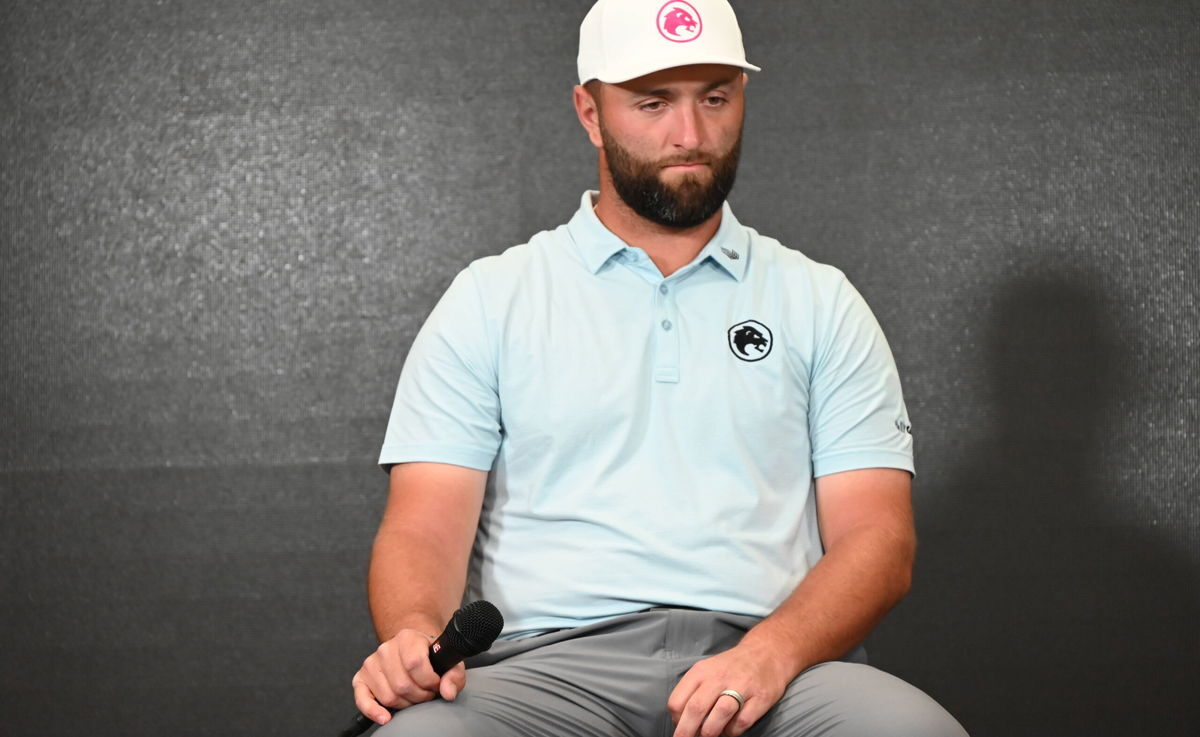
Jon Rahm, Bubba Watson And Phil Mickelson At LIV Golf press conference, PK, Pressekonferenz in Miami – 03 Apr 2024 Captain Jon Rahm of Legion XIII GC shown, Captain Phil Mickelson of HyFlyers GC not shown and Captain Bubba Watson of RangeGoats GC not shown speak at a press conference during the practice round before the start of LIV Golf Miami at Trump National Doral in Miami. Miami United States Copyright: xKylexMazzax/xSOPAxImagesx KMZ_4517
The numbers are stark. LIV Golf Ltd’s UK arm lost $461.8 million in 2024, with revenue at only $64.9 million. That is about $8.50 spent for every dollar earned. Total international losses since the league began are now over $1.1 billion, not counting the U.S. The PIF has put in more than $5 billion since 2022, and that could reach $6 billion by the end of this season.
Rory McIlroy, who previously encouraged the PGA Tour to work with the PIF, recognized the recent changes at the PGA Championship this week. “I’m glad I was wrong,” McIlroy said. “The PIF’s priorities shifted, and that leaves LIV in a pretty precarious spot.” He also said it felt like the rug had been pulled from under the players without warning, which is what happens when something relies on just one, geopolitically sensitive funding source.
LIV is still searching for new investors. O’Neil has mentioned interest from private equity, family offices, and wealthy individuals. A smaller league with fewer events, lower prize money, and possibly a partnership with DP World Tour is still possible. However, the original LIV model from 2022 relied entirely on funding that was never guaranteed. As reported in a previous report, O’Neil has now admitted that the league has never operated without outside support. That is no longer the case.
The current financial crisis has changed the situation for LIV players. The contracts that once seemed secure are now uncertain, showing how quickly the landscape has shifted since LIV began.
What LIV Golf’s restructuring means for Jon Rahm, Bryson DeChambeau, and the PGA Tour
Players facing this financial situation have limited choices. Jon Rahm, LIV’s biggest signing with a reported $300 million contract, made his position clear at LIV Golf Virginia earlier this month.
“I have several years of my contract left, and I’m pretty sure they did a pretty good job when they drafted that, so I don’t see many ways out. I do believe that for the business plan to change, whatever they’re coming up with, there will need to be some concessions on our part.”
Bryson DeChambeau is in a different position. His contract ends this season, which means he could leave. But the PGA Tour has set tough terms for players who want to return. When Brooks Koepka returned in January, he had to give up his player equity shares for five years, miss out on the $100 million FedEx Cup bonus program, and make a $5 million charity donation. PGA Tour CEO Brian Rolapp said this could mean losing $50 million to $85 million in earnings. Rolapp has made the Tour’s stance clear: rules were broken, and there are consequences.
The 2026 season is underway. Events are on the calendar. Players are still competing. But every tournament now takes place amid uncertainty. LIV is trying to secure new investment and is also preparing for what happens if that fails. LIV created a product, but it did not create a stable business. Only one of those problems can be solved with Saudi money.