
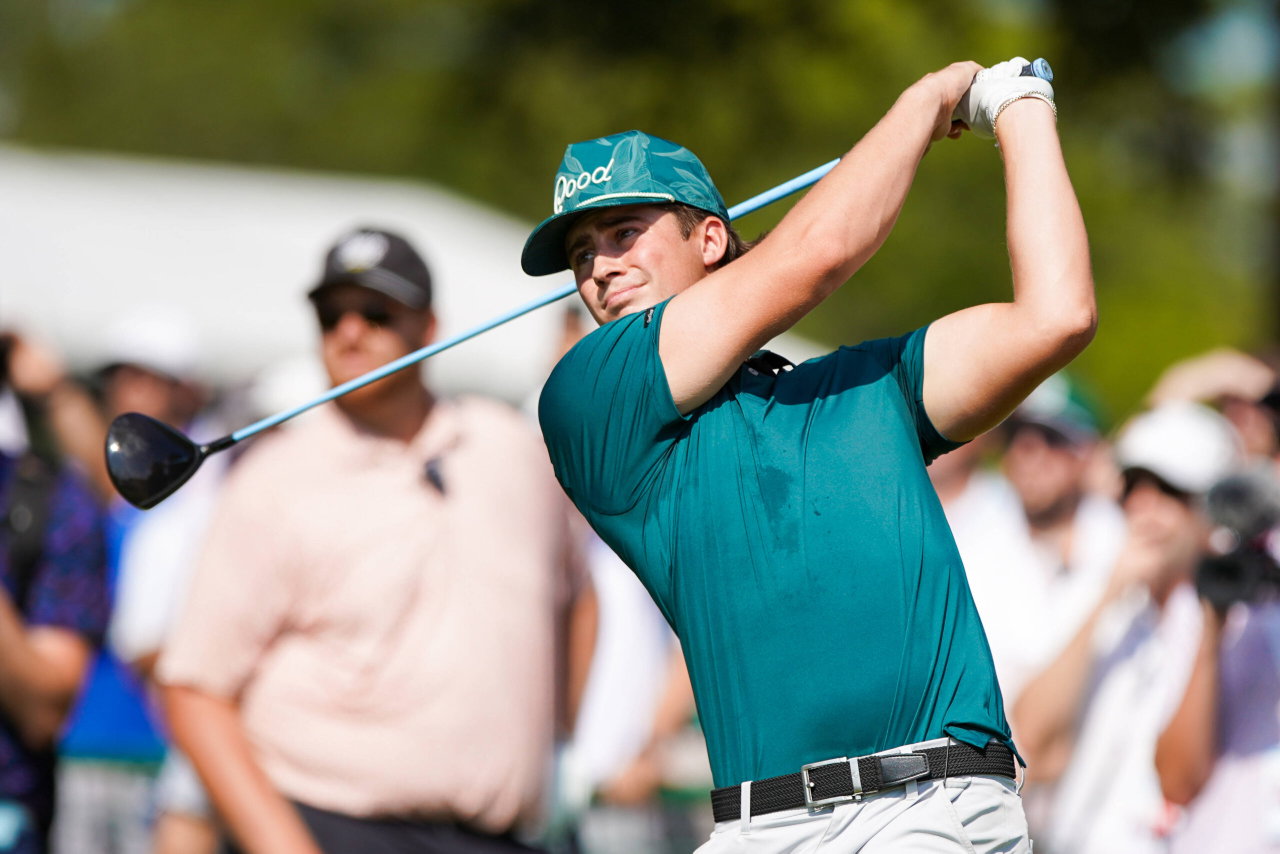
For years, Garrett Clark carried a quiet fear behind the camera. While millions watched him laugh on Good Good, his heart could suddenly race up to 280 beats per minute. Four days after a catheter ablation, the YouTube golf star shared the emotional reality of living with that condition.
Watch What’s Trending Now!
The heart rhythm issue had affected Clark since childhood. Stress or poor sleep often triggered the sudden spikes.
“If I’m a little stressed or maybe don’t have enough sleep or stuff like that, then my heart essentially will go from beating normally to all of a sudden beating out of rhythm; sometimes it can beat up to 280 beats per minute. It’s a pretty scary feeling when it happens,” Clark said on his vlog, Garrett Clark Vlogs.
Catching those unpredictable spikes became an exhausting search for answers.
Seven Years of Waiting for Answers
For years, a clear diagnosis stayed out of reach. A two-week Holter monitor picked up signs of atrial fibrillation (AFib), supraventricular tachycardia (SVT), and ventricular tachycardia (VT). Those mixed readings left Clark without one certain answer.
People with heart rhythm issues are too often told it is just anxiety. Tired of living without clarity, Clark decided to act.
Do You Think Justin Thomas Can Win Again With His New Caddie?
“I’ve been begging for these answers for the last basically seven years of my life. It’s time I finally do it,” he said.
He also urged viewers with similar symptoms to see a specialist.
“If you do have a Holter monitor, make sure you get it looked at by an electrophysiologist. Those are the people that specialize in this,” Clark said. “Make sure that you take those things seriously. Go to the cardiologist.”
With that choice made, Clark headed to the hospital.
A Sleepless Morning and a Seven Hour Ordeal
Clark returned from Good Good’s 50 day U.S. road trip and had his procedure at Baylor Scott and White days later. He had never undergone sedation previously and woke at 4:00 a.m. ahead of his 7:00 a.m. appointment. Nervousness kept him from sleeping.
He noted that a catheter ablation is a minimally invasive procedure rather than a traditional surgery. Doctors guide a catheter through the groin to cauterize misfiring heart tissue and leave healing scars. They used twilight anesthesia so medication could trigger his abnormal rhythm, warning they might wake him if needed.
The medical team kept him calm, and Clark soon drifted off. He dreamed about YouTube golf with friends Matt Scharff and Luis before waking in recovery. Far more time had passed than planned.
“My surgery was supposed to take 2 to 4 hours. It took 7 hours,” Clark said.
That longer procedure pointed to unexpected findings in his heart.
Bittersweet News After Waking Up
Clark woke up sore on both sides of his groin instead of only the right. His electrophysiologist, who performs over 300 ablations a year, told Clark’s family that doctors found two forms of SVT: AVNRT and AVRT.
“Most people don’t have two different types of heart rhythm issues, but especially two different types of SVT,” Clark said.
The doctor fully ablated the SVT, causing Clark’s fastest heart rates. The second type had too many small misfires in a complex spot to remove completely. Instead, the doctor created scar tissue “speed bumps” to slow misfires as the heart heals over three months.
Doctors also saw a one-minute AFib episode during induction that stopped on its own. When Clark asked if that meant higher long-term AFib risk, the answer remained unclear.
“The answer is still that’s a little unknown. It’s like that’s a kind of sit-and-wait situation, which is totally fine,” Clark said.
Now comes a patient stretch of healing and recovery.
Healing and Looking Ahead to 2027
Because doctors accessed both groin areas, Clark cannot golf, lift heavy items, or do hard workouts for two to three weeks. Those limits protect his scars from dislodging, bleeding, or infection, while full tissue healing takes three months.
Even without eliminating every trace of the second SVT, Clark felt grateful for the outcome.
“All in all, surgery went very good. Technically speaking, it could have went better because we could have gotten 100% of the SVT, but it wasn’t possible with how everything was positioned in my heart,” he said.
With seven years of uncertainty finally behind him, Clark is ready to put his energy back into what he loves. Once cleared, he plans to grow his rebranded channel, Garrett Clark Golf, while staying committed to Good Good as he looks ahead to a big 2027.