
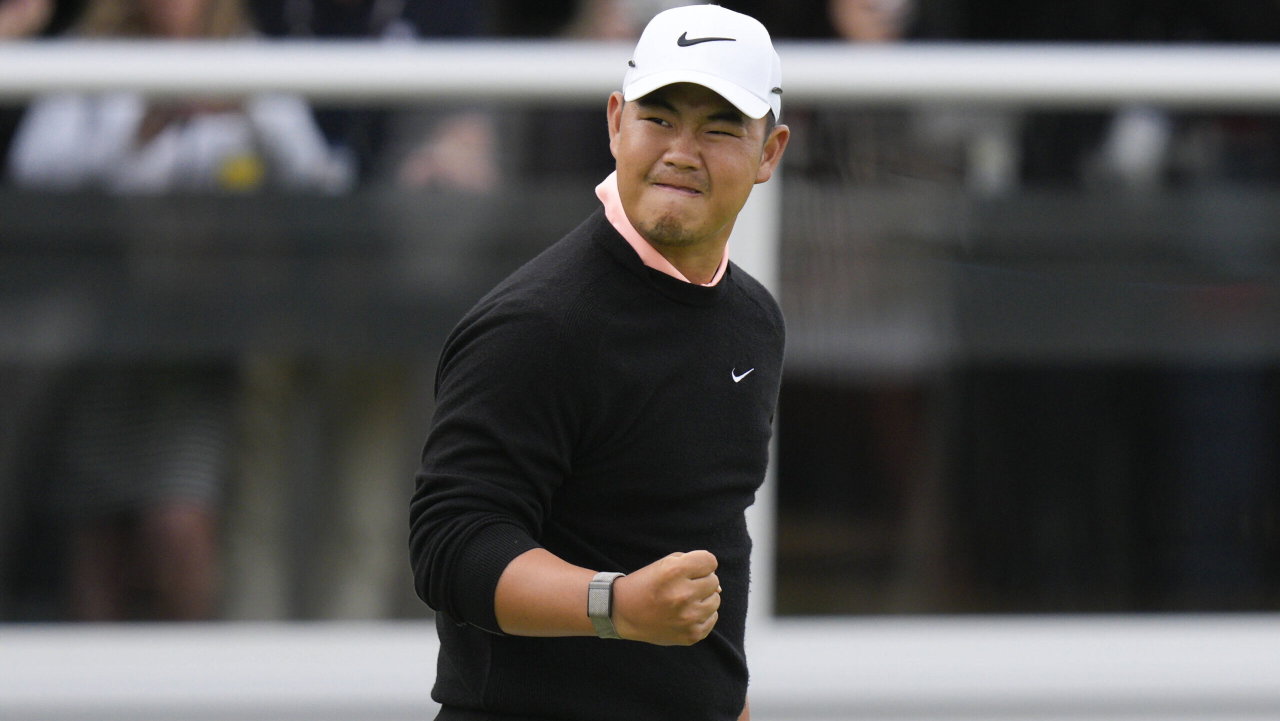
Two years ago in Paris, Tom Kim entered the final round of the Olympic golf tournament in medal position, with a military exemption within reach. But he faded on the last day and finished eighth, leaving him with the memory of a near miss. That experience lingered as he returned to the international stage this week in Japan, where he had another chance to change the story. This time, Kim made sure the ending was different. He shot a final-round 6-under 64 at Kasugai Country Club to win Asian Games gold by three strokes and secure the military exemption that had eluded him in Paris.
Watch What’s Trending Now!
After the win, he released a statement: “I’m more proud that I’m able to bring a medal for my country. I tried not to think about it. I just tried to play (the) best for my country. It’s a big stepping stone. I think the pressure that I felt this week, I’ll be able to implement it in my upcoming seasons.”
That sounds like a golfer talking about a normal win, not someone who had just secured an exemption from nearly two years of military service—and that may be the most impressive part of how Tom Kim handled the week. Despite the enormous stakes, he focused on golf and treated the tournament like any other competition.
The stakes, however, were anything but ordinary. As an able-bodied South Korean man, Kim needed to complete approximately 18 months of military service, usually before his 28th birthday. At 24, he was getting closer to that deadline. South Korea grants military-service exemptions to athletes who win gold at the Asian Games or an Olympic medal of any color. Rather than completing the full service, exempted athletes still undergo basic military training, which lasts less than a month. For golfers, those two achievements represent the primary paths to an exemption—and after coming up short in Paris, Kim had just secured one in Japan.
The timing made Kim’s performance even more remarkable. He arrived in Japan straight from the Presidents Cup at Medinah, where he led the International side with four points in five matches, including a 3&2 singles victory over Wyndham Clark. The Presidents Cup is a team competition between the United States and an International team representing the rest of the world outside Europe.
Despite the quick turnaround, Kim quickly found his rhythm. The turning point came Friday, when he began the third round two shots off the lead and responded with an eagle and five birdies to shoot a 6-under 65. That moved him to 12 under and gave him a one-shot lead heading into the final round. His surge also helped put South Korea atop the team standings, with two military exemptions available for the tournament’s gold-medal-winning team.
On Saturday, he finished the job. His rounds of 67, 66, 65, and 64 improved every day, and he ended at 18-under 262. He won by three shots over Japan’s Kazuki Higa, China’s Ding Wenyi and Thailand’s Sadom Kaewkanjana. This was no fluke. Kim finished third at the U.S. Open and won the Scottish Open in July, so he arrived as one of the field’s in-form players.
Soccer fans will remember Son Heung-min going through a similar experience in 2018. With Tottenham’s permission, he joined South Korea at the Asian Games, knowing that a gold medal would end his national-service obligation. South Korea beat Japan 2-1 in extra time, and with the victory came the exemption Son had been seeking.
The policy extends beyond athletes, too. South Korea also grants exemptions to certain classical musicians, dancers, and other artists who meet the government’s criteria for contributing to national prestige. That broader system helps explain why the stakes surrounding Kim’s victory were about more than a golf medal: for him, as for Son, the result changed a major obligation waiting beyond his sporting career.
South Korea lost to China in the team event, meaning Tom Kim’s teammate S.H. Kim (Kim Seong-hyeon) missed out on a military exemption. Do-yeob Mun had already completed his military service. South Korea introduced the exemption over 50 years ago, but some people still question whether the system is fair.
Kim can now plan his seasons, majors, and team events without worrying about a lengthy interruption in his late 20s, when many golfers are entering their prime. That alone gives him significant continuity. But his own words suggest the bigger takeaway may be what he learned from the experience itself. Kim said he can carry the pressure he faced this week into future seasons, potentially turning an exhausting week into a source of confidence for whatever comes next.
If that proves true, the value of the gold medal could extend well beyond the military exemption. Kim won it on almost no rest, following his run at the Presidents Cup with the added pressure of knowing exactly what was at stake. Now he can take both the exemption and that experience into the rest of his career. For a player already finding success in 2026, that could make him an even tougher opponent for the rest of the field.
Known as Kim Joo-hyung in South Korea, the 24-year-old can now call himself an Asian Games champion, with the military exemption he had been chasing finally secured. The immediate question is what comes next. With that obligation no longer hanging over his career, will the freedom to plan his future without interruption allow Kim to perform at an even higher level on the PGA Tour?