

English pro golfer Piers Berrington has spent years grinding through professional golf’s various mini-tours, where he has claimed ten titles. The numbers behind those results, though, tell a story far removed from the seven and eight-figure purses dominating headlines. According to the 29-year-old, even a strong week on tour comes with a catch. He laid that harsh reality bare.
Watch What’s Trending Now!
“You see a lot of guys who will start the season and run out of money. They’ll start the season, let’s say they have £20,000 and once that’s gone – if they haven’t had a good season where they’re not making any money – they can’t play anymore. I think that’s what you see more. You see more at the end of the season the fields drop off a lot because boys just can’t afford to do it anymore,” the OWGR’s 1738-ranked golfer revealed to Golf Monthly on June 10, 2026.
Giving the example of a Clutch event, Berrington said that £500 ($670) goes for entry to play the event alone. Then there’s £20 ($27) on top of that for the course guide. With transportation, accommodation, food, coaches, and more, the ballpark number, according to him, goes anywhere around £900 ($1200) a week and £40,000 ($53,590) for a season.
Sure, they might have equipment sponsorship, but that support alone wouldn’t get them far on their journey, not with the prize pool on the line. Signature Events on the PGA Tour have a $20 million purse, while LIV Golf events have $30 million on the line. Even the DP World Tour events now have over $3 million in prize money in many tournaments, but it’s significantly less on mini-tours.
On the Clutch Tour, for example, Berrington revealed that the total prize money is £58,000 ($67,000). Of these, the winner gets just £8,000. He addressed his earnings from the Rapsodo Championship, which took place in the last week of May.
“I finished T6th last week and won £1,600, I think it was. So you’ve covered your costs, but you’ve had to finish sixth that week,” he added.
The T6 finish helped him move from 1889 to 1782 in the rankings. A week later, he finished T7 at the Caddy Comps Championship to rise 44 spots in the OWGR. The rankings leave him far away from the big tournaments, and consistently breaking even with the prize money in smaller tournaments in a field with over 150 professionals is tough. This is a reason many even have to leave their dream of playing on the biggest stages.
Berrington, though, can keep playing as he has built himself a good sponsorship portfolio to have something more than the money from his golf to keep him going. The golfer, who turned pro in 2018, has the following sponsorships based on his Instagram profile.
- J. Lindeberg (clothing)
- All Avenues Golf (YouTube/content brand)
- IM8 Health (nutrition)
The struggle spans continents. Pros on mini-tours worldwide report identical math.
Other professionals who spoke about financial struggles on mini tours
Fredrik Lindblom, a Swedish mini-tour pro, spoke on the same in early May 2026. Uploading an Instagram post, he revealed he finished 9th out of 168 players at the SoCal Open. The purpose of the post was to calculate his profit.
He revealed that the entry fee was $800, and his earnings for 9th place were $843.75. This means that by eliminating the entry fee alone, he had only a $43 profit. Now, there were other expenses, such as Airbnb, food, gas, practice rounds, and yardage booking. Collectively, they cost him $945. So, despite a 9th finish, the outcome was -$901.25.
Kenzie Wright wrote about the Epson Tour in February 2023. Sharing insights about her 2022 spending, she said that she spent $16,826.47 on entry fees and yardage alone across 14 tournaments. However, her winnings were only $8,015.
Even when a professional goes to the next tier, like the Korn Ferry Tour, the earnings aren’t that much. James Nicholas shared his earnings and expenses for the 2025 season in an Instagram post. His total expenses were $151,249, and his total earnings were $255,057. This left him with just over $103,000 in net income at the second tier of professional golf.
This extends to the top tier, too.
Speaking on the Full Send podcast, Bryson DeChambeau said, “Anybody that is outside the top 165 on the money list is losing money every year. They don’t make money. They are losing money.”
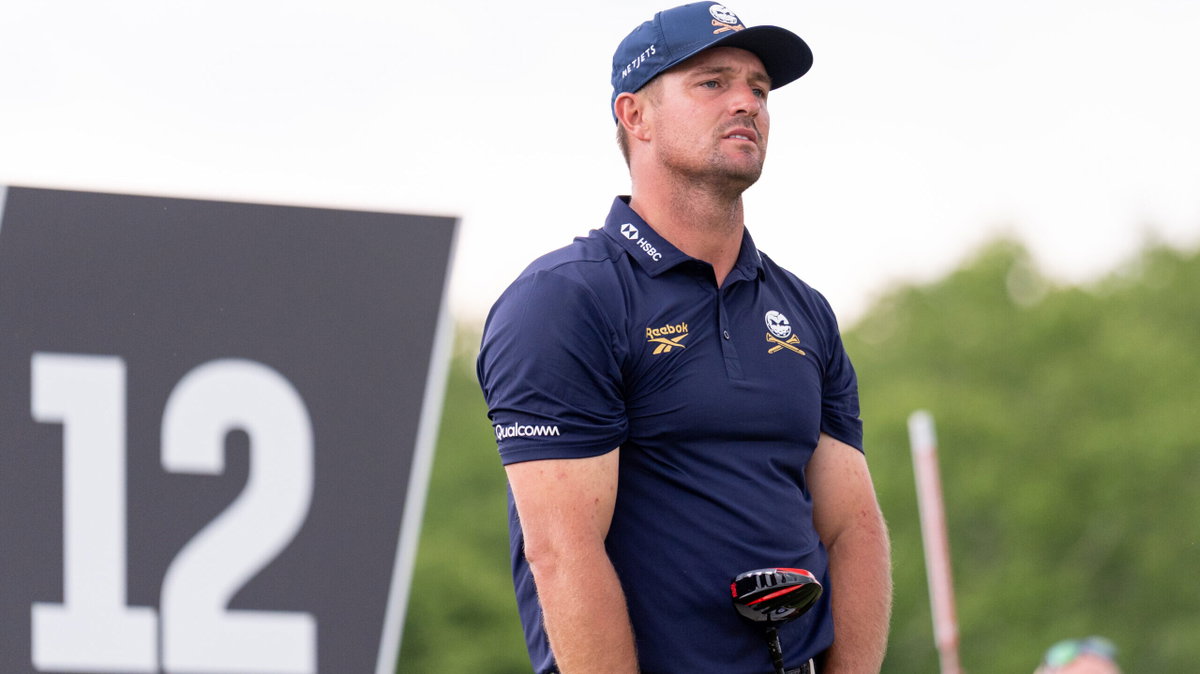
Imago
May 10, 2026; Sterling, Virginia, USA; Bryson DeChambeau reacts to his drive during the final round of LIV Golf Virginia golf tournament at Trump National Golf Club. Mandatory Credit: Jack Power-Imagn Images
The American professional said that golfers are independent contractors who must cover all their expenses. So, when all expenses are deducted, professionals who don’t play consistently find it challenging to break even.
Ben Griffin’s remarks on his finances for the 2026 season prove DeChambeau’s point. Griffin finished T3 at the Charles Schwab Challenge, earning $524,700. But before that, the World No.15 had made $2.5 million in 2026 and spent around $750,000 of that on unavoidable expenses.
For Berrington, those stories reinforce the reality he described on the Clutch Tour. Whether it’s mini-tours, developmental circuits, or even golf’s highest levels, the path to success depends more on financial survival than it does on performance on the course.