Imago
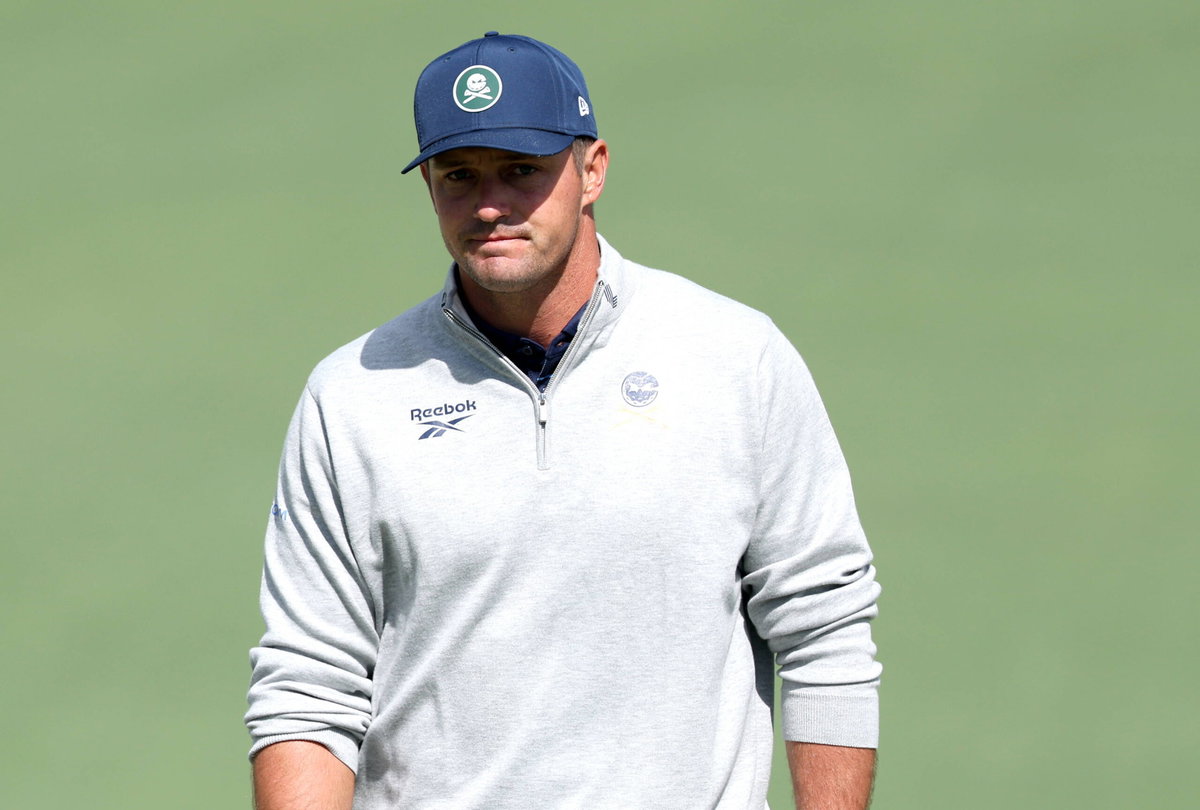
Golf 2026 Masters Tournament – Round 1 Bryson DeChambeau of the USA on hole 2 in Round 1 of the 2026 Masters tournament in August, Georgia, USA, 09 April 2026. Augusta United States PUBLICATIONxINxGERxAUTxINDxONLY Copyright: xCHRISxTORRESx
Imago
Golf 2026 Masters Tournament – Round 1 Bryson DeChambeau of the USA on hole 2 in Round 1 of the 2026 Masters tournament in August, Georgia, USA, 09 April 2026. Augusta United States PUBLICATIONxINxGERxAUTxINDxONLY Copyright: xCHRISxTORRESx
Just days before Augusta National would deliver a humbling verdict on his game, Bryson DeChambeau was making headlines for a different reason: the acquisition of a new golf technology venture. While the move signaled his ambition to perfect the sport, his performance at the Masters told a very different story.
Watch What’s Trending Now!
On April 7, DeChambeau announced his acquisition of Sportsbox AI, a platform co-founded by former LPGA player Jeehae Lee. As part of the deal, he introduced SAMI, a new Google Cloud-powered AI motion assistant set to launch within the Sportsbox app later this year, signaling a major new business focus for the golfer.
“This is about making golf more accessible, especially premium coaching,” DeChambeau said via Business Wire. “With Sportsbox AI and Google Cloud, we’re building something that brings real coaching to anyone with a smartphone, not just elite players.”
The technology they are trying to incorporate is called SAMI. It utilizes a patented 3D motion capture system to transform any swing recorded on a smartphone into a fully 3D-rendered model. Powered by Google’s Gemini, it analyses thousands of biomechanical data points for each swing and delivers coaching insights within seconds.
As for Lee, the acquisition represents a full arc of the platform she built to solve a problem she felt as a player. “What am I doing well? What do I need to get better? And more specifically, what actually changes in my swing when I hit well versus when I don’t?” she said. “That’s the piece that had traditionally been a mystery without the right data.”
This search for real-time feedback is universal, whether you’re a beginner or an elite pro. For amateurs, especially, who often lack access to professional caddies or coaches, this technology could provide tips to improve skills.
DeChambeau aims to frame the venture as broader than performance gains at the elite level. He stated that the goal is to democratize access to premium coaching, bringing tool-level analysis to any golfer with a phone.
An opening-round triple bogey came at the 11th, where DeChambeau needed three attempts to escape the greenside bunker. In the second round, another triple followed at the 18th—he stood on the tee needing only a bogey to make the cut, but ended up missing the cut by two shots.
DeChambeau has now recorded 16 doubles and two triples across his past seven Masters starts, and this week added two more triples to that tally, both from the sand, both decisive.
“I need to improve my iron play,” DeChambeau said after round one. “I was able to drive the ball well on numerous occasions.”
The contrast is glaring. DeChambeau closed an acquisition two days before Augusta that claims to improve performance for elite golfers, but then produced arguably the worst two rounds of his Masters career. Whether the off-course ambition is affecting his on-course preparation is a question only he can answer. But one thing is clear: his footprint beyond the ropes is growing fast, and his results inside the ropes, at least this week, did not keep pace.
Written by

Edited by

Abhimanyu Gupta