
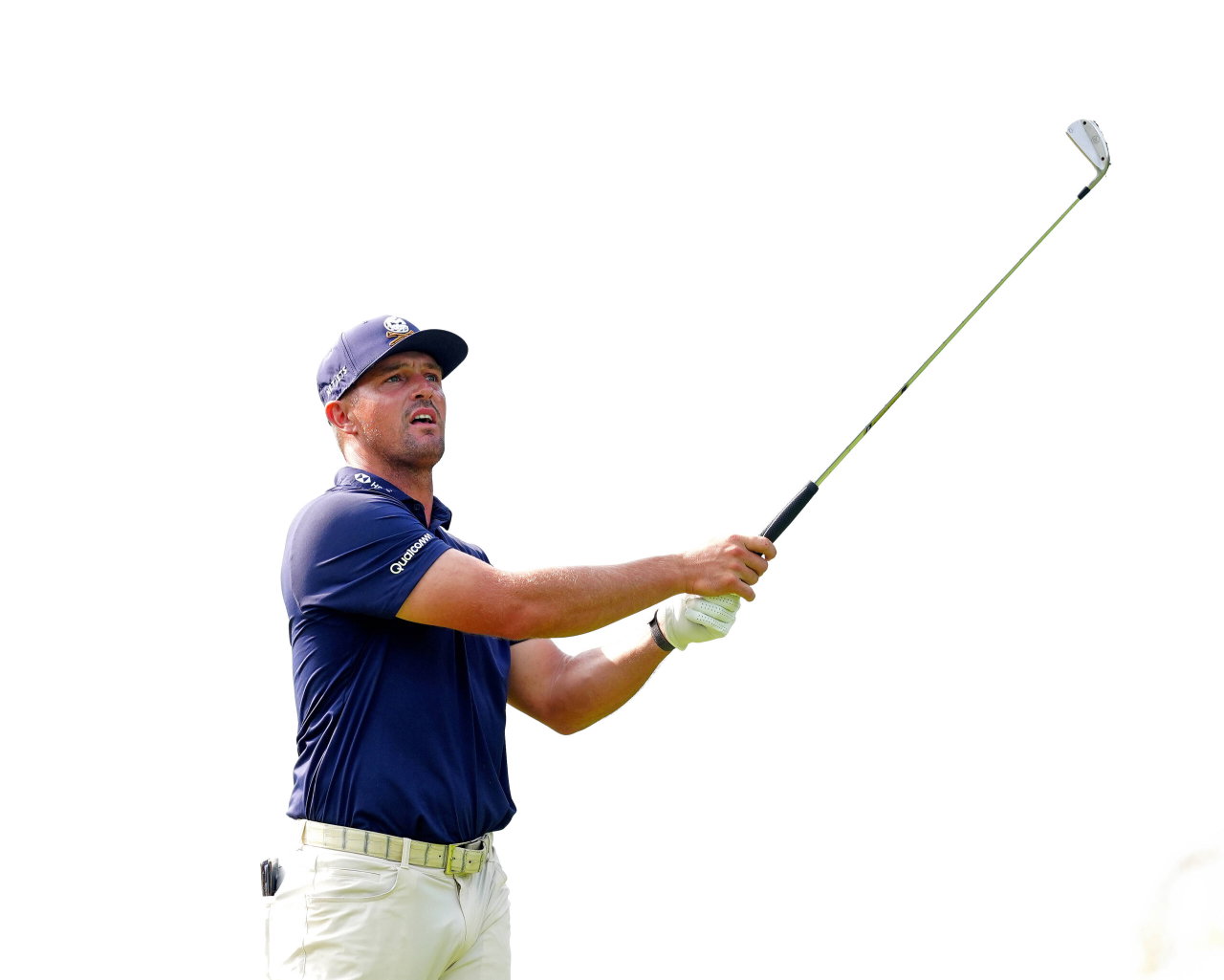
When Brooks Koepka returned to the PGA Tour in January, it initially seemed like the first sign of a broader shift, with more LIV Golf players potentially following him back. But that hasn’t happened. The tour offered the same return option to Bryson DeChambeau, Jon Rahm, and Cameron Smith, yet none chose to make the move. As a result, Koepka’s return now appears less like the beginning of a LIV exodus and more like an isolated exception. Rather than setting a precedent that others have followed, his decision has so far remained a one-off.
Watch What’s Trending Now!
That raises another question: if more LIV Golf players change their minds, how welcome would they actually be on the PGA Tour? In a new Golfweek column, Eamon Lynch took a blunt view, suggesting that not every player would be equally easy to bring back. Bryson DeChambeau, in particular, appears to face the biggest hurdle. Lynch argued that PGA Tour CEO Brian Rolapp might make an internal case for players who would strengthen the product, and he points to Jon Rahm, Tyrrell Hatton, Cam Smith, and Joaquin Niemann as examples. Those names are Lynch’s examples, however, not a list the PGA Tour has publicly confirmed. That distinction matters, especially considering where DeChambeau might stand if he ever sought a return.
But even in Lynch’s view, a return would not come without conditions. He argues that players seeking to come back would need to show enough humility to signal that they recognize their previous decision was a mistake, even if they never explicitly say so. They would also need to relinquish their equity—or ownership stake in the Tour’s business—for an extended period, potentially permanently. Additionally, Lynch believes that any returning player could face a request to make a substantial charitable donation, one he anticipates would greatly exceed Koepka’s reported $5 million contribution. It is important to stress, though, that these are Lynch’s expectations for what a potential return could require, not conditions the PGA Tour has denounced.
Koepka’s agreement gives a clearer picture of what a return actually costs. Under the PGA Tour’s Returning Member Program, he agreed to give up his player equity for five years, sit out the 2026 FedEx Cup bonus program, and make a $5 million charitable donation. PGA Tour CEO Brian Rolapp estimated that the combination of those concessions could amount to roughly $50 million to $85 million in lost earnings. Against that backdrop, Lynch’s point is straightforward: players who view those terms as too steep still have another option. They can remain with LIV Golf and continue their careers outside the PGA Tour.
The more revealing part of Lynch’s argument, though, involves the PGA Tour’s board. According to a source he describes as a well-placed insider, only one board member still favors punishing LIV defectors harshly. On the surface, that could suggest the resistance to welcoming players back has softened. But Lynch feels there is an important catch: the same insider claims that no board members are openly advocating for those players to return. That would leave PGA Tour CEO Brian Rolapp to make the case himself, while also taking on the political and organizational risk if a returning player later became a problem. The door may not be closed, but Lynch’s reporting suggests there is still no clear institutional push to open it.
That context matters because the PGA Tour board approved the Returning Member Program as a one-time measure in January. That could suggest the board made the decision around one specific player and one specific set of circumstances, rather than reflecting a broader change in the Tour’s approach to LIV players. Consider Lynch’s reporting in that context as well: one unnamed source supplied his account, and there was no independent confirmation. He further connects the board dynamics to what he describes as a tougher attitude within PGA Tour headquarters toward Bryson DeChambeau, suggesting that a future return for DeChambeau could face a different reception than the one Koepka received.
He cites the two-time major champion’s social media teasing, a lack of self-awareness, and his public evangelism for LIV 2.0. Lynch argues they make him “a liability no one is eager to assume.”
That is a columnist’s opinion, not a Tour statement. Rolapp’s pitch to a skeptical board would be hard enough for a quiet, humble returnee. It gets harder when the player is a very public promoter of the rival league’s relaunch. The irony is hard to miss. DeChambeau had the same open door as Koepka in January and walked past it. If Lynch’s reading is right, he may now be the player with the most to lose from that decision.
Lynch directs his ultimate point at the people advising LIV’s players. A lucky few, he writes, have already heard hard truths from their agents and prepared accordingly. The rest will discover they paid for lousy advice that sugar-coated reality, and they are still getting it. If Lynch is right, many players have been told the way back is easier than it is.
Here’s our read. The door back to the PGA Tour doesn’t appear welded shut, but it comes with a steep toll and no cheerleaders on the board. For DeChambeau, with his public promotion of LIV 2.0, it may be harder still. The real question is no longer whether LIV stars want back in. It’s whether the Tour is ready to make room for them, and on whose terms.