
The idea first came in early 2023, when the governing bodies decided they needed to curb the distance issue in pro golf. By the time December rolled around, the USGA and the R&A changed the tune and announced a universal rollback in phases. This June, they changed that, too. Call this indecisiveness or whatever you’d like, but it’s keeping the conversations alive. Well, that and experimentation.
Watch What’s Trending Now!
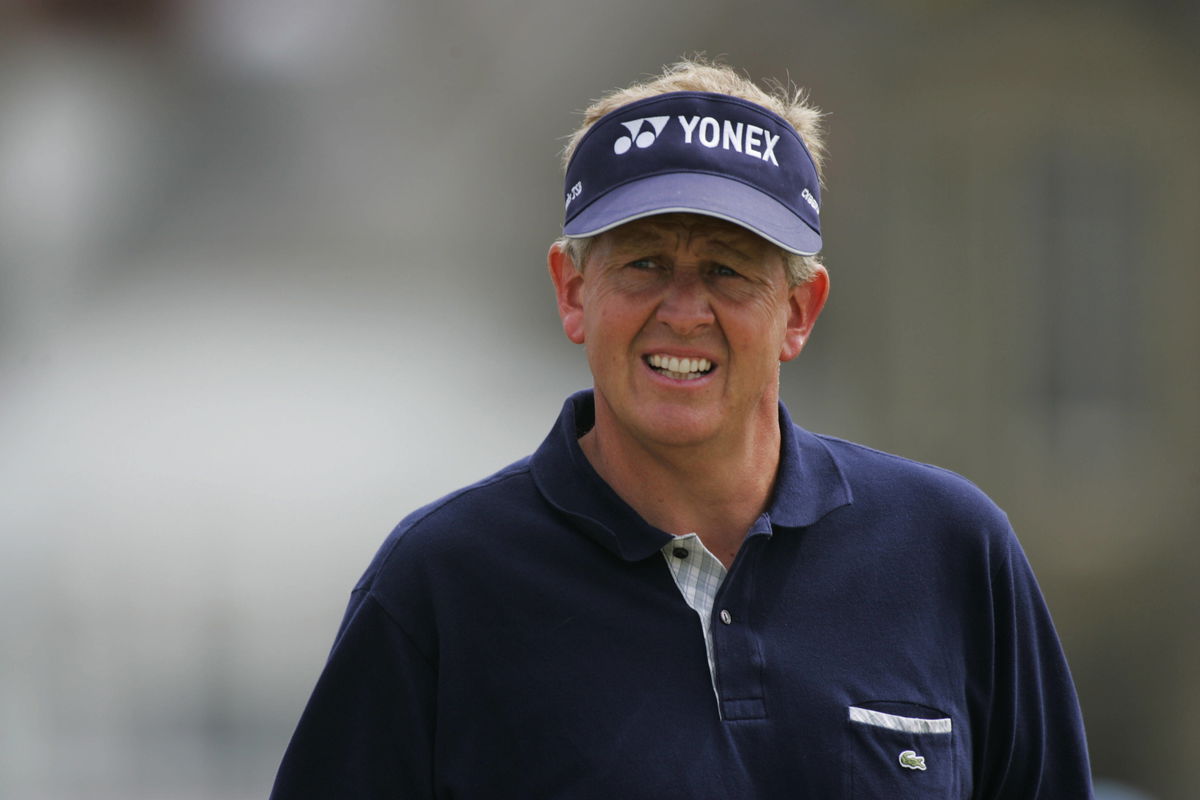
Before the governing bodies made a joint statement with the tours, Cameron Young played a golf ball conforming to the rollback changes. He did so at the PGA Championship and confessed it did not significantly affect his distance. Hall of Famer Colin Montgomerie, however, says this decision-making process is not paying attention to all the factors involved.
Talking about historic courses on the Old Boys, New Balls podcast, Montgomerie stated, “Lytham was not designed for someone who hits the ball 350 yards. The bunkers are obsolete. They are out of the way. We can’t keep buying new land because land costs time anyway… The only way is to reduce the ball and reduce the club. We can’t reduce the actual human specimen. But excuse me, it just used to be the ball and the club that were the problem. Now it’s the ball, the club, and the athlete. … The game’s become more one-dimensional.”
The balls make sense, you might think. The clubs make sense, too, but how are pros the problem? Well, precisely because we do not have golfers like Jack Nicklaus, or say, Arnold Palmer anymore. We have pros who regularly go to the gym, work out, and can hit longer than golfers did fifty years ago. Consider Bryson DeChambeau for a start, as Montgomerie did six years ago.
Back then, DeChambeau weighed 200lbs and led the PGA Tour in driving distance. In the first two rounds at the 2020 Charles Schwab Challenge, he averaged 343.8 yards off the tee. That, according to Montgomerie, was unsustainable for the future of golf. It was then. It is even now. Perhaps that’s why he knows what we can do to combat this distance issue.
“But of course, the powers that be don’t want that because what happens is the amateurs suffer because we don’t want to have two different golf balls for amateurs and pros. But I think the time has come now where they say, ‘okay, there’s your professional golf ball, there’s your golf ball for this tournament,” he stated.
He will find that Rory McIlroy agrees with that sentiment. As per HITC, McIlroy stated, “Leave amateurs alone. Bifurcate. I’m all for bifurcation. But I think at this level, to keep some of those golf courses relevant that we want to go to and we’re talking about, I think equipment, whether that’s ball, whether that’s club, whatever that means, I think it has to be regulated to a higher degree than it is at the minute.” There’s a sense in that argument.
St. Andrews and Royal Lytham, for instance, cannot be grown or renovated any further, as both venues sit tight on land with no room to push tees back or lengthen holes. They cannot, even in Montgomerie’s argument, be increased to 10,000 yards just to accommodate pros. But let’s go even further.
In the early 1900s, as per Golf, courses averaged 5,400 – 5,500 yards. In the sixty-something years between 1930 and the 1990s, the yardages increased by six/ year on average. In the next three decades, that too increased, with the PGA Tour courses now measuring 7,000 yards on average. How much can these courses be lengthened to suit the requirements of the modern golfers? Perhaps a lot, but will the courses retain the same value? In fact, will they be the same?
Moreover, Montgomerie’s points are not without precedent. John Daly topped the PGA Tour driving stats in 1996 with a 288-yard average. Today’s longest hitter averages 328, and the tour as a whole now sits at 303 yards, a number that would have led most fields a decade ago. Amateurs are moving too: the average recreational golfer now drives it 245 yards, up 32 yards from 2016.
Montgomerie’s own playing peak in 1993 predates almost all of that surge, which explains why he sees the modern distance as “bizarre.” How else to prove that point but by comparison? In an Instagram post, as per Todays Golfer, Montgomerie placed a driver he used at the 1984 British Amateur next to the one from 2026. The old one looked the size of a frying pan. Of course, that is an issue.
That’s why the governing bodies are working in tandem to resolve it, though it will be delayed. The USGA and R&A announced rollback regulations in 2023, aiming to trim professional distances by cutting how far the ball flies, with a 2028 start date. The plan was shelved this summer and pushed to at least 2030 after pushback from the tour, manufacturers, and players worried about cost and complexity.
After a joint discussion, the governing bodies are now open to “reconsider alternative approaches that may more materially impact the pace of future distance increases, while minimizing disruption to the overall golf market.” That’s a problem, too.
The discussion means the golf rollback would be implemented late until, at least, January 2030. That said, a sport cannot dial back a player’s skills. But not everyone saw the delay the same way. Trump welcomed it. Rather than rolling distance back, he suggested golf’s rulemakers just lock the ball at its current distance going forward.
What about the fans, though? Do they want it? Well, think about this: instead of golfers bombing it, the rollback will force players to think about angles, course management, and precision. That’d be interesting.
For Montgomerie, the conclusion is simple. The Tour must provide its own balls, much like any other sport does. He points to rugby, cricket, and tennis as examples of sports that supply their own equipment. If the ball is standardized for professionals, he argues, it could help save old courses.
Ultimately, Colin Montgomerie’s warning is really a question about what golf wants to reward. Until the ball changes, distance will keep deciding the answer, not the course.