
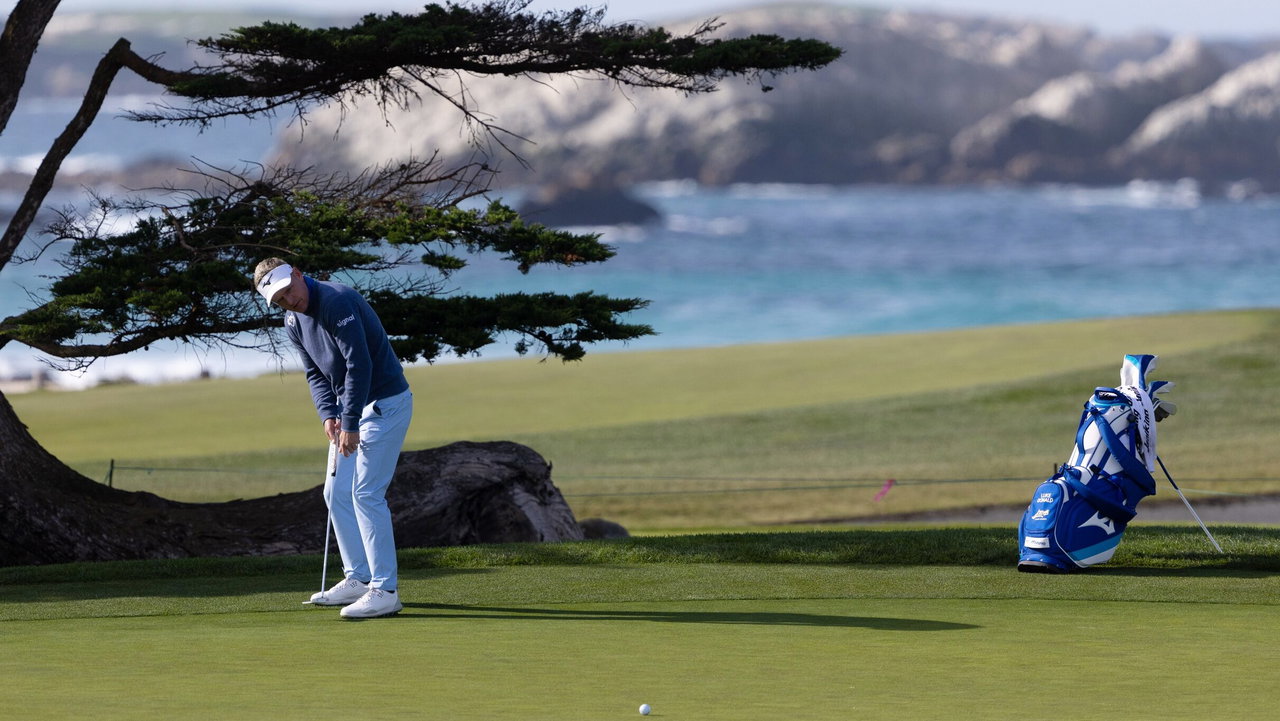
Before the Pure Insurance Championship teed off at Pebble Beach Golf Links on Thursday, the iconic course had already become a talking point. Joel Stewart, a golf enthusiast known for discussing course architecture, revealed that the legendary layout had been altered. However, the alteration didn’t sit particularly well with one player in the field.
Watch What’s Trending Now!
“This golf course is probably arguably in the top five in this country and around the world, to be honest,” Ernie Els said in an interview with Golf.com on Friday. “It’ll be a shame if the golf course becomes a little not the way it was meant to play.”
Els enters the week eighth in the Charles Schwab Cup points race, without a win yet in the 2026 season.
“Unfortunately, I know the USGA is trying to work on that golf ball, but it’s got to seriously happen quickly. You need to hit certain shots to certain holes. And with the ball flying this far, this golf course is going to get hurt. But it’s one of my favorites,” he continued.
The change in question is the removal of a tree on the par-4 16th hole, which historically required players to navigate a precise approach over a gully framed by two massive Monterey cypress trees that together acted like a “field-goal post.” The tree, positioned roughly 90 yards short of the green, was cut down a few weeks before the tournament and the spot was covered with fresh sod and ground-under-repair markings.
While some speculated that the tree was strategically axed for the upcoming 2027 U.S. Open, Pebble Beach Resorts confirmed the removal was due to the tree’s health. According to the resort, the tree had become severely diseased and infested beyond recovery. It was removed on the recommendation of a certified arborist to prevent the disease from spreading to neighboring trees. But not everyone was worried.
“I don’t think it’s that significant a change,” said Zach Johnson. “It’s unfortunate that the tree wasn’t in good health, and that’s what you got to do, but the integrity of the hole has not wavered.”
Justin Thomas, however, wasn’t convinced. He went on a social media rant a few days ago after hearing about the change. Without the right-side tree, he felt the fairway was more open on that side, allowing longer hitters to consider a ‘bomb-and-gouge’ approach, driving farther down the right and hitting a short wedge into a less-guarded green.
“You know, we were thinking about taking driver out and just sending it,” Ryan Armour said. “I think the long guys can really take it on if they want.” At the tournament itself, though, Armour and Johnson both opted to play the hole conservatively, laying up as they might have a decade ago rather than testing the newly opened right side.
In any case, it wasn’t just any tree. The trees on the 16th hole have a long history at Pebble Beach, dating back to the course’s first major redesign of the 20th century. Commissioned ahead of the 1929 U.S. Amateur, the changes by architects H. Chandler Egan and Robert Hunter introduced the cypresses that would remain a defining feature of the hole for nearly a century.
Their presence also shaped how players approached the hole, forcing them to position their tee shots carefully short of the fairway bunkers and trees if they wanted a clear opportunity at the green. However, the 16th is hardly the only hole that has been reworked at Pebble Beach this year. On the 4th hole, the tee was moved 15 yards left, while the fairway bunker complex was restored to its original design.
The 18th hole also received a significant restoration, with a second cypress tree replanted in the fairway after the original was lost during a 2014 storm. Despite these updates, the action at Pebble Beach has carried on largely undisturbed. Y.E. Yang took the outright first-round lead at 8-under, three strokes clear of Armour in second, as the tournament moved into its second round.
Still, it’s hard to ignore how one change triggered concerns among players who have loved playing the course for years.