
USA Today via Reuters
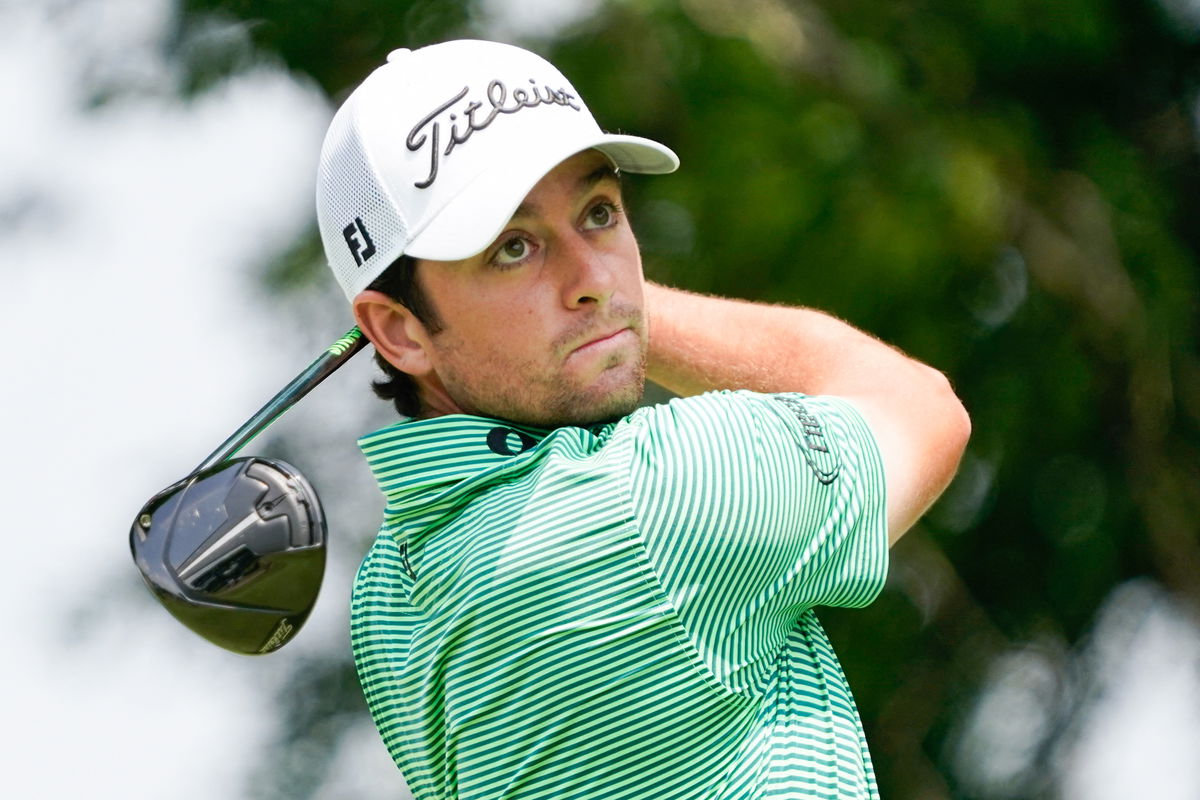
May 4, 2024; McKinney, Texas, USA; Davis Riley plays his shot from the second tee during the third round of THE CJ CUP Byron Nelson golf tournament. Mandatory Credit: Raymond Carlin III-USA TODAY Sports
USA Today via Reuters
May 4, 2024; McKinney, Texas, USA; Davis Riley plays his shot from the second tee during the third round of THE CJ CUP Byron Nelson golf tournament. Mandatory Credit: Raymond Carlin III-USA TODAY Sports
Davis Riley’s Zurich Classic victory proved his ball-striking credentials. His 2026 equipment choices reveal how he plans to sharpen them further.
Watch What’s Trending Now!
The 29-year-old enters the new season with a bag that embraces Titleist’s latest flagship hardware while stubbornly preserving a Callaway “unicorn” 3-wood. Performance logic drives every slot — not sponsorship aesthetics. As Riley carries a two-shot lead into the Sony Open’s final round at Waialae Country Club, his equipment tells the story of a player who prioritizes results over uniformity.
Top Stories
Reactions Pour In as Jordan Spieth’s Strange On-Course Moves Catch Fans Off Guard
Wishes Pour in for Golf Legend After He Underwent Open Heart Surgery for Concerning Health Issue

‘He’s Mean’: Vijay Singh Put Ex-Caddie Through Serious Hardships as PGA Tour Looper Opens Up
Paige Spiranac Feels ‘Deeply Misunderstood’ as She Accepts Sad Reality About Golf Career

Tiger Woods’ $3.5B Sponsor Sues American Giant Callaway for Alleged Libel – Report

ADVERTISEMENT
Davis Riley’s long game: GT2 transition and the Callaway anomaly
Riley swapped his TSR3 driver for the Titleist GT2 (9°) heading into 2026. The move chases the “high launch, low spin” holy grail that soft coastal conditions demand. Titleist’s Thermoform Crown and Split Mass Construction redistributes weight low and deep, increasing MOI while keeping spin rates from ballooning on aggressive swings.
The Fujikura Ventus Black VeloCore+ 6X shaft anchors the setup. At 66.5 grams with 3.0 degrees of torque, it prioritizes dispersion control over speed chasing. For a player whose ball-striking already generates sufficient velocity, the ultra-stiff tip section keeps the clubface square through impact — eliminating the hook that haunts high-speed players. The GT2 retails at approximately $649.
But the 3-wood slot breaks the Titleist uniformity entirely.
ADVERTISEMENT
Getty
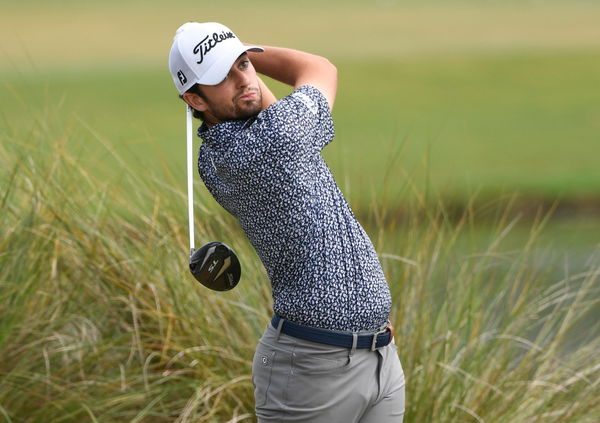
ST. AUGUSTINE, FLORIDA – JUNE 20: Davis Riley tees off on the eighth hole during the final round of the Korn Ferry Tour’s The King & Bear Classic at World Golf Village on the King & Bear Golf Course on June 20, 2020 in St. Augustine, Florida. (Photo by Ben Jared/PGA TOUR via Getty Images)
Riley games a Callaway Paradym Ai Smoke Max (15°) — a choice an earlier report confirmed despite his Titleist staff status. Callaway’s Ai Smart Face technology employs variable thickness patterns that create micro-deflections on off-center strikes, normalizing dispersion in ways Titleist’s GT fairways couldn’t replicate for Riley’s specific yardage window.
ADVERTISEMENT
The Fujikura Ventus TR Black 8X shaft, weighing 89 grams with 2.6 degrees of torque, transforms this fairway wood into a tempo regulator. The 23-gram jump from driver to 3-wood shaft slows Riley’s transition, promoting smoother ground interaction on a club that serves dual roles off the tee and from the turf. The Paradym Ai Smoke Max retails between $349 and $458.
Performance trumps brand loyalty. Riley’s long game proves it. The same philosophy extends through the middle of his bag.
ADVERTISEMENT
Davis Riley’s engine room: TSR2 Bridge and T100 scoring irons
Riley retained the Titleist TSR2 hybrid (18°) rather than upgrading to GT-series hybrids. The decision reflects turf interaction trust — the TSR2’s deep CG and high MOI deliver penetrating trajectories that newer models couldn’t match for his utility play requirements.
The Fujikura Ventus Black HB 9 TX shaft pushes this hybrid into steel-like territory. At 96 grams with 2.0 degrees of torque, it eliminates the common hybrid complaint among better players: wayward draws that balloon left. This shaft forces a lower, more piercing trajectory, turning a forgiving head into a targeting instrument. The TSR2 hybrid retails between $279 and $299.
From hybrid to irons, Riley’s shaft weight progression builds a deliberate stiffness plateau: 66g → 89g → 96g → 125g. Each step tightens dispersion rather than chasing velocity.
ADVERTISEMENT
His Titleist T100 irons (4-9) represent the “blade in a cavity disguise” philosophy. D18 tungsten brazing — fused at 2,000°F using aerospace construction — places dense tungsten in the heel and toe without adding blade length. The result: blade aesthetics at address, cavity-back forgiveness on mishits.
The KBS Tour C-Taper 125 S+ shafts complete the picture. Stepless construction produces a lower launch and significantly reduced spin compared to stepped alternatives. At approximately 1.9 degrees of torque, these shafts act as low-spin flight governors — critical for eliminating fliers from PGA Tour rough. The T100 set retails between $1,200 and $1,499.
ADVERTISEMENT
Davis Riley’s scoring zone: SM10 grinds and phantom confidence
Riley’s Vokey SM10 wedge gapping runs 46°/50°/56°/60° with grind selections mapped to specific shot demands.
The 46-10F and 50-08F carry full soles for aggressive full swings from the fairway. The 56-08M features Vokey’s M grind — relief on the heel, toe, and trailing edge — allowing Riley to open the face without the leading edge rising. It’s the versatility wedge for bunker play and greenside manipulation.
The 60-04L reserves the narrowest sole and lowest bounce for elite turf control. The L grind demands precise contact; there’s little bounce to rescue fat strikes. It’s a scorer’s grind, built for firm conditions and tight lies that separate Tour players from amateurs.
ADVERTISEMENT
True Temper Dynamic Gold Tour Issue S400 shafts replace the C-Taper rigidity in the scoring zone. At 132 grams with a softer tip section, they provide the feel and feedback critical for touch shots around the green. Each wedge retails between $159 and $189.
Riley’s Scotty Cameron Phantom 9.2R Tour Prototype anchors the bag. The “R” designation signals rounded geometry — softened edges that melt into the ground at address, eliminating visual distractions. The plumbing neck adds toe hang to a high-MOI mallet, combining stability with blade-like arc suitability.
The SuperStroke Zenergy Pistol Tour grip locks Riley’s upper hand into a consistent position while neutralizing dominant-hand wrist action. The Phantom 9.2R retails between $649 and $749.
ADVERTISEMENT
Riley’s setup isn’t a cosmetic refresh. It’s deliberate architecture — selective modernization balanced against problem-solver clubs that outperform newer releases in specific roles. As he chases his third PGA Tour victory at Waialae, every club in the bag earns its place through performance, not aesthetics.
ADVERTISEMENT
ADVERTISEMENT
ADVERTISEMENT
