
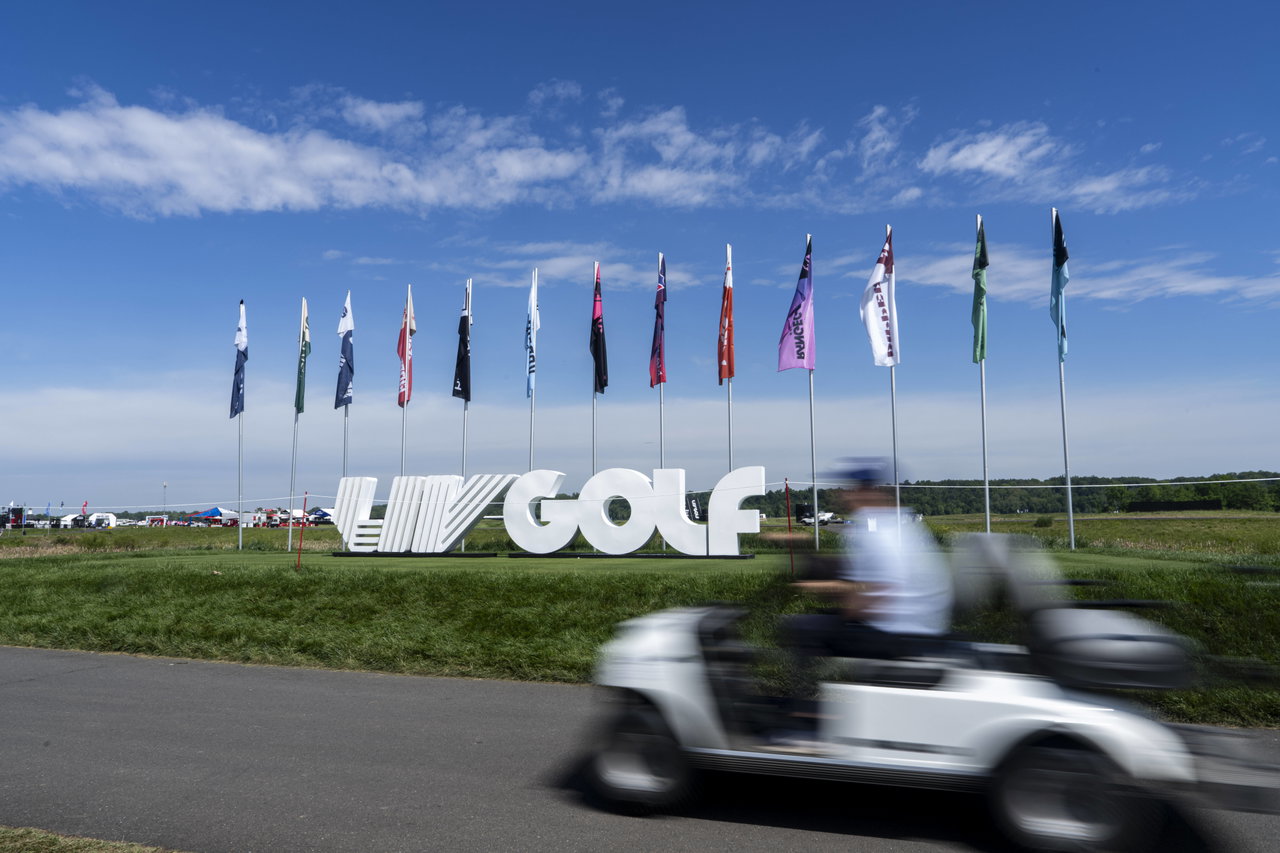
LIV Golf’s financial collapse is now drawing the PGA Tour back into a dispute that once threatened to reshape professional golf. This time, however, the focus is on bankruptcy discovery. LIV’s unsecured creditors are seeking records that could shed light on the Saudi-backed league’s relationship with its biggest rival, its funding arrangements, and the negotiations that produced the controversial 2023 framework agreement.
According to a post on X from Front Office Sports’ David Rumsey, the Official Committee of Unsecured Creditors in LIV Golf’s Chapter 11 case has subpoenaed the PGA Tour for documents related to its dealings with LIV, Saudi Arabia’s Public Investment Fund (PIF), and the framework agreement announced in June 2023.
He also shared two images highlighting the subpoenaed documents in the same thread. These included revenues, media-rights fees, sponsorship revenues, and communications with PIF, Yasir Al-Rumayyan, PIF representatives, the DP World Tour, or any LIV Group entity.
Sharing his thoughts on the matter, Rumsey wrote, “I’d bet against the PGA Tour willingly handing all of this over.”
A PGA Tour spokesperson has already made the Tour’s position clear.
“This document request is a desperate fishing expedition and a baseless attempt to try and drag the PGA Tour into the ongoing LIV Golf bankruptcy case. The efforts of these creditors should be dedicated towards LIV Golf and the parties responsible in the bankruptcy filing,” the spokesperson told Front Office Sports.
LIV Golf’s bankruptcy has left a substantial group of players, contractors, vendors, and other business partners uncertain about unpaid claims. The creditors’ committee is seeking to determine whether additional value can be recovered for those owed money.
Bankruptcy reporting has identified more than $100 million in unsecured creditor claims. However, the proposed wind-down arrangement currently allocates only $2 million for their recovery. The 30 largest unsecured creditors alone were listed with claims exceeding $64 million when LIV filed for bankruptcy.
The financial structure also places PIF in a considerably stronger position than ordinary creditors. Approximately $495 million was outstanding under its pre-bankruptcy secured loan when LIV filed for Chapter 11 protection. PIF also committed $49.6 million in debtor-in-possession financing to support the bankruptcy process.
Under the proposed wind-down plan, PIF’s secured claims receive priority treatment, while unsecured creditors are expected to share the much smaller pool. The proposed plan does not allocate any distributions to equity holders.
The U.S. Trustee appointed the committee on September 30, 2026, under Section 1102 of the Bankruptcy Code. It subsequently retained Fox Rothschild LLP and Willkie Farr & Gallagher LLP as legal counsel. Section 1103(c)(2) gives an appointed creditors’ committee the authority to investigate the debtor’s financial condition, business operations, and other matters relevant to the bankruptcy proceedings.
That investigative authority helps explain why the PGA Tour has entered the picture. The committee is looking beyond the documents held by LIV itself, since other organizations involved in its commercial and financial history may possess information relevant to the bankruptcy.
Each category of records could offer a different perspective on LIV’s financial history.
For instance, the 2023 framework agreement remains one of the most consequential developments in professional golf’s recent history.
The arrangement contemplated a new collectively owned, for-profit company, with the PGA Tour expected to retain an important leadership role. It also provided for resolving pending litigation between the parties.
For LIV’s creditors, documents surrounding those negotiations could be particularly interesting. They may provide insight into how the proposed partnership affected LIV’s commercial strategy, PIF’s commitments, player arrangements, and the league’s future business plans.
Although the PGA Tour is not the debtor in LIV Golf’s bankruptcy case, it is an important third party with potentially relevant information. Its records could contain sensitive business discussions, internal communications, legal advice, player-related negotiations, and commercial strategy involving PIF and LIV.
The PGA Tour, however, has several reasons to limit what it produces.
It could argue that certain requests are overly broad, impose an unreasonable burden, or seek information unrelated to the bankruptcy investigation. It may also rely on confidentiality agreements and commercially sensitive information.
The Tour could also negotiate the production terms, ask for an extension, or request a protective order from the bankruptcy court to limit how others use or disclose sensitive information.
If the committee and the Tour cannot resolve their differences, the bankruptcy court may have to decide whether to enforce the disputed requests.
The December 4 production deadline could therefore become an important date in the proceedings, although the extent of any eventual disclosure remains uncertain.