Essentials Inside The Story
- Brooks Koepka's return to the PGA Tour looks simple on the surface, but the unseen cost of leaving LIV hints at a much bigger story
- LIV talks openly about freedom, yet the lack of transparency around exits limits who can actually make the jump back
- Koepka may have found a way through golf's divided system
Three years ago, LIV Golf promised players freedom from the PGA Tour’s rigid structure. Now, a five-time major champion is paying two tours to leave one and rejoin the other.
Watch What’s Trending Now!
Scott O’Neil faced the obvious question at LIV’s preseason media event in West Palm Beach on Wednesday. What did it cost Brooks Koepka to walk away with a year remaining on his reported $125 million contract? The CEO pivoted. “Legally, I can’t say, and I don’t know if I would if I could,” he said. “We agreed we’d not discuss the separation terms publicly.”
That silence tells its own story. Industry reports have long suggested LIV contracts include exit clauses ranging from two to four times a player’s original signing bonus. If Koepka’s upfront guarantee exceeded $100 million, his “amicable” departure may have required an extraordinary personal payout—one that would make the PGA Tour’s published penalties look modest by comparison.
O’Neil wrapped the rest of his remarks in the language of player empowerment. “I believe in free agency,” he declared at the Palm Beach Convention Center. “Call me old-fashioned. I believe in open pathways. I believe people should be where they want to be.”
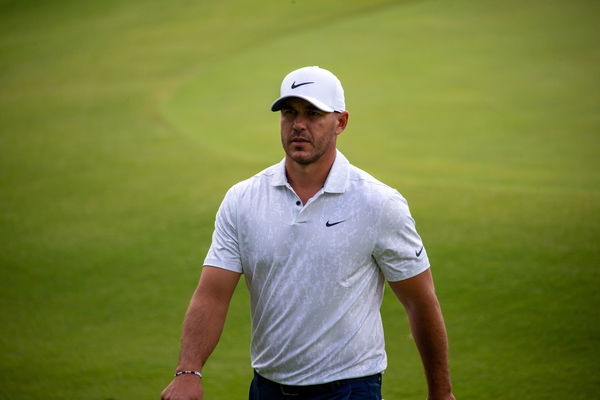
Imago
LAS VEGAS, NV – OCTOBER 08: Brooks Koepka walks off the ninth hole green after completing his second round of the Shriners Childrens Open on October 8, 2021 at TPC Summerlin in Las Vegas, NV. Photo by Matthew Bolt/Icon Sportswire GOLF: OCT 08 PGA, Golf Herren – Shriners Children s Open Icon21100810653
The rhetoric landed smoothly. O’Neil, who cut his teeth running NBA and NHL franchises before taking the LIV reins from Greg Norman a year ago, knows how to frame a loss as a philosophical victory. By appearing indifferent to Koepka’s exit, LIV projects confidence rather than vulnerability. The message is clear: doors swing both ways here.


But free agency means nothing without transparency.
The PGA Tour, for all its faults, laid its cards on the table. Koepka’s reinstatement carries a $5 million fine directed to charity, five years without player equity grants, ineligibility for FedEx Cup bonus money in 2026, and no sponsor exemptions into signature events. The SI Golf panel estimated Koepka’s forfeited equity alone could cost him up to $85 million over the restriction period.
That’s the visible toll. Harsh, public, and defensible—the kind of penalty structure fans can debate, and analysts can quantify.
LIV offers none of that clarity. NBC Sports analyst Rex Hoggard argued on Golf Channel that the league’s refusal to disclose contract terms removes the stakes that make free agency compelling. “We don’t know the money or the terms for any player,” co-host Ryan Lavner observed. In the NFL, a star leaving mid-contract would trigger discussion of dead money, signing bonus recoupment, and holdout penalties.
LIV’s “amicable” framing offers none of that. The pathway exists in theory. The toll booth remains invisible. That asymmetry extends beyond Koepka. It shapes who can realistically follow him back.
PGA Tour’s Returning Member Program signals a one-time political maneuver
O’Neil’s kindness-forward approach obscures a harder truth: Koepka is almost certainly walking this road alone.
The PGA Tour’s Returning Member Program applies only to players who won majors between 2022 and 2025—a deliberately narrow window that names Bryson DeChambeau, Jon Rahm, and Cam Smith as eligible alongside Koepka. All three appeared at LIV’s media event this week and pledged their commitment to the league.
“I’m contracted through 2026, so I’m excited about this year,” DeChambeau said. “I’m not planning on going anywhere.”
Rahm offered a similar response. Smith, speaking from Australia, emphasized LIV’s flexibility for spending time in his native country—something the PGA Tour schedule cannot match.
The SI panel delivered a unanimous verdict: Koepka will be the only LIV defector to return in 2026. The financial implications are simply too severe for anyone else. DeChambeau reportedly stands on the verge of a massive new PIF deal. Rahm appears content with his team structure. Smith has no interest in a tour that doesn’t play Down Under.
Only players commanding nine-figure guarantees could realistically absorb penalties on both sides of golf’s divide. For the rank-and-file LIV roster, the “open pathway” O’Neil celebrates remains functionally closed.
That’s the paradox buried beneath the pleasantries. O’Neil’s free agency rhetoric transplants the language of traditional sports leagues onto a fundamentally different economic structure. In the NBA, players move between franchises within a shared ecosystem. In golf’s fractured landscape, movement requires paying exit fees to one organization and reinstatement penalties to another.
Freedom, in this context, is a luxury good. The structure ensures stability for leagues, not mobility for players. O’Neil can afford to wish Koepka well. The system he oversees ensures very few will follow.
Related Newsletters