
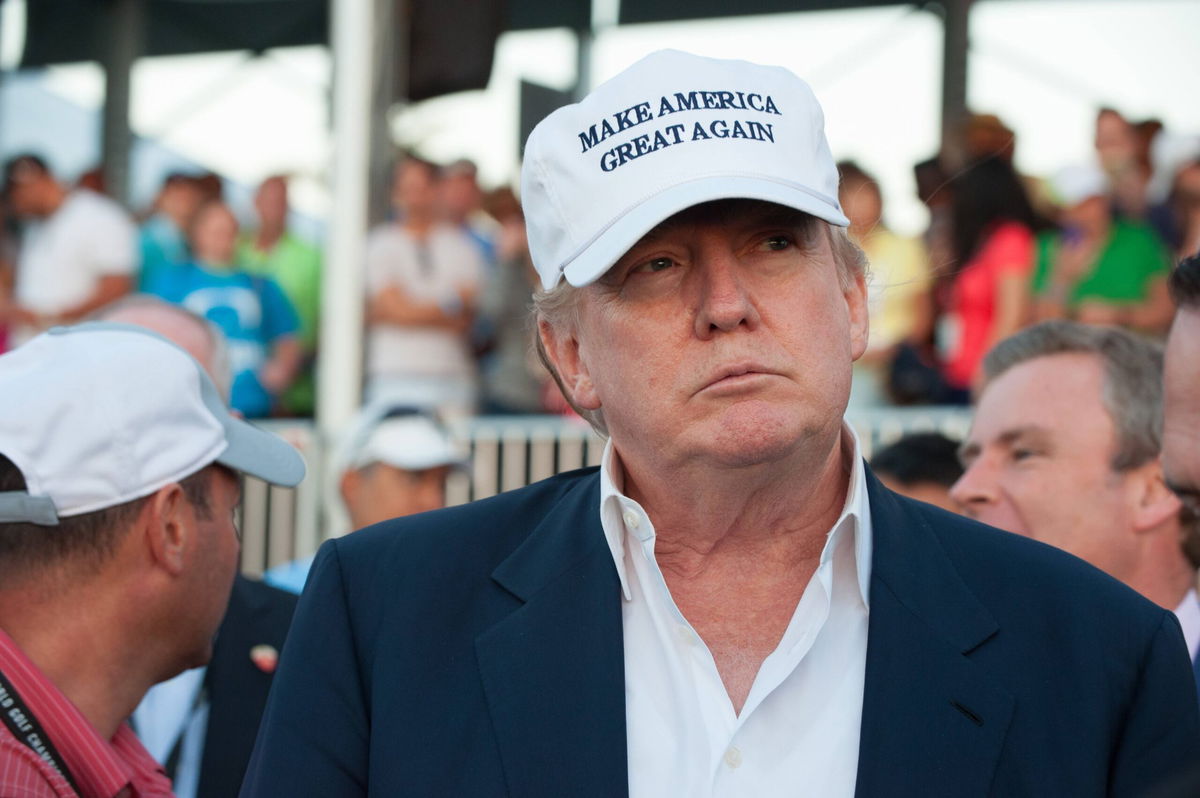
President Donald Trump has announced plans to shut down Washington, D.C.’s historic East Potomac Golf Links on November 15 for a 15-month renovation aimed at transforming the public facility into a championship-caliber course capable of hosting major tournaments, including the U.S. Open and the Ryder Cup. The proposed overhaul, developed with golf architect Tom Fazio, comes amid an ongoing legal battle over tree removal, environmental compliance and the administration’s plans for the historic federal property.
Watch What’s Trending Now!
In a social media post, Trump said the Interior Department and Fazio had “developed a plan” to turn the century-old course into one of the “Best and Most Spectacular Golf Courses anywhere in the World.” He added that the redesigned facility would remain open to the public while meeting professional tournament standards.
Trump has presented the renovation as an opportunity to modernize a deteriorating golf course, create jobs, attract major sporting events and stimulate the local economy. However, the proposed closure comes as a federal judge scrutinizes the administration’s actions at the site, raising uncertainty over whether the project can proceed on the announced timeline.
Renovation Plans and Major Events Face Legal Hurdles
Trump has justified the overhaul by describing the 106-year-old course as severely deteriorated and unsafe. In his announcement, he called the facility “old, broken, dilapidated,” citing hazardous trees and a collapsing seawall as reasons for a comprehensive renovation. He also defended the National Park Service’s removal of over 400 trees by stating that the course was initially celebrated for its open landscape and unobstructed views of Washington, D.C.
The redevelopment has attracted scrutiny over its environmental implications and the procedures followed before work began. National Park Service officials have attributed the tree removal to a 2019 report recommending restoration of the course’s historic landscape. However, on October 12, 2026, U.S. District Judge Ana C. Rehas questioned that explanation, suggesting that Trump’s broader redevelopment ambitions may have motivated the work.
The plaintiffs, including preservationists and local golfers represented by organizations such as Democracy Forward, argue that the administration failed to conduct the environmental reviews required under the National Environmental Policy Act (NEPA) before beginning the tree-clearing operation. Reyes subsequently issued a temporary restraining order barring further tree removal through October 26.
The administration maintains that the broader redevelopment remains conceptual and that the tree removal was unrelated to Trump’s plans. Nevertheless, the president’s announcement of a specific closure date and a 15-month renovation has raised questions about the project’s development and its relationship to work already completed.
Additional concerns have emerged over debris from the demolition of the White House East Wing, undertaken to make way for Trump’s proposed ballroom. The National Park Service said testing detected lead, chromium, and other toxic metals in debris dumped on the golf course grounds, adding to scrutiny of activities at the site.
The legal confrontation intensified on October 16, 2026, when the Justice Department filed a motion seeking Reyes’s recusal. Government lawyers alleged that her conduct reflected a “deep-seated and unequivocal antipathy toward the Trump Administration,” describing her behavior as “nothing short of egregious.”
Reyes has ordered Interior Department deputy chief of staff Gregory Wischer and acting National Park Service director Jessica Bowron to testify about the origins and execution of the tree-removal plan. Their testimony could clarify who authorized the work, explain the rationale, and determine whether the proposed renovation was connected to it. The judge will review the government’s request to have her step aside at the upcoming hearing, while the plaintiffs have asked for a more enduring preliminary injunction and/or a stay to stop further action during the litigation.
Project Timeline, Funding and Future Remain Uncertain
The proposed overhaul has grown since Interior Secretary Doug Burgum unveiled Fazio’s conceptual design in May. Trump toured the course in June and subsequently set September 1 as the anticipated construction start date, but that deadline passed without work beginning as planned.
The newly announced November 15 closure date signals a renewed push to advance the project. However, key details, including the total cost, funding arrangements, and implementation plan, remain unclear. The distinction between a conceptual design and an approved redevelopment plan is central to the legal dispute, and Trump’s announcement does not resolve questions about environmental compliance or the relationship between the proposed renovation and the tree removal already undertaken.
If completed, the redesigned course could host major professional tournaments while retaining public access. The administration argues that the project would improve the facility and deliver economic benefits, while opponents maintain that the redevelopment must comply with environmental safeguards and established legal procedures.
Ultimately, the future of East Potomac Golf Links will depend on both the administration’s ability to advance its renovation plans and the outcome of the ongoing court proceedings. The November 15 closure date sets out Trump’s intended timeline, but unresolved questions over approvals, funding, and environmental compliance leave the project’s next steps uncertain. How these legal and practical challenges are addressed will determine if the course becomes the championship destination the president envisioned.