
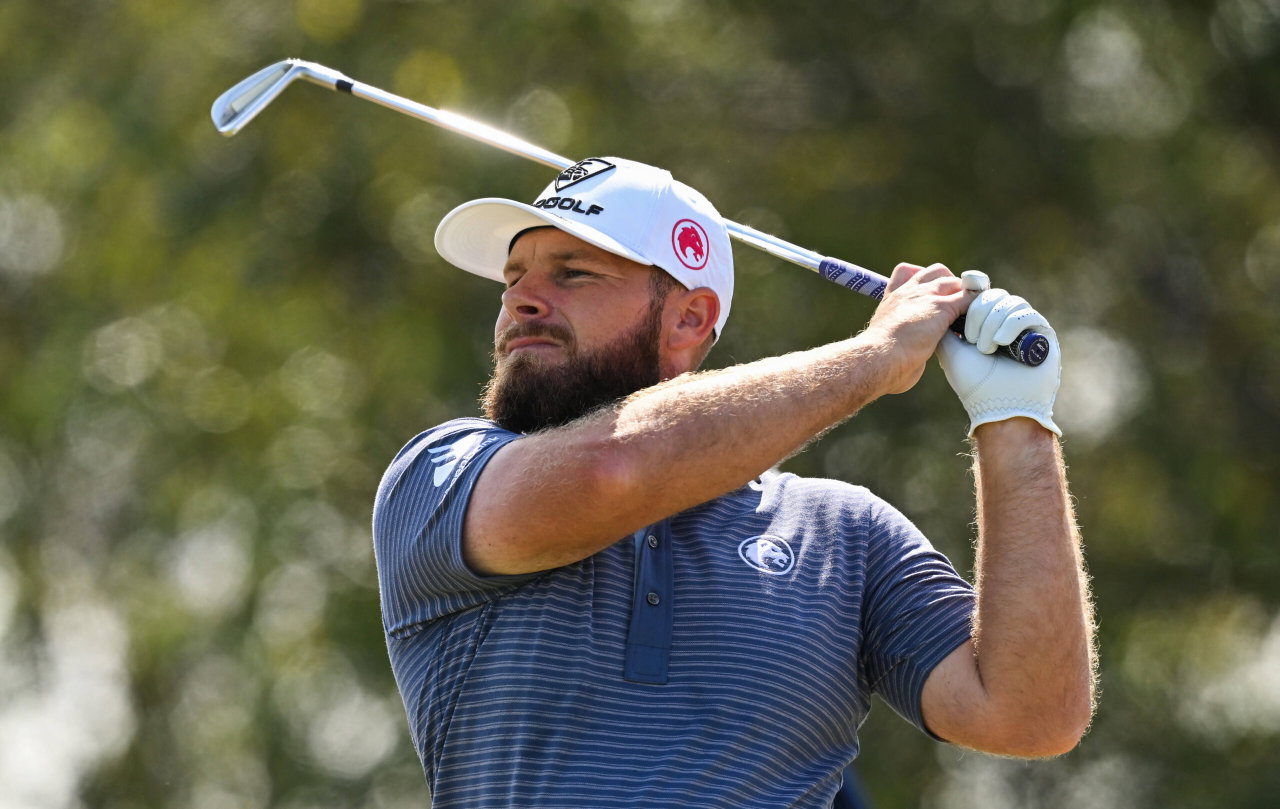
LIV Golf’s fight for survival has taken another damaging turn, and this time, the consequences extend far beyond prize money. As the breakaway league prepares for a radically different future, the DP World Tour has drawn a line that could force European golfers like Tyrrell Hatton to choose between joining LIV 2.0 and pursuing their Ryder Cup ambitions. This also raises an uncomfortable question for LIV’s prospective investors: how attractive a relaunched league can be if the players it needs most won’t join.
Watch What’s Trending Now!
On October 12, 2026, the DP World Tour made its position clear.
“On their membership application for next year, if they said they intended to play on LIV, their application wouldn’t be accepted,” an insider told Telegraph Sport. “If they said they weren’t going to play on LIV 2.0 and they then go on to do just that, their membership would then be rescinded.”
This came shortly after DP World Tour CEO Guy Kinnings told BBC Sport that “players need to make a choice.”
Kinnings said the tour has rules and regulations in place to protect its members’ best interests. Therefore, anyone who seeks to join the DP World Tour should be willing to comply with them.
The decision marks a significant departure from the arrangement that allowed selected LIV golfers to retain their European Tour status during 2026.
Earlier this year, the DP World Tour granted conditional releases to players including Tyrrell Hatton, Tom McKibbin, Adrian Meronk, and others. Those agreements required financial settlements and commitments to additional Tour appearances.
But that compromise was temporary from the beginning. The DP World Tour had clearly stated that it was only for the 2026 season, and things could change next year.
This isn’t just about choosing between the two leagues, because it affects a golfer’s European Ryder Cup eligibility. Although the Tour has not announced a separate Ryder Cup ban, golfers who lose their membership under the new policy would lose their route to selection under the published criteria.
Tyrrell Hatton is an obvious example of how critical the choice can be. The Englishman has played in the last four Ryder Cups, including Europe’s victories in 2023 and 2025. Before the biennial event at Bethpage, he described the Ryder Cup as “very important to me.” This reflects his stated desire to keep his DP World Tour membership while competing in LIV Golf.
That ambition now comes with a potential cost. Signing with LIV 2.0 could mean sacrificing his opportunity to represent Europe at Adare Manor in Ireland in September 2027.
A Ryder Cup appearance offers sporting prestige, a place in European golf history, and the opportunity to compete alongside longtime teammates. An equity stake in a restructured league, meanwhile, carries financial potential but no guarantee of future value.
If Ryder Cup participation remains a genuine career goal for someone like Tyrrell Hatton, refusing to sign with LIV 2.0 may be the more logical decision. The policy could therefore eliminate a significant portion of LIV’s potential European recruitment pool before negotiations are complete.
The timing could hardly be worse for LIV Golf. After Saudi Arabia’s Public Investment Fund withdrew its backing, the league filed for Chapter 11 bankruptcy protection in September. BC Partners Credit has since committed initial funding and outlined plans to provide up to $300 million.
However, the proposed relaunch would feature a smaller, 10-event schedule and a player-ownership model. The purses for both individual and team wins have also gone down significantly. That represents a substantial change from the original LIV proposition, which relied on enormous purses and lucrative contracts to attract established stars.
As a result, many LIV golfers have already signaled interest in leaving the breakaway league. For instance, Jon Rahm’s lawyer confirmed that the Spaniard would not participate in LIV 2.0. He said that the proposed terms were unacceptable. Meanwhile, Bryson DeChambeau’s future remained uncertain amid the announcement’s coverage.
Joaquin Niemann also announced his intention not to continue with LIV Golf.
“Obviously, if they can open a door for me somehow, that would be incredible. And if not, it will open eventually,” he said.
Losing prominent names would make LIV’s rebuilding effort considerably harder. The league could still recruit players, but replacing the competitive credibility and audience appeal of established stars would be difficult.
The DP World Tour’s decision may be one of the biggest obstacles LIV has faced since its 2022 launch. Its impact extends beyond membership rules. It changes the incentives facing players as the league tries to secure financing and rebuild its roster.
The October 25 LIV commitment deadline and November 16 DP World Tour registration deadline leave players with limited time to assess their options. For European Ryder Cup hopefuls like Tyrrell Hatton, waiting indefinitely may not be possible.
However, the DP World Tour has not killed LIV Golf outright. Its financial restructuring is still underway, and the final player roster has yet to be set. However, it has created a sporting cost that money and equity may struggle to offset.
But for golfers who want to wear Europe’s colors at a Ryder Cup, the message is simple. LIV 2.0 could demand a sacrifice they might be unwilling to make. If enough players reach that conclusion, the Tour’s decision could become a defining setback for LIV’s attempt to survive.