
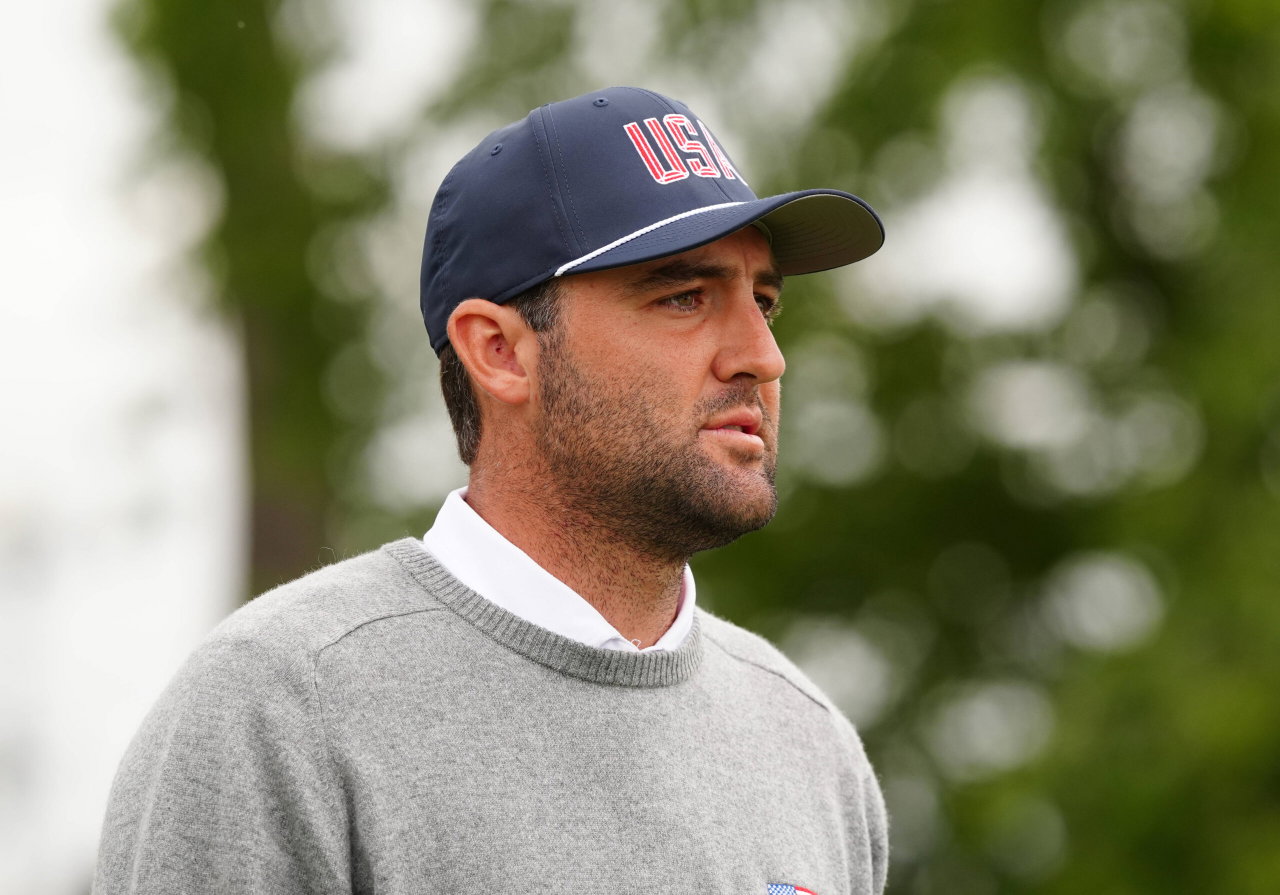
Scottie Scheffler is one of the biggest stars in golf, but his position at the top also means dealing with constant attention. After winning the Tour Championship on August 30, 2026, Scheffler covered a camera with his cap while signing his scorecard in the scoring area, with his wife and sons in the room. The moment highlighted the growing pressure PGA Tour players face when cameras follow them beyond the action on the course. Seven-time PGA Tour winner Peter Jacobsen believes the modern game is very different from the one he played in.
Watch What’s Trending Now!
On the We Need a Fourth podcast, host Cooper Manning asked whether players avoid joking around because they fear how they might look after a poor round. Jacobsen responded, “Well, I will say this, there is a heck of a lot more media scrutiny. Everybody’s got a camera. Everybody is under the microscope.”
His comments offer a different way to look at Scheffler’s camera incident. For today’s stars, the pressure is not limited to hitting the right shot. Every reaction, mistake, and private moment can quickly become part of the public conversation.
From a Buick-Goodwrench Win to a $10 Million Check
The money gap is the first thing Jacobsen points to. He remembered that when he joined the Tour, players needed years of success before they could truly call themselves established professionals. He won his first PGA Tour title at the 1980 Buick Open in Grand Blanc, Michigan, and recalled earning about $32,000.
His memory was a little off. Tour records show that Jacobsen actually received $45,000 for winning the 1980 Buick-Goodwrench Open, along with a new Buick to use for a year. Scheffler, meanwhile, earned $10 million at East Lake as the winner of the $40 million Tour Championship purse. The victory also moved him ahead of Tiger Woods on the PGA Tour’s all-time money list.
That means Scheffler’s winning check was more than 200 times what Jacobsen earned for his first Tour victory.
But money was not the only thing Jacobsen feels has changed. He believes golf has also lost some of the colorful personalities who once made the sport feel more fun. He pointed to players such as Chi Chi Rodriguez, Lee Trevino, Fuzzy Zoeller and Jim Thorpe, who could smile, joke with fans and enjoy the moment even during competition.
Jacobsen feels today’s players face a different kind of pressure. With much more money at stake, golfers often arrive with larger teams around them and treat every tournament with a serious mindset.
The players he mentioned show what Jacobsen means. Trevino became famous for his humor and was known as the “Merry Mex.” Zoeller famously waved a white towel in mock surrender at Winged Foot in 1984 before beating Greg Norman in a playoff. Those moments came from players who were not afraid to show their personalities, even when the pressure was high.
The Spotlight That Scottie Scheffler Can’t Switch Off
Scheffler is a clear example of the pressure Jacobsen was talking about. Earlier this summer, he said that being under the spotlight all the time can put a lot of pressure on a player. The attention grew even more during his stretch without a win. Still, Scheffler finished in the top three in 10 of his 20 starts this season.
The PGA Tour has also added fixed cameras in scoring areas that were once more private. That may help explain why Scottie Scheffler reached for his cap. At the same time, those cameras have helped bring more people to the sport. Netflix’s Full Swing debuted in 2023, and Nielsen found that 63% of its viewers watched PGA Tour coverage within two months. The players featured on the show also saw major increases in social media followers and sponsor interest.
LIV Golf’s Bryson DeChambeau is now the most-followed male professional golfer on Instagram, with around 4.6 million followers. The PGA Tour has also encouraged its players to grow their online audiences. Meanwhile, this year’s Masters final round averaged nearly 14 million viewers, while PGA Tour viewership also increased in 2026.
Justin Thomas has also spoken about the pressure that comes with media and fan expectations. In 2018, he said it was difficult because of the expectations placed on him by the media, fans and other people. Thomas also considered deleting Twitter because of the negativity he saw online, even though he believed social media was important for growing players’ brands. At the same time, he said social media gave him a way to interact with fans and show them more of his personality. His comments highlight the mixed side of modern exposure: players can use social media to connect with fans and build their brands, while also dealing with constant outside attention.
More exposure can mean bigger paychecks and larger crowds. But it can also mean less privacy for players. Back in 1980, Jacobsen’s win received less attention because Tom Watson was winning the World Series of Golf in Akron at the same time. Local Detroit media had been building excitement around the Buick Open all week, but much of the wider golf world was focused elsewhere.
Today, a star like Scottie Scheffler can barely finish a round without a camera waiting in the scoring area. That is an example of how much the game has changed, not necessarily what Jacobsen was talking about.
Jacobsen also pointed to the American Century Championship at Tahoe as an example of how players can still show their personalities. He explained that players there can laugh at themselves after a bad shot, something he believes is harder to see on the PGA Tour because players may feel they cannot afford to show that side of themselves. The bigger question is whether golf can keep the huge audience that cameras and social media have created while still giving players room to be themselves. Scottie Scheffler, the sport’s biggest star, is playing in a world that golf’s old characters never had to deal with.