Imago
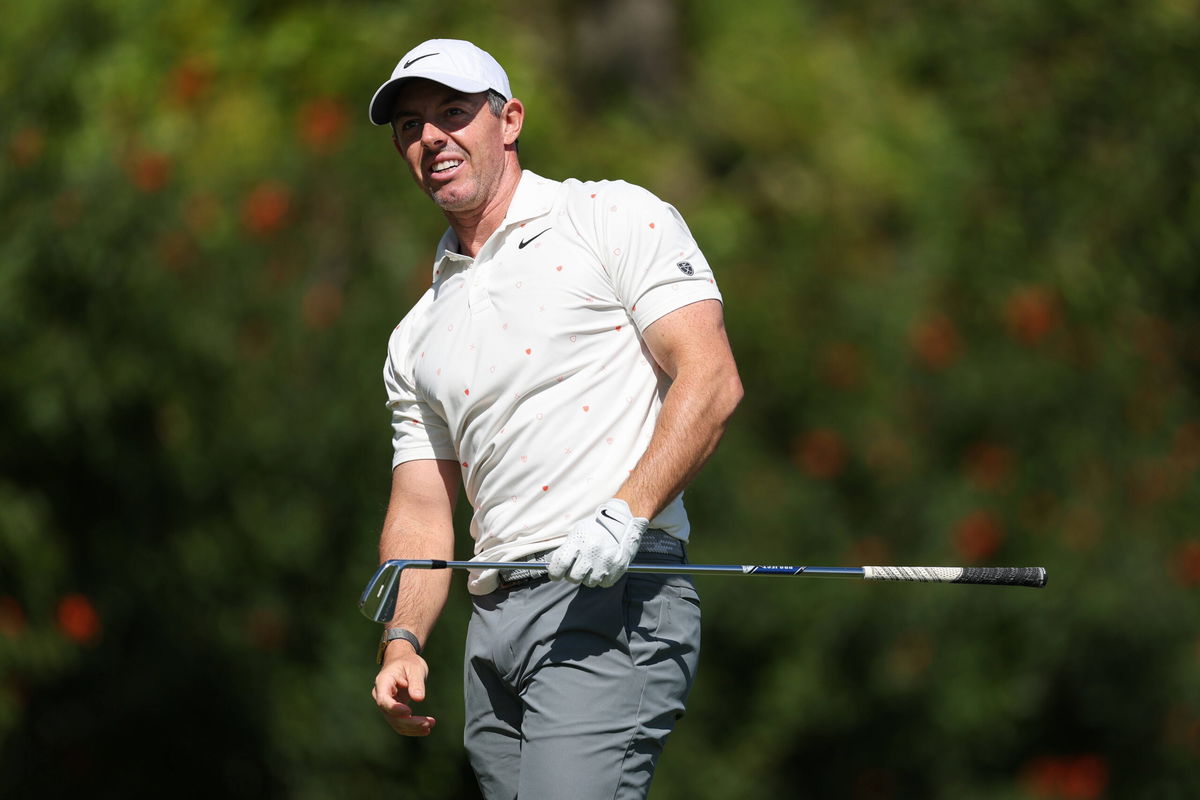
February 21, 2026, Pacific Palisades, California, USA: RORY MCILROY tees off on the 4th hole during the third round of the Genesis Invitational at the Riviera Country club in Pacific Palisades, California. Golf_PGATour_GenesisInvitational_ PUBLICATIONxINxGERxSUIxAUTxONLY – ZUMAt158 20260221_zsp_t158_060 Copyright: xBrentonxTsex
Imago
February 21, 2026, Pacific Palisades, California, USA: RORY MCILROY tees off on the 4th hole during the third round of the Genesis Invitational at the Riviera Country club in Pacific Palisades, California. Golf_PGATour_GenesisInvitational_ PUBLICATIONxINxGERxSUIxAUTxONLY – ZUMAt158 20260221_zsp_t158_060 Copyright: xBrentonxTsex
A few minutes were all it took for Rory McIlroy‘s momentum to break. The regular range practice turned into a distressed call. The result was his second career withdrawal. But before McIlroy could publicly announce what went wrong, an eyewitness already charted what went down.
Watch What’s Trending Now!
SiriusXM’s Emilia Doran was standing on that same range, close enough to watch every interaction unfold. What caught her attention first was not the injury itself but the sequence of events. Rory McIlroy stepped away from his wedge shots mid-session and got on a call that stretched to five minutes. The situation caught her eye as he wasn’t hitting bad wedge shots. Soon, NBC analyst Brad Faxon came over, and the conversation ran far longer than the usual pre-round exchange an analyst has with a golfer.
Then a trainer walked out, and the discussion shifted specifically to Rory McIlroy’s posture and his pointing at his lower back. That is when Doran told her producer that something might be wrong. Within minutes, the world No. 2 announced he was withdrawing from the tournament, roughly 30 minutes before he was due on the first tee.
View this post on Instagram
The 36-year-old confirmed it in a statement: “While warming up in the gym this morning, I felt a small twinge in my back. As I started hitting balls on the range before the round, it worsened and developed into muscle spasms in my lower back.”
Looking at the 5x major champion scorecard, the timing stings. In Round 1, McIlroy carded an even-par 72, finishing at -2 overall after a back-nine score of 38. He bounced back sharply in Round 2, shooting a 68 with a back nine of 32, finishing the round at -4 for the day and putting himself firmly in contention heading into the weekend at this $20 million event. Had he won, he would have taken $4 million home. But this withdrawal was necessary.
Next week is the 2026 Players Championship (March 12–15) at TPC Sawgrass, which is now the main focus for McIlroy. There, he won the 2025 Players Championship in a playoff against J.J. Spaun. He must be there to defend his title and be the second golfer to do so after Scottie Scheffler. Then, a couple of weeks later is the Masters, for which the Northern Irishman also needs to be in optimal health.
This event was not the first time McIlroy’s back had sent that kind of signal. In August 2023, a workout before the Tour Championship at East Lake triggered spasms so severe that his back seized up, yet he still competed that week. This time, he could not.
Withdrawal due to injury is not new in golf, though.
Tiger Woods pulled out of the 2023 Masters before the third round with a foot injury. Will Zalatoris withdrew from that same tournament before it even started after hurting his back during warmup. Jordan Spieth exited the 2025 Travelers Championship mid-round with a neck and upper-back injury. The pattern is consistent: when the body signals stop, players listen.
McIlroy’s injury came at a moment when his long-term future on Tour is already an open conversation.
Rory McIlroy’s early-retirement outlook adds context to his Bay Hill withdrawal
Just 48 hours before withdrawing at Bay Hill, McIlroy had openly told Fried Egg Golf’s Kevin Van Valkenburg that a full-time PGA Tour or DPWT career is not his forever plan. The timing makes those words land differently now.
“I want to see the world, and I don’t want to see the world just through the lens of golf courses and hotels,” McIlroy said.
For a 36-year-old with a career Grand Slam and financial security most athletes never reach, that is not a throwaway line. PGA Tour pro Joel Dahmen had already predicted Rory McIlroy would not push past 40, pointing to his career completeness and financial standing.
“Is he going to want to play after 40?” Dahmen asked.
When a player has won everything and earned everything, grinding through injuries carries a different weight.
A back problem at 36, with Augusta six weeks away, only sharpens the question further. McIlroy is not walking away tomorrow, but every injury from here adds context to a conversation he himself refused to walk back.
Related Newsletters