
The Presidents Cup kept golf fans glued to their screens for four straight days last week, delivering an exciting, back-and-forth battle at Medinah. While Team USA pulled off yet another victory, the contest also exposed some vulnerabilities on the American side. And at its core, that unpredictability is what makes team golf so compelling. Now, fans face a year-long wait for the next Ryder Cup.
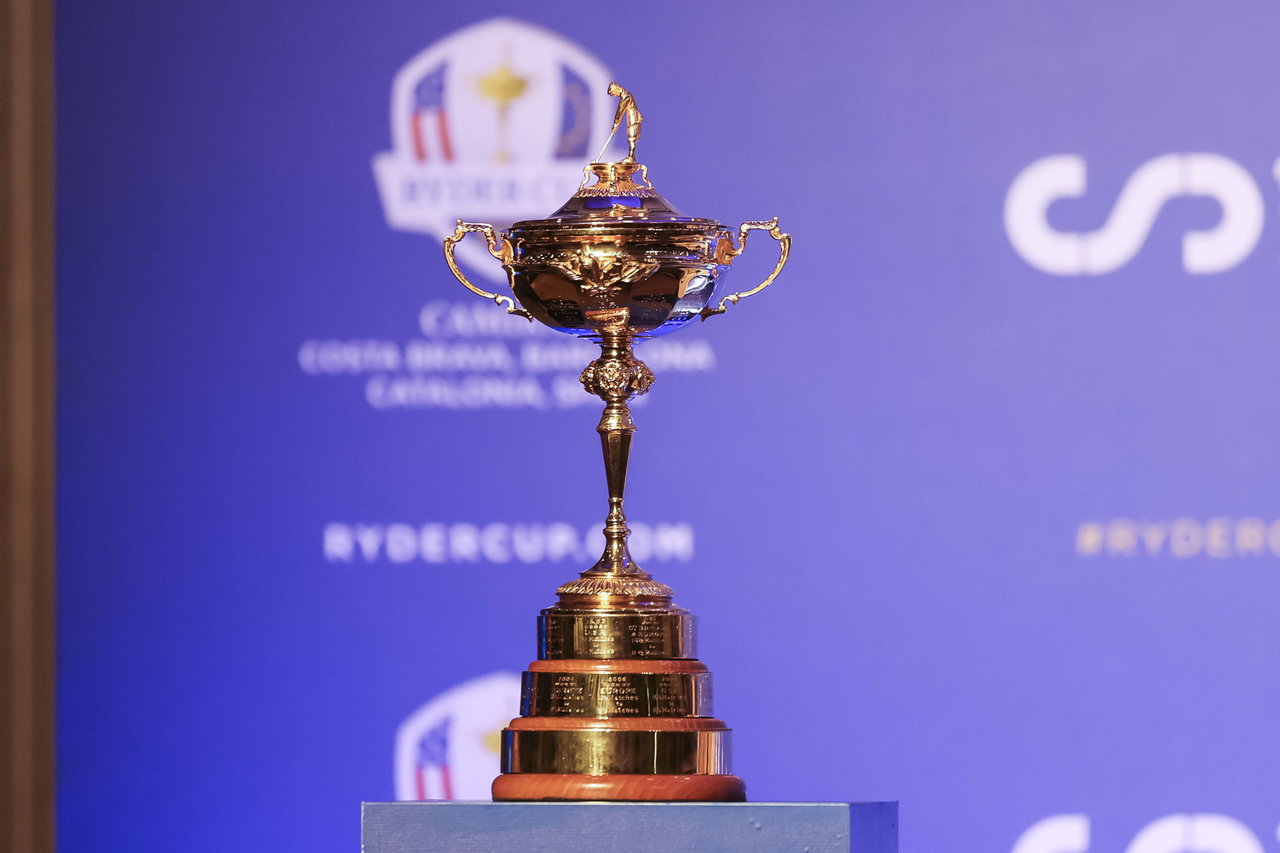
In many ways, the two events share plenty of similarities. Both feature 12-player teams competing in sessions of foursomes, four-ball, and singles, and each event is held every two years. Despite those similarities, however, the Presidents Cup still struggles to capture the unique magic that the Ryder Cup brings to golf fans. Here are five reasons why.
Mo history, mo emotions
History has a way of making sporting rivalries feel bigger. And the Ryder Cup has had nearly a century to build that emotional weight. First played in 1927, the biennial contest has evolved from a U.S. vs. Great Britain matchup into one of golf’s most fiercely contested team events after continental Europe joined in 1979.
That evolution, combined with decades of iconic moments and intense rivalries, has given the Ryder Cup a rich identity that extends well beyond the results. The Presidents Cup, by comparison, is still a relatively young competition. First held in 1994, it has only had a little over three decades to establish its own traditions and history.
Its one-sided record has also meant fewer moments of sustained competitive drama. While the Presidents Cup has produced memorable occasions of its own, the Ryder Cup’s longer history has given players and fans more emotional connections to the event.
Ryder Cup is more personal
In the Ryder Cup, Team Europe represents a single continent with a shared golfing culture, overlapping tours, common languages among many players, and a genuine sense of continental pride. Since the 1979 expansion that brought in continental Europeans, the team has developed a distinct identity. That includes blue-and-gold colors, a unified ‘us against them’ mentality, and deep institutional support from European golf organizations. In comparison, the Presidents Cup is very different.
Presidents Cup has no clear identity
The Presidents Cup International team lacks a clear identity. It is simply ‘everyone else’: from Australia, South Africa, Japan, South Korea, Canada, New Zealand, Latin America, and beyond. These golfers come from different continents, tours, languages, and golfing cultures. There is no shared national anthem, no single flag, no common continental narrative, and no equivalent of Europe’s tightly knit team structure.
Too dominant, a lack of anticipation
For all the excitement the Presidents Cup can generate, its biggest problem remains the lack of anticipation surrounding the eventual result. Since its launch in 1994, the US has dominated the competition, going 14-1-1 through the 2026 edition at Medinah. The International team’s only victory came in 1998, while the 2003 edition remains the lone tie.
With Team US now riding an 11-Cup winning streak, the possibility of another American victory can sometimes feel more like an expectation than a genuine question. That stands in stark contrast to the Ryder Cup, where the US and Europe have produced a far more competitive rivalry since 1979. Europe has repeatedly challenged the Americans, with tight contests, dramatic momentum swings, and recent victories in 2023 and 2025.
Mo highlight reels, mo success
The Ryder Cup’s long history has given it something the Presidents Cup has struggled to build. And that’s a deep catalogue of moments that can be replayed, remembered and passed down to the next generation. From Jack Nicklaus conceding Tony Jacklin’s putt in 1969 to Europe’s remarkable comeback at Medinah in 2012, the event has consistently produced scenes that transcend the result itself.
Moments such as Bernhard Langer’s heartbreaking miss in 1991, Justin Leonard’s famous birdie putt at Brookline in 1999, and Seve Ballesteros’s bunker escape in 1983 have become staples of Ryder Cup highlight reels. Each carries its own story, drama and emotional context, giving the event a wealth of material to revisit decades later.
The Presidents Cup has also produced memorable moments, but since the U.S. dominates the competition 14-1-1 through 16 editions, it’s difficult to pinpoint one moment that stands out from the other.
That said, the Presidents Cup is still relatively young compared with the Ryder Cup. If the International team can build on its stronger showings in the last two editions and consistently challenge the U.S., the competition could become less predictable and create more of the memorable moments that have defined the Ryder Cup.