Imago
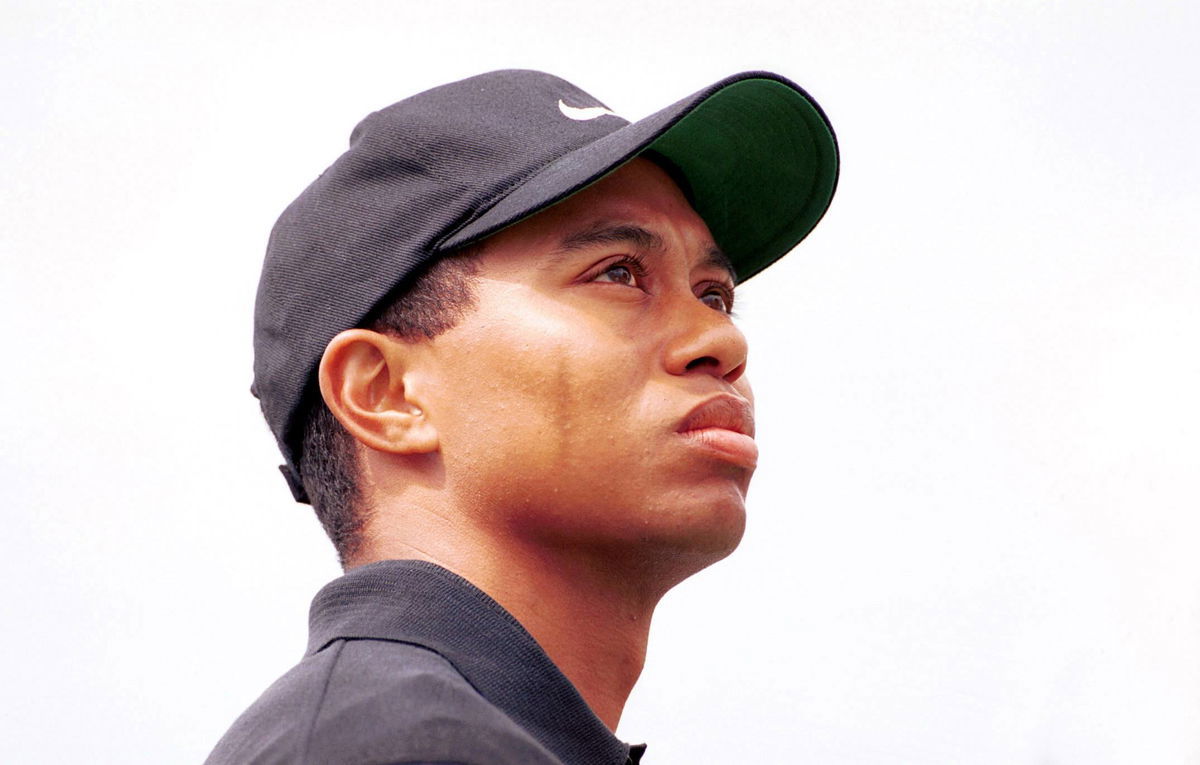
Bildnummer: 00122687 Datum: 22.05.1999 Copyright: imago/Contrast Eldrick Tiger Woods (USA) nachdenklich; Mimik, close, Blick nach oben, Basecap, Mütze PGA, European Golf Tour, 1999, German, Deutsche Bank SAP Open, Golfen, Profis, Profigolf St. Leon Rot TPC of Europe Nachdenklichkeit, Skepsis, Golf Herren Einzel Deutschland Porträt Randmotiv Personen
Imago
Bildnummer: 00122687 Datum: 22.05.1999 Copyright: imago/Contrast Eldrick Tiger Woods (USA) nachdenklich; Mimik, close, Blick nach oben, Basecap, Mütze PGA, European Golf Tour, 1999, German, Deutsche Bank SAP Open, Golfen, Profis, Profigolf St. Leon Rot TPC of Europe Nachdenklichkeit, Skepsis, Golf Herren Einzel Deutschland Porträt Randmotiv Personen
Essentials Inside The Story
- As Tiger Woods turns 50, we rewind the clock.
- Woods going from 2-Handicap at 11 to scratch by 13.
- Looking back at the day he turned pro.
It was 1996. A 20-year-old amateur golfer was practicing on the greens of Augusta National. Watching him, a nearby standing figure prophesied the future: “…He will be the favorite here for the next 20 years.” That young golfer was Tiger Woods, and watching him was none other than Jack Nicklaus. Needless to say, his prophecy would prove uncannily accurate. But what Nicklaus didn’t know then was that Woods’s path to greatness had already been paved well before he turned 20.
Watch What’s Trending Now!
1. From 2-Handicap at 11 to Scratch by 13
As per the current USGA data, the average male golfer carries a handicap of around 14 or 15. For many, moving from a 5 to scratch typically takes multiple years. That too, with relentless structured practice. But Tiger Woods defied this norm.
At the age of 11, Woods had reached a handicap of 2, placing himself in the elite top 5-10% of all male golfers. Two years later, he became a scratch golfer with a 0 handicap. For Woods, this trajectory was not surprising.
By the time he turned pro at the age of 20, estimates put him at roughly +8. That means he would have needed to add eight shots to his score in handicap play. That’s an almost unimaginable level for a club golfer.
2. Breaking 70 on a regulation course at 12


At the mere age of 8, Woods had broken his first 80 on a full course. At 12, he first broke 70 on a regulation golf course. Woods was simply a child prodigy.
Tomorrow, Tiger turns 50.
Today, we wind the clock back to some of his historic moments at The Open. pic.twitter.com/gcjZm3NzIG
— The Open (@TheOpen) December 29, 2025
For those who aren’t aware, a “regulation” course is where most club handicap scores are recorded. It is usually 6,200-7,000 yards, rated and sloped. For most decent amateurs, shooting in the 60s is a rare career feat, even if they have years of experience. Many single-digit players can go seasons without a sub-70 score.
But Woods was extraordinary. His breaking it at 12 meant that he was performing at a high-level college standard at a time when he was probably in middle school. Part appreciation should go to his father, Earl Woods, who brought his military psychology and coached his son through age 5. A young Woods was bound to succeed.
3. Six Optimist Junior World Titles
Winning this event once is a massive achievement on its own. Tiger Woods dominated it ruthlessly by grabbing the trophy six times, setting a tournament record by winning it more than anyone in history. His first win came at the young age of 8, and from there on he kept collecting more at the ages of 9, 12, 13, 14, and 15.
His final win in 1991 was particularly interesting.
A 15-year-old Woods was at the Torrey Pine, facing Mark Worthington. The commanding player held a four-shot lead over Woods. But the game’s never over till the final round. Woods barged in with a 69, featuring four birdies with just one bogey. He landed with a total of 286, winning the tournament by eight strokes.
That year, Tiger Woods was named “the man-child of golf” by the LA Times. The newspaper claimed that he was getting more attention than even Jack Nicklaus ever got at that age. When the media asked him how many tournaments he had won, Woods’s reply was unhesitant.
“I have no idea. I quit counting after 11-and-under. I had 110 trophies. I threw them all into the garage.”
4. A hat trick at the US Junior Amateur
Tiger Woods is the only golfer ever to win the US Junior Amateur three times. He is also the only one to do it back-to-back (1991-93). His last win, coming in at the age of 17, made this amateur achievement revolutionary.
Woods’s first US Junior-Am title came at the Bay Hill Club in Florida, when he was just 15. Defeating Brad Zwetschje in 19 holes (playoff), he became the youngest to secure the title. That record stood undefeated until Jim Liu won it in 2010 at the age of 14 years and 11 months.
After brutally dominating the junior circuit, Woods also won the US-Am Championship back-to-back three times from 1994 to 1996. He was also once again the only golfer to achieve this feat in a row. Across every USGA amateur and junior amateur match-play event, Woods collected 18 astonishing victories, a record that stands unmatched to this day.
5. The day Tiger Woods turned pro
27th August, 1996, is when he turned pro, just days after winning his third consecutive US-Am title.
“I knew that after I won [the U.S. Amateur], there was not much to achieve in amateur golf,” he said plainly back then.
In just eight PGA Tour events, he won twice. First at the Las Vegas Invitational, then at the Walt Disney World/Oldsmobile Classic. All this while, he was just 20. These two wins propelled him to the PGA Tour Rookie of the Year honors.
After that, his momentum was unstoppable. He rapidly advanced into the top 50 of the OWGR. More specifically, in only 291 days from his first pro round. That was the quickest ascent to the top ever recorded.
In 1997, a year after he turned pro, Tiger Woods won his first Masters, the youngest winner at the time. These achievements were not disconnected feats. They show a coherent progression of a prodigy. Each milestone sets the stage for the next and makes what the world would eventually come to know as ‘The Tiger Woods.’
Related Newsletters