
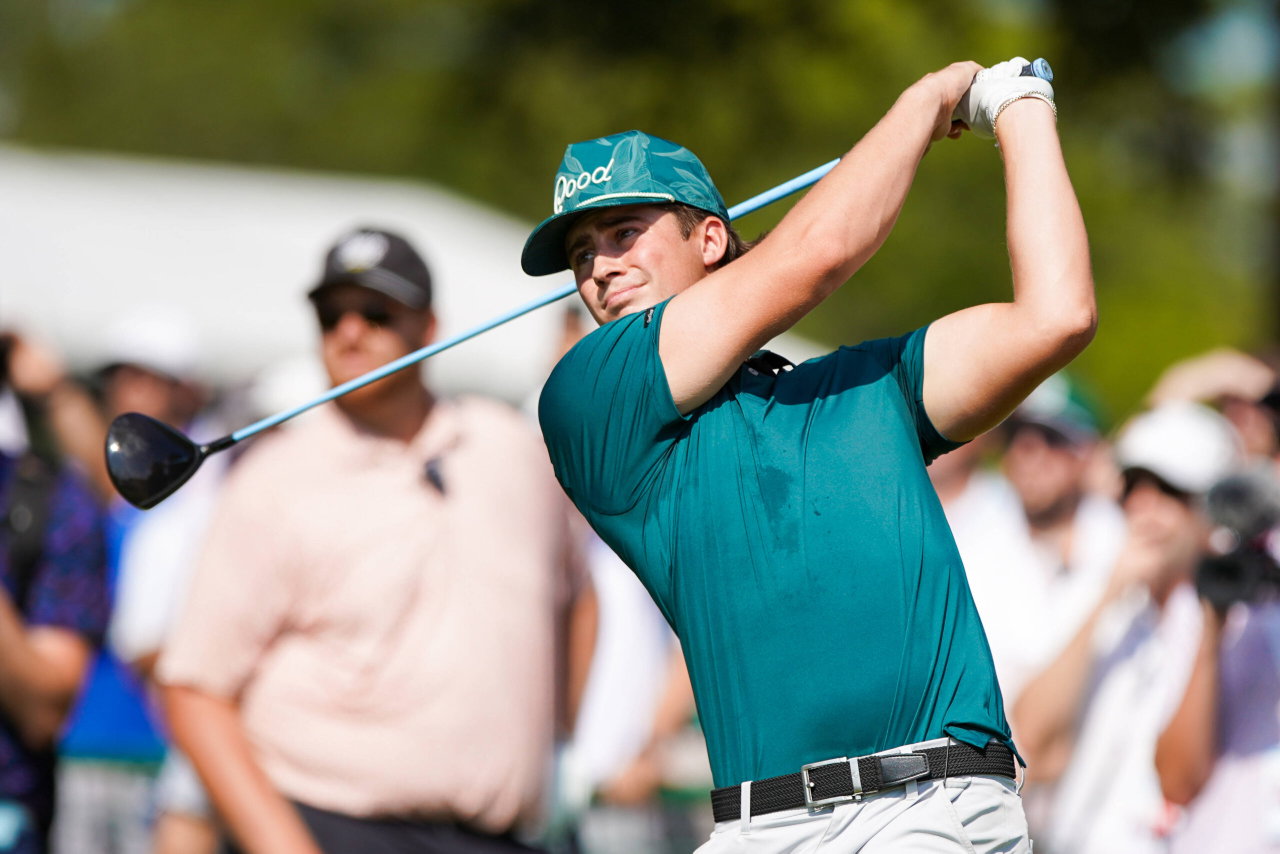
Good Good Golf’s controversial Callaway advertisement sparked widespread criticism, cost the company a major equipment partnership, and triggered a shake-up in its leadership. Now, months after the incident, the fallout has taken a legal turn. Former marketing executive Jeff Lefkovits alleges he was unfairly blamed for changes in the advertisement he says he neither approved nor knew about.
Watch What’s Trending Now!
Lefkovits, Good Good’s former vice president of brand and marketing, has filed a defamation lawsuit against the golf-content company and its former CEO, Matt Kendrick, as reported by Business Insider. He filed the lawsuit in Texas and seeks more than $1 million in relief.
The lawsuit claims that public statements linking his marketing department to the controversial advertisement damaged his professional reputation and left him unable to find work.
The dispute dates back to August 2026, when Good Good released a promotional advertisement for a co-branded Callaway driver. The video featured Good Good co-founder Garrett Clark rushing toward fellow creator Alexis Miestowski, shoving her to the ground, and standing over her while saying, “Do not touch my new driver.”
Clark and Kendrick explained that the concept involved someone becoming irrationally obsessed with a golf club. However, the execution drew immediate criticism. Many viewers argued that the scene made light of violence against women.
Miestowski’s involvement also carried significance beyond her appearance in the commercial. She was a golfer who had competed on the Epson Tour and appeared in Good Good’s female-focused content through its Good Good Girls channel.
Good Good removed the advertisement and issued an apology. Both Good Good and Callaway acknowledged that the actions depicted in the video did not align with their brand values.
Callaway CEO Chip Brewer said the company had approved the advertisement before publication and admitted its review process had failed. He also said Callaway would investigate its approval procedures and make changes to prevent similar incidents.
Kendrick accepted responsibility in a public apology, stating, “I own it.” He also acknowledged that the company was responsible for the content it released, regardless of its original intentions.
The public acceptance of responsibility did not prevent the controversy from escalating, though. Callaway eventually ended its relationship with Good Good, while several retail and media partnerships were affected.
However, Jeff Lefkovits says that there was a difference between the original advertisement concept and its final execution.
According to the complaint, Lefkovits approved a lighthearted parody script that ended with the entire group becoming equally obsessed with the driver. The planned conclusion involved the creators playfully competing to hold the golf club.
The lawsuit alleges that the original script contained no scene involving Clark shoving Miestowski.
Lefkovits further claims that the controversial scene was “conceived of and approved on set.” He was away when filming was completed and that the scene was added without his knowledge or participation.
The complaint also challenges the suggestion that the final advertisement had faced internal objections. According to the lawsuit, Clark and Miestowski were among those who “loved” the finished edit and did not request changes.
Another significant allegation concerns Callaway’s approval. Lefkovits claims that Callaway approved both the concept and the final edit in writing.
The lawsuit also challenges statements Kendrick made after the advertisement attracted criticism.
Kendrick reportedly emailed Good Good’s marketing partners about changes to the company’s marketing organization and blamed the team for the advertisement. Lefkovits was fired the following day, according to the complaint.
He later discussed the matter in an interview with Front Office Sports. When asked whether anyone from the marketing team had faced consequences, Kendrick responded, “We removed people responsible for the ad.”
He also explained that he had not watched the advertisement before it was released. According to the interview, Good Good’s and Callaway’s marketing teams had reviewed the content.
The fallout affected several parts of Good Good’s business.
On August 26, Dick’s Sporting Goods and Golf Galaxy pulled Good Good merchandise from their stores and online platforms. PGA Tour Superstore also confirmed that it had removed the brand’s products.
The creator group also stepped away from its title sponsorship of a November PGA Tour event in Austin, Texas, which continued under the name Austin Championship.
The Golf Channel’s planned Big Break x Good Good project was also affected.
Despite the commercial and leadership fallout, Good Good has continued working to restore its regular operations.
In an October 5 report, Front Office Sports noted that the company had resumed publishing videos on its flagship YouTube channel. It was attempting to return its focus to its core content business.
The report indicated that Good Good had posted nine videos since the controversial advertisement’s release. This included episodes of its Golfing 50 States in 50 Days series. The videos were averaging just under one million views, broadly in line with the channel’s historical performance.
Good Good also reported strong activity on its online merchandise store and continued sales through independent golf course pro shops. However, those developments do not establish that the company has recovered its lost retail distribution, sponsorships, or former commercial relationships.
Lefkovits’ lawsuit now adds an employment and reputational dispute to the company’s ongoing recovery. Even as the company attempts to rebuild its business, the question of who was responsible for the advertisement remains unresolved.