Getty
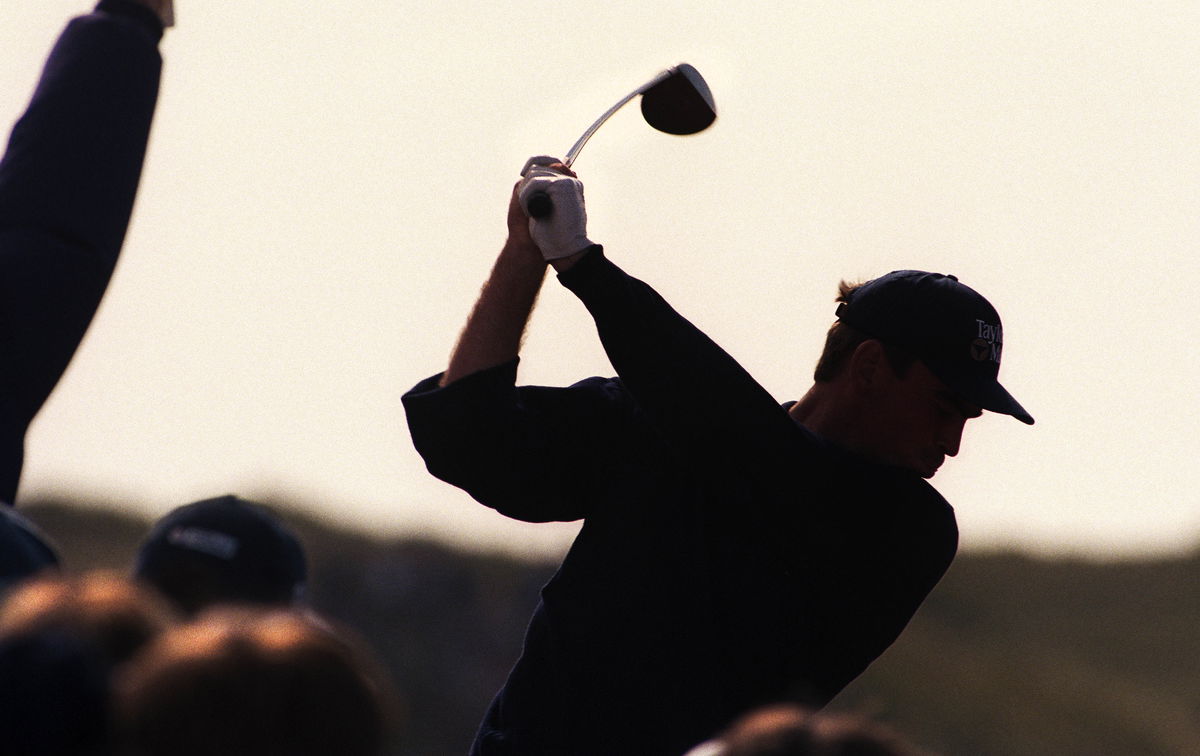
Silhouetted golfer on the tee during the 127th British Open Golf at Royal Birkdale GC in Southport 16th-19th July 1998. (Photo by David Ashdown/Getty Images)
Getty
Silhouetted golfer on the tee during the 127th British Open Golf at Royal Birkdale GC in Southport 16th-19th July 1998. (Photo by David Ashdown/Getty Images)
Getty
Silhouetted golfer on the tee during the 127th British Open Golf at Royal Birkdale GC in Southport 16th-19th July 1998. (Photo by David Ashdown/Getty Images)
Getty
Silhouetted golfer on the tee during the 127th British Open Golf at Royal Birkdale GC in Southport 16th-19th July 1998. (Photo by David Ashdown/Getty Images)
What does a PGA Tour player actually take home from a $100,000 check? The leaderboard flashes six figures. The cardboard check looks enormous. But Kevin Kisner knows the truth behind the curtain — and on Christmas Day, he pulled it back.
Watch What’s Trending Now!
“I usually call it about 30%,” Kisner told Josh Baylin on the Market Swings podcast, dismantling the illusion of Tour wealth with surgical precision. The non-hesitant response came when Baylin asked what percentage of prize money actually comes home.
Kisner walked through the arithmetic with the detachment of an accountant reading a balance sheet. “8% to a caddy, 3% to a coach, 1% to a putting coach,” he rattled off. “Then you got your state you played in taxes, your South Carolina 7% taxes, and your federal taxes. You can do the math pretty quickly, right?”
The team alone carves out 12% before government entities touch the earnings. Caddies operate on a high-wire without a net- no salary guarantees, just a weekly base fee of $2,000–$3,000 and a commission tied entirely to their player’s performance. When the golfer struggles, the caddie bleeds alongside him.
View this post on Instagram
Then comes the layered taxation that hits professional athletes harder than most. The “jock tax” extracts its pound of flesh tournament by tournament. Play the Genesis Invitational in California, and the state claims 13.3% off the top. Add South Carolina’s 7% home-state tax. Stack federal taxes at the 37% bracket. The government’s slice dwarfs the caddie’s cut.


Kisner wasn’t complaining. He was simply doing cold math: the kind that separates fantasy from reality for anyone dreaming of Tour life. The calculus turns darker when a player misses the cut. Zero earnings don’t mean zero cost. Travel, lodging, and caddie base fees are the bills that arrive regardless of weekend tee times. A missed cut translates to a net loss of $7,000 to $10,000.
Kisner knows this grind intimately. He arrived at the 2025 RSM Classic ranked 194th, playing on a one-time career money list exemption after missing the cut in 13 of his 16 starts this year. For a player outside the elite bubble, every week becomes a financial dice roll.
Do PGA Tour signature events change the prize money equation?
With elevated purses now exceeding $20 million, the raw numbers look transformative. A 30th-place finish at the Genesis Invitational grosses $140,000 — more than a top-three finish at some lower-tier events. But Kisner’s math scales with the check.
A $140,000 becomes roughly $42,000 after the team and the taxman finish their work. Life-changing money for elite players cashing seven-figure wins. For the middle-tier pro finishing 30th, the signature event bump softens the grind without fundamentally altering it.
Bigger checks simply mean bigger deductions flowing to the same destinations.
Kisner has earned $34.7 million across his PGA Tour career. The number sounds like generational wealth. But filter it through the 30% reality, spread it across nearly two decades of competition, and the picture shifts. Tour life isn’t a lottery ticket; it’s a business with relentless overhead.
The next time the broadcast lingers on a leaderboard payout, remember Kisner’s math.
Related Newsletters