Imago
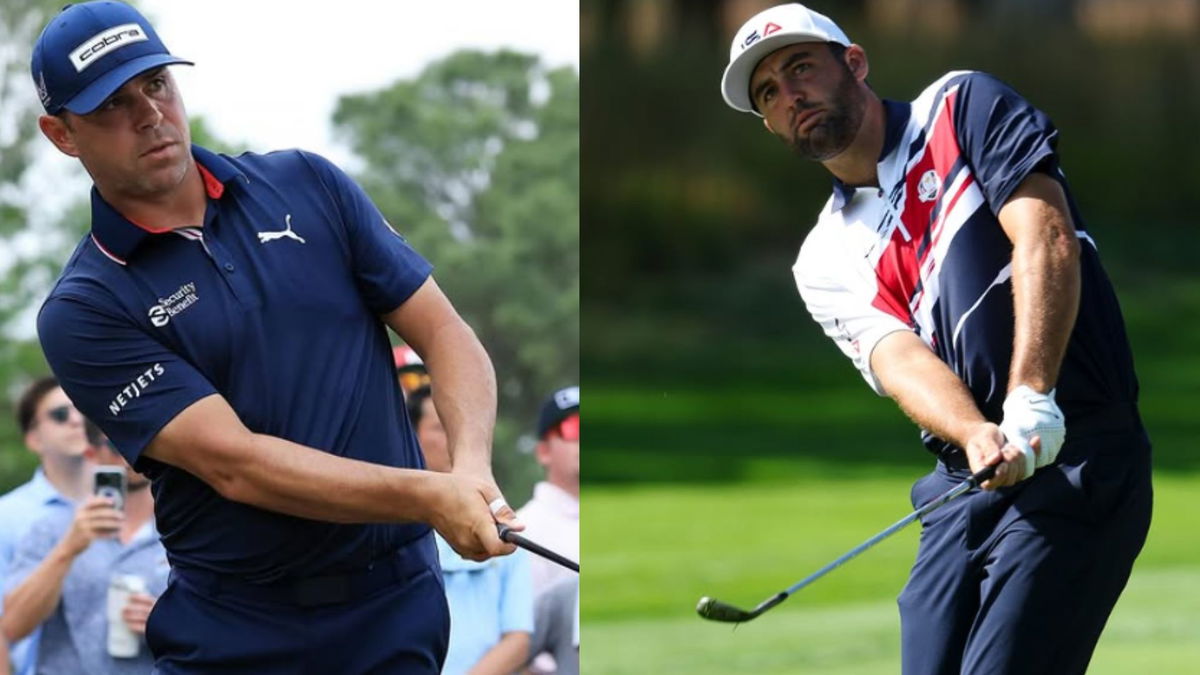
source: Instagram of Gray Woodland and Scottie
Imago
source: Instagram of Gray Woodland and Scottie
Voice breaking, eyes filled with tears, Gary Woodland described the moment his PTSD hit him in the middle of a competitive round at the 2025 Procore Championship. What makes this instance even more telling is the reason Woodland refused to walk off.
Watch What’s Trending Now!
A walking scorer approached him from behind, and that was enough. His vision blurred. He could not remember what hole he was on. He pulled his caddy aside and said, “Butch, this stuff’s hitting me, man. You can’t let anybody get behind me. ” A hole later, it was his turn to hit, and he could not. “I started bawling,” he told Rex Hoggard on the Golf Channel. “I’m here for these guys. I can’t leave them out here in a twosome.”
Butch handed him sunglasses to hide it. And then Woodland went into every bathroom to cry the rest of the day. He was in Napa serving as a U.S. Ryder Cup vice-captain under Keegan Bradley. So, playing alongside Scheffler and the rest of the team at the Procore Championship was a pre-Ryder Cup bonding exercise. He was there for his teammates, not himself.
View this post on Instagram
Gary Woodland had a brain lesion surgically removed in September 2023 and received a formal PTSD diagnosis roughly a year ago. After Napa, things slowly started to change. The Tour worked with security to build protocols around him, and Woodland now has personnel assigned during rounds, making him feel safe.
“I have a lot of fight in me, and I’m not going to let this thing win,” he said, his voice barely steady. “But it’s been hard.”
The 41-year-old also received the 2025 PGA Tour Courage Award for his return to competition, though Woodland was clear that the fight is far from over. His decision to speak publicly carries weight beyond his journey, as mental health struggles on the PGA Tour are not new.
Golf’s quiet battle with mental health
Mental pressure has quietly followed professional golfers for decades. Bert Yancey, one of the most talented players of the 1960s, battled bipolar disorder and spent time in psychiatric treatment before returning to compete. He later became one of golf’s earliest voices on mental health awareness.
Steven Bowditch carried a similar weight. The PGA Tour winner revealed he fought severe depression early in his career, eventually seeking therapy before returning to form. Like Yancey, he used his experience to push mental health conversations forward in a sport that rarely made room for them.
Rory McIlroy spoke in 2021 about crying alone in a hotel room early in his career, crushed by loneliness and pressure.
Professional golfers were expected to compartmentalize their emotions for decades. Showing vulnerability was seen as weakness, not courage. Gary Woodland’s public breakdown changes that framing. He is not a golfer who has lost form or confidence. He is a 2019 U.S. Open champion and a Ryder Cup vice-captain, fighting a neurological aftermath that no one can see. That is exactly why his honesty lands differently than anything golf has heard before.
Related Newsletters