

LIV Golf is no longer playing with house money. With the Saudi Public Investment Fund pulling back its funding, the league that once gave hundreds of millions of dollars in signing bonuses must now operate as a business. And a 2010 U.S. Open champion believes this is exactly the pressure CEO Scott O’Neil needs to build something that lasts.
Watch What’s Trending Now!
Graeme McDowell, who has been with LIV since its 2022 launch, addressed the situation Tuesday at Trump National D.C. ahead of this week’s LIV Golf Virginia event. “Potentially he’s been given some leash now to be able to go and … I think we all knew that we were going to have to stand on our own two feet at some point to be able to make this into a legitimate business,” McDowell said. “It’s kind of like we’re turning 18 now. I’m going to go into the real world. We got to fend for ourselves a little bit.”
The numbers put that transition in perspective. Since 2022, LIV players have collectively taken home over $3 billion through tournament purses, bonuses, and signing fees. In 2026 alone, each weekly event carries a $30 million purse, with $4 million going to the winner, and even a guaranteed $50,000 to the player who finishes in last place. That is the financial baseline LIV built its identity around, and it is exactly what becomes harder to sustain without backing.
Beyond the finances, McDowell also addressed the hostility that has followed the tour since day one. “I don’t think we could have ever imagined how deep this would go. The hatred,” he said. “If we can shift the narrative away from Saudi Arabia and bring some U.S. money and get rid of that narrative… because that narrative is just nasty.”
That has personal weight for McDowell. He said he received death threats and his family faced abuse after he made comments about LIV “growing the game” on behalf of Saudi Arabia at launch. He later called those remarks a mistake. “I regret a few things I said in the beginning, stuff like growing the game. I should have just said it for what it was: this is good for my bank account, and I’m getting a runway to play the game of golf for as long as I possibly can.”
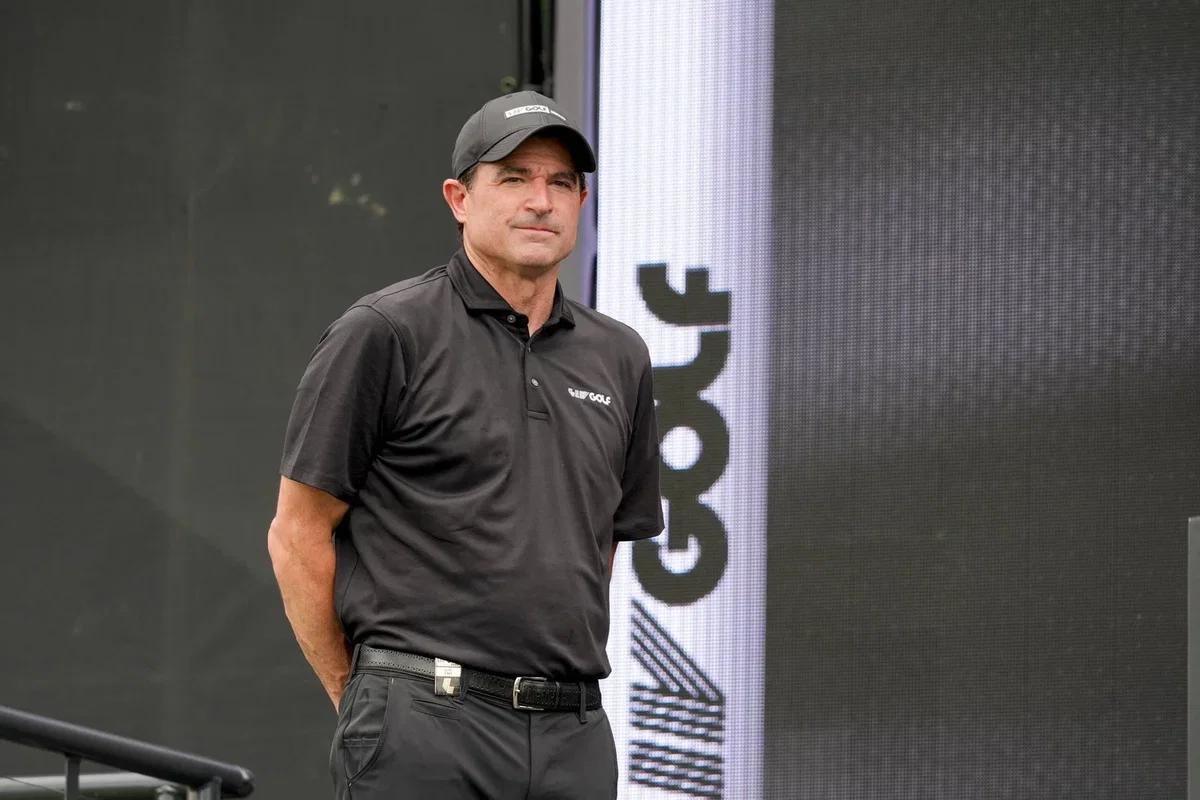
Imago
Joburg Open LIV Golf CEO Scott ONeill on the stage during the final round of LIV Golf Singapore presented by Aramco, Sentosa Golf Club, Singapore. 16/03/2025. Picture Steven Flynn / Golffile.ie All photo usage must carry mandatory copyright credit Golffile Steven Flynn Copyright: xStevenxFlynnx *EDI*
McDowell also pointed out that the backlash was never evenly distributed. The PIF has invested in horse racing, Formula One, boxing, soccer, and snooker without generating the same anger anywhere. Golf became the flashpoint. Critics called the money “blood money” and questioned player loyalty, while many openly hoped the league would collapse. “There are people who hate this product with passion and they can’t wait for it to fail,” McDowell said. “I partly get it, and I partly don’t.”
With PIF stepping back, McDowell sees a chance to reset that conversation. If U.S.-based investment replaces Saudi funding, the loudest criticism loses its main target. “Maybe we can get rid of that and focus on LIV as a viable golfing product,” he said. For O’Neil, who met with players Tuesday night after addressing the media, that is precisely the window he now has to work with.
LIV Golf’s hunt for survival money is already well underway.
LIV Golf gets legal and financial advisors to secure new investment
LIV Golf has brought in law firm Gibson Dunn and Crutcher alongside investment bank Ducera Partners and business advisory firm AlixPartners to help find new investors and fill the funding gap left by the PIF. The league publicly confirmed the Ducera partnership, framing it as building a “multi-partner investment model.”
The PIF announced last week that it will end its financial support for the league after the 2026 season concludes in August. LIV named its new board members three days after appointing Gene Davis and Jon Zinman to lead the board. The league will conduct a structural overhaul because it requires immediate assistance to remain operational.
Cost cuts are also on the table. Multiple people familiar with the situation say the league is focusing on reducing expenses while searching for an investor. LIV’s representative denied existing plans to modify the organization, but the inclusion of turnaround consultants on the board tells a different story.
Gibson Dunn is not new to LIV Golf, having advised the league since its formation on corporate matters. Its return now, in a restructuring context, reflects how sharply the situation has changed. Four years ago, LIV Golf was paying players hundreds of millions to join. Today, it is paying lawyers to figure out what comes next.