
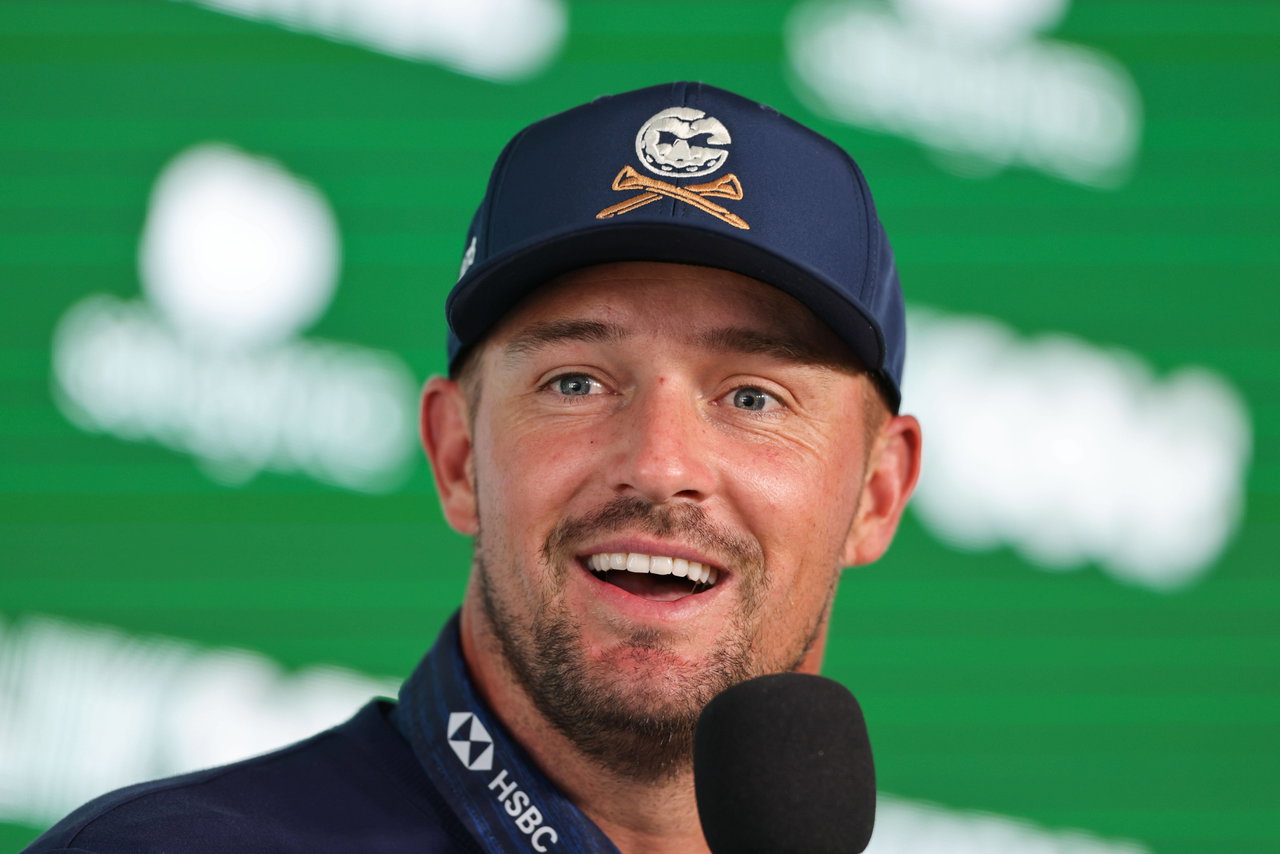
Golf is obsessed with what it can measure: clubhead speed, ball speed, launch angle. But nobody tracks the cheapest edge a kid can have, which is the nerve to ask a stranger for help. Bryson DeChambeau had it long before he turned pro.
Watch What’s Trending Now!
On the “Figuring Out” podcast with Raj Shamani, released October 31, the two-time U.S. Open champion explained where it came from, tracing it to childhood fundraisers.
“And it was funny, it stemmed from selling candy bars as a young kid, going around to different houses and raising money for a fundraiser for the school. We’d just sell candy bars. We did a jog-a-thon. There was numerous things that we’d go sell. You know, and it just got me out of my comfort zone of going and selling myself, selling this opportunity as a youngster and it made me into the person I am today because of that, ” he said.
Bryson DeChambeau says he was a different kind of kid.
“I just had a different mindset as a kid. And that’s where those insecurities came from, because people wouldn’t accept me for asking those questions,” he said.
That outsider streak met a real test in 2009.
The U.S. housing market had collapsed, and the DeChambeau household had no cushion for junior golf. Bryson played tournaments every summer, and the entry fees ran a couple of thousand dollars.
His mother broke the news plainly.
“Hey, hon, we don’t have any money this year for tournaments,” he recalled her saying. “I don’t know what we’re going to do.”
He already had a plan though.
“I’m just going to go raise money,” he said.
Both parents doubted it, but his mom let him try. Two days later, he had raised $2,000 around the neighborhood. He was no unknown at the time. He had won a Junior Golf Association of Northern California event with a 64 when he was 15.
His pitch was simple. He knocked on doors as a 15- or 16-year-old, said he was an aspiring professional who wanted to play college golf and someday the PGA Tour, and asked: “Is there any way you can support me with just 20 bucks?”
One man answered differently.
“Yeah, yeah, yeah, no problem. No problem, son. I’ll be right back,” he said before returning with an $800 check.
DeChambeau said the moment still moves him.
“It even tears me up today, because it was this belief,” he said. “This person saw the passion that I had and said, ‘Yeah, I’m going to take a risk on you.’”
He agreed with the host that it was an “angel check,” called it the first time he understood what private investment was, and described it as the inception of his entrepreneurship.
The story has a clean ending. He repaid the $800 right when he turned professional.
This could signal how he approaches golf. The kid who pitched himself door to door became a player who keeps selling his ideas, and he now balances tournament golf with a YouTube channel.
He won the California State Junior Championship at 16. In 2015, he became the fifth player to win the U.S. Amateur and NCAA Championship in the same year. He turned pro the week after the 2016 Masters and finished tied for fourth at the RBC Heritage. He won the U.S. Open in 2020 and 2024.
His father, Jon, died in 2022 after a long battle with diabetes and kidney failure. After the 2024 win, DeChambeau said, “This one is for him.” The man who once needed someone to believe in him had become the one people were cheering for on Father’s Day.
Tony Finau knows the feeling very well. At 14, he and his mother slept in their car at a junior event in Milwaukee because they couldn’t afford a hotel room. At 17, a local businessman paid the $50,000 entry fee for both Finau brothers in a putting contest. Tony didn’t win, but he made enough to repay his sponsors. Finau now gives back. He donated $10,000 to four youth golf organizations.
His message was blunt: “Pick up a kid’s green fee when you can.”
DeChambeau’s story is a reminder that elite golf is not only talent and training. Somebody often has to take a small risk on a kid first.
For Bryson DeChambeau, that was a man with an $800 check. The part worth remembering is that he paid it back, and that a stranger’s belief still moves him.