
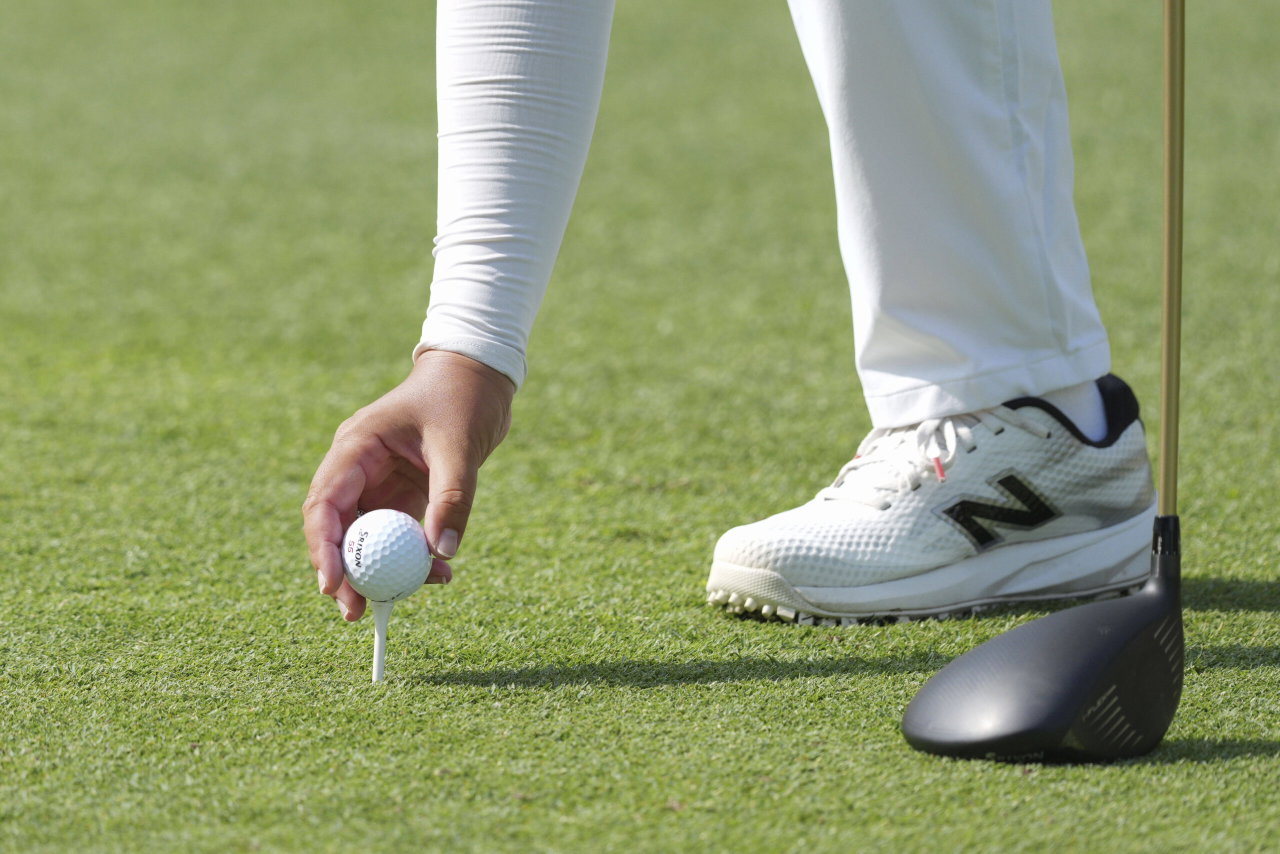
Your ball shifts as you settle your stance. Do you play it or replace it?
Watch What’s Trending Now!
Before you grab your wedge and just hack away, take a breath. If your golf ball moves while you are taking your stance, do not automatically assume you must play it as it lies. Under the USGA and R&A’s Rule 9, the right call depends on a quick decision tree that looks at what caused the movement, where you are on the course, and whether you had already begun your backswing.
Here is your guide to navigating one of golf’s most common and misunderstood scenarios.
What exactly does taking your stance mean?
First, let’s define our terms. Taking your stance means positioning your feet and preparing to make a stroke. This phase of your pre-shot routine can include grounding or hovering the club behind the ball, settling into your posture, or making a practice swing near the ball.
Rule 9 applies to a ball that is in play and at rest before the stroke is made. If the ball moves during your preparation, your first job is not to get frustrated. Your job is to play detective. You need to figure out if it actually moved, and what caused it to happen.
It is also important to know the difference between oscillation and movement. Did the ball just wobble, or did it actually change positions? If your club brushes the grass and the ball oscillates but settles back into its original spot, it has not officially moved. There is no penalty, and you simply continue with your shot. It only counts as moving if it comes to rest on a new spot.
Step 1: Establish the cause
A ball is treated as having moved only when it is known or virtually certain that it moved. If there is doubt, you play it as it lies.
Known or virtually certain means you are at least 95 percent sure of what happened. For example, if you see your clubhead tap the ball and it rolls slightly, you know you caused it. But if you hear a rustle in the rough, look down, and see the ball has shifted, yet you cannot tell if it was the wind, your feet, or gravity, the Rules treat the movement as being caused by natural forces.
Once you establish that the ball moved, the Rules recognize four possible culprits: you or your caddie, natural forces, an outside influence, or your opponent.
Scenario A: You or your caddie caused it
Let’s get the bad news out of the way. If it is known or virtually certain that you, your caddie, or your equipment caused the ball to move while taking your stance away from the putting green, you normally receive a one-stroke penalty.
You must then replace the ball on its original spot before playing your next stroke. Do not play it from the new location. This rule applies even if the movement was entirely accidental. If your club, foot, or loose clothing causes the ball to shift as you settle into a fairway or rough lie, take your penalty, put the ball back, and hit your shot.
There are minor exceptions when you are taking reasonable actions allowed by the Rules, such as marking or lifting a ball, removing a movable obstruction, taking relief, or measuring. In those situations, an accidental movement may carry no penalty, provided the ball is replaced when required.
Scenario B: Location saves the day on the putting green
Breathe a sigh of relief if you are on the putting green, because it is the major exception to the player-caused penalty rule.
If you accidentally cause your ball or ball marker to move on the green, there is no penalty. Simply replace the ball on its original spot. This applies whether you bump it with your putter during a practice stroke, accidentally drop a club on it, kick it with your shoe, or fumble it while trying to mark it. As long as it was an accident, you are safe. Just put it back.
Scenario C: Mother Nature moved it
If wind, water, gravity, or another natural force moves your ball, there is no penalty. Generally, you must play it from its new location.
For example, imagine your approach shot plugs high on a steep bunker face. As you are taking your stance, the sand gives way on its own, dislodging the ball and sending it to the base of the bunker. Because nature, rather than your actions, caused the movement, you play it from the bottom of the bunker with no penalty.
There is one massive exception to the natural forces rule. If your ball is on the putting green, and you have already marked, lifted, and replaced it, you now control that spot. If a gust of wind blows the ball away after you have replaced it, you must put it back on its original spot with no penalty. Furthermore, if a ball that was dropped, placed, or replaced anywhere on the course moves to another area of the course or out of bounds because of natural forces, it must also be replaced on its original spot.
Scenario D: An outside influence moved it
If an outside influence, such as a spectator, a stray dog, a squirrel, or another player’s golf ball, moves your ball, there is no penalty to you. The ball must be replaced on its original spot, or at the estimated original spot if the exact location is unknown.
In match play, the procedure differs if your opponent or their caddie accidentally causes your ball to move. They generally receive a one-stroke penalty, and you replace your ball. However, exceptions apply, such as if they were helping you search for it, accidentally moved it on the putting green, or mistakenly marked and lifted it believing it was their own.
What if it moves during your swing?
Timing is everything when the ball shifts late in your routine.
If the ball moves before you begin the backswing, identify the cause, replace the ball if required, and take any applicable penalty.
If the ball begins moving after you have started your backswing, and you go on to complete the stroke, do not replace it. You play the ball from where it comes to rest after your swing. Whether you get a penalty depends on if you caused the initial movement under Rule 9.4b. The rules do not expect you to magically stop your swing mid-air.
If the ball moves during your backswing and you manage to stop yourself from making the stroke, Rule 9 applies. Determine the cause, replace the ball if necessary, and proceed.
What happens if you play it wrong?
Playing from the wrong place turns a bad situation into a scorecard disaster. If you fail to replace a ball that required replacement and hit from the new spot, the general penalty applies. That means two strokes in stroke play or loss of hole in match play.
The practical takeaway
Next time your ball takes an unexpected detour while you’re getting ready to swing, do not panic. Ask yourself if you caused it.
If you did, and you are not on the green, take your medicine, replace the ball, and add a stroke. If you did not, figure out if it was nature or an outside influence, and follow the matching procedure. Knowing Rule 9 does not just save you strokes. It saves you from turning a simple one-stroke mistake into a round-ruining penalty.