
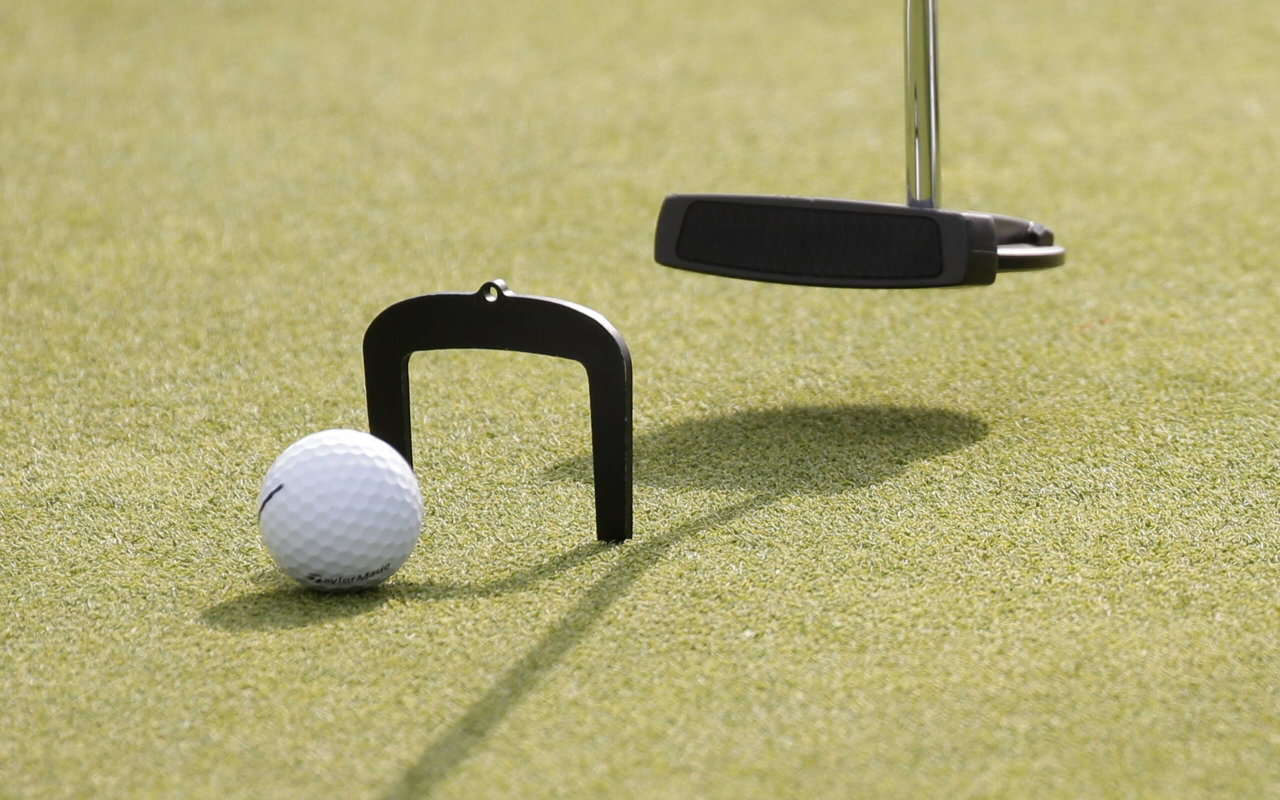
For centuries, golfers faced an unusual obstacle that had little to do with the course or shot accuracy. Under a rule known as the ‘stymie’, a player could find an opponent’s ball sitting directly between their own ball and the hole, blocking a clear putting line. Unlike in modern golf, players could not simply have the obstructing ball lifted. Instead, they had to putt around it or attempt to strike their ball over it.
Watch What’s Trending Now!
The stymie was one of golf’s strangest traditions, turning the position of a ball on the green into a potential tactical weapon. Although the rule eventually disappeared, it shaped competitive golf for generations and occasionally produced extraordinary moments in major championships.
One of the most memorable examples came during the 1929 PGA Championship at Hillcrest Country Club in Los Angeles, where the rule played a dramatic role in the final between Leo Diegel and Johnny Farrell.
A Rule Rooted in Tradition
The stymie reflected an older philosophy of golf: players had to negotiate the conditions their opponents faced rather than expect every obstacle to be removed. If one golfer’s ball stood between another’s ball and the cup, the obstructed player had to find an alternative route.
Supporters considered this a legitimate test of strategy and adaptability. Golf, they argued, required players to respond creatively to difficult situations. Critics, however, believed the rule could undermine the contest by an opponent’s ball interfering directly with an otherwise well-executed putt.
The controversy centred on whether the stymie rewarded ingenuity or introduced an unnecessary element of unfairness. A player could find a carefully planned shot thwarted by a stationary ball, while another could exploit ball placement to make an opponent’s next move considerably harder.
The 1929 PGA Championship
The rule’s peculiar consequences were on display at the 1929 PGA Championship, where defending champion Diegel faced Farrell in a 36-hole match-play final before approximately 5,000 spectators.
Both golfers had defeated formidable opponents to reach the final. Diegel had overcome Gene Sarazen and Walter Hagen, while Farrell had advanced past Henry Ciuci and Al Watrous.
Diegel took an early four-hole lead, but Farrell fought back, leaving the match level at the halfway point. The second half produced an extraordinary sequence involving the stymie.
At the 27th hole, Diegel missed a short putt, leaving his ball in a position that obstructed Farrell’s route to the cup. Under the rules of the time, Farrell could not simply ask for the ball to be marked and removed. As he attempted to negotiate the obstacle, his ball struck Diegel’s and sent it into the hole.
A similar predicament arose at the following hole, further showing how the regulation could turn an ordinary putting situation into an unpredictable contest.
Farrell later missed a short putt at the 29th hole, and Diegel eventually won the championship by six holes with four remaining. The result was decisive, but the unusual incidents showed how the stymie could influence a match in ways that extended beyond conventional putting skill.
Why the Stymie Was Abolished
Debate over the rule continued for decades. As golf grew, critics increasingly questioned whether leaving obstructing balls in place served the interests of fair competition. Although the stymie demanded creativity, it could also reward strategic obstruction and force players into awkward shots unrelated to the quality of their original approach.
In 1952, golf’s governing authorities abolished the rule. Players in match play could thereafter have an obstructing ball marked and lifted under the applicable rules, removing one of the sport’s most unusual restrictions on putting.
The change represented a shift towards a more straightforward approach to competition. Rather than requiring players to treat an opponent’s ball as an immovable obstacle, the revised rules allow play without that particular interference.
The decision also ended a tradition running for centuries. Some enthusiasts valued the stymie as part of golf’s historical character, while reformers welcomed its removal as a necessary improvement to fairness and consistency.
A Forgotten Chapter of Golf History
Today, the stymie survives largely as a historical curiosity. Its legacy is preserved in everyday language, where stymied means blocked or prevented from making progress.
Its disappearance illustrates how sporting rules grow alongside the games they govern. Changing expectations of fairness and competitive skill can lead people to reconsider traditions that once appeared essential.
The 1929 PGA Championship remains a striking example of the rule’s influence. At Hillcrest, a golf ball’s position could become a tactical weapon, an unexpected obstacle, and a source of controversy.
When the stymie was abolished in 1952, golf lost one of its most eccentric traditions. In return, players gained a simpler approach to obstructing balls on the green. The episode remains a reminder that even rules rooted in centuries of sporting history aren’t beyond change when the game’s governing authorities decide it is time to move forward.