
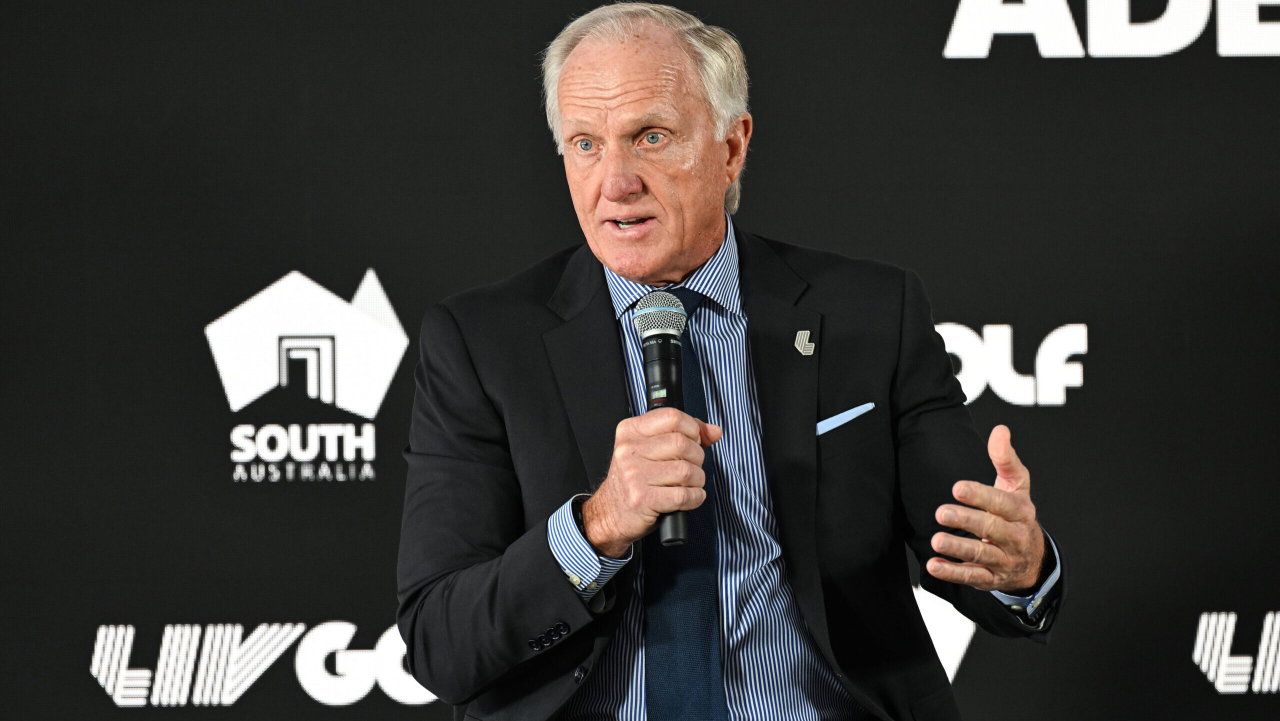
Greg Norman once led LIV Golf, giving him firsthand insight into its battle with the PGA Tour. Under his watch, the Saudi-backed league lured several PGA Tour stars, triggering a fierce response from the American circuit. Now, with LIV facing an uncertain future, Norman has revealed what he would have done differently.
Watch What’s Trending Now!
“Oh, yeah. Oh, definitely,” Norman told Golf Digest when asked whether he would do things differently. “I would have gone quick and globally [rather] than slowly globally. I would have gone basically 10 and 4 straight off the bat if I had my wishes.”
Since Norman vacated his seat as CEO of LIV Golf, the breakaway tour has slowed down significantly. It had nine tournaments scheduled across the globe, with events planned in Saudi Arabia, Australia, Hong Kong, Singapore, South Africa, Mexico, South Korea, Spain and the UK. Meanwhile, LIV also slated five events in the United States. However, that ambitious schedule did not last very long once the season got underway.
Saudi Arabia’s PIF eventually pulled its funding from the tour, setting off a series of struggles for LIV Golf. As the season neared its conclusion, the league was forced to cancel two events: one in New Orleans and another, its season-ending Team Championship in Michigan. Clearly, the vision Norman had for LIV looks very different from what ultimately unfolded. However, the bigger question is why Norman envisioned things unfolding differently.
He explained his reasoning while also taking a dig at the PGA Tour.
“Because when you go in there, and you start poking the bear, the bear’s going to react,” Norman added, referring to the PGA Tour. “And then the bear didn’t want to sit down and understand the opportunity to coexist in the ecosystem, then you start to keep poking and poking and poking.”
Of course, the PGA Tour’s hostility toward LIV Golf and the players who defected to the breakaway circuit was evident in its response. The American tour suspended players who left for LIV, effectively barring them from competing in PGA Tour events. Even when some of those players later sought a return, the PGA Tour imposed penalties and periods of inactivity before they could compete again.
Not to mention, the American circuit had already been in a strategic alliance with the DP World Tour since 2020. The PGA Tour didn’t consider something similar with LIV Golf. In fact, PGA and DP World strengthened their connection by launching an expanded 13-year operational joint venture running through 2035, which included cross-tour co-sanctioning of events like the Genesis Scottish Open.
On top of that, the PGA Tour and DP World Tour together partnered with the Asian Tour, which had served as a key feeder circuit for LIV Golf’s players, adding another layer to the growing tensions between the two sides. Still, Greg Norman believes there’s room for co-existing, but he doesn’t see it happening “under the current structure of the system.” He now just wonders, “does the monopolist get bigger and stronger?”
In the meantime, however, LIV Golf has filed for Chapter 11 bankruptcy after failing to pay several contractors and laying off a significant number of employees. While the breakaway league is not closing shop just yet, thanks to new lead investor BC Partners, its plans for 2027 appear far more modest.
LIV is expected to operate with significantly smaller purses and a reduced schedule as it attempts to restructure its operations and find a sustainable path forward.
Still, there’s a real case that Norman’s instinct wasn’t wrong. Locking down more markets early, before the PGA Tour and DP World Tour cemented their own alliance, could have given LIV more leverage and a stronger claim to legitimacy. And leverage tends to buy patience, even from a funder as deep-pocketed as the PIF. LIV’s collapse ultimately came down to money, but money follows confidence, and a league that looked unstoppable out of the gate might have held onto that confidence a little longer. Seen that way, speed and survival were never as separate as they look in hindsight.