
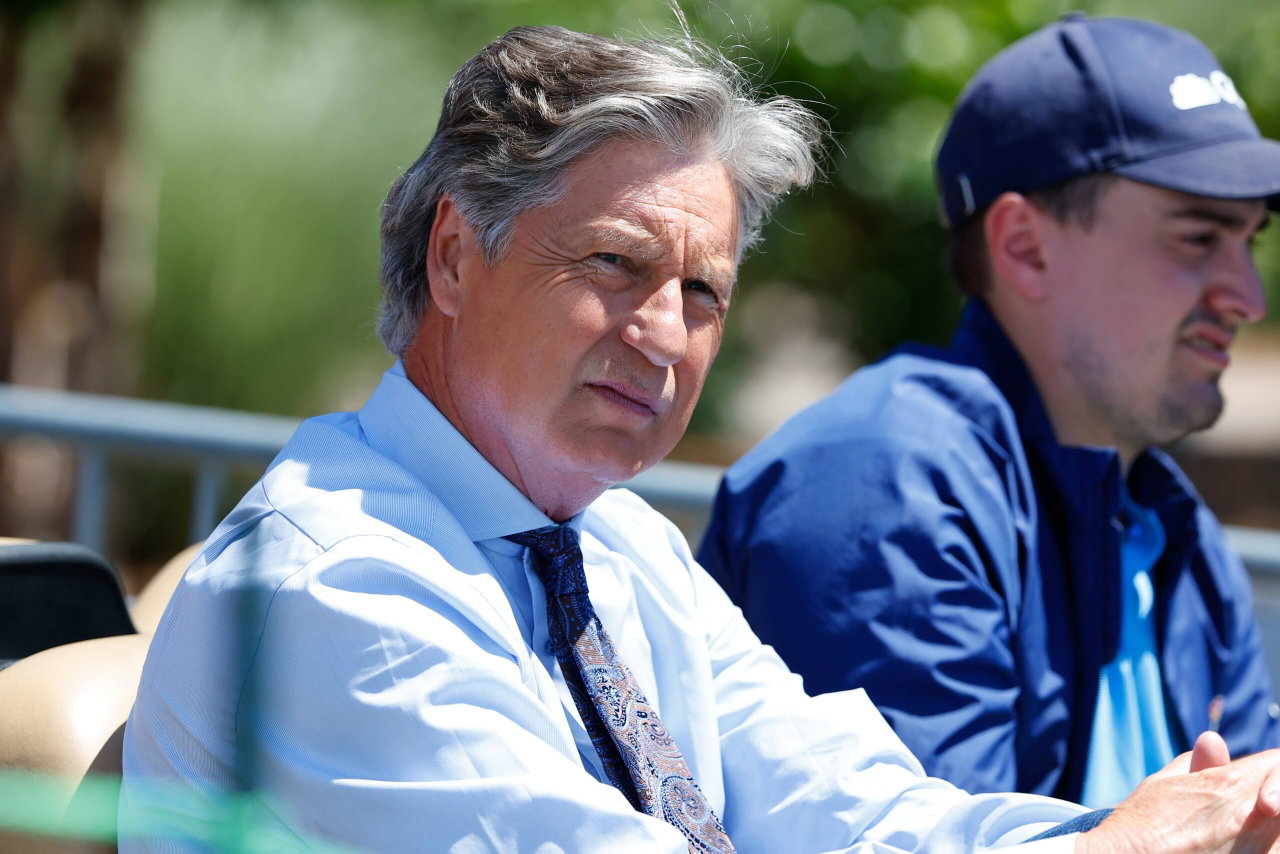
Few voices in golf have followed Phil Mickelson’s break with the PGA Tour as closely—or as critically—as Brandel Chamblee. The Golf Channel analyst has been at odds with Mickelson since the emergence of LIV Golf, frequently criticizing both his decision to join the breakaway league and his role in encouraging other players to follow.
Watch What’s Trending Now!
Now, with LIV Golf’s future facing renewed uncertainty, Chamblee has revisited one of the central disputes behind Mickelson’s split from the tour: the question of who owns a player’s rights. That issue became a key part of Mickelson’s argument as he challenged the tour’s authority and helped fuel the broader conflict between LIV Golf and the established golf ecosystem.
Speaking on We Need a Fourth Show, Chamblee said, “Well, Phil’s was—he wanted to burn the tour down and tear the house down because he thought he was entitled to his media rights, which no athlete in any sport is entitled to their media rights. Otherwise, the television contracts and the media all fall apart. If you can just go play and then take your media and put it on your site, people will go watch your site and not watch the game, or, to some degree, will not watch the game. Uh, that’s the reason they’re called media rights. That’s the reason media pays for the right to put these things on. That’s what Phil was trying to say he was entitled to.”
Moreover, Chamblee also challenged the logic behind Mickelson’s position, arguing that stars represent the real stakes, drive the game, and deserve to be paid accordingly.
“The thing that’s different about golf than football, than baseball, than hockey, than basketball, in those particular sports, the difference between Tom Brady and the average quarterback in the NFL is about thirty percent, twenty percent. The difference between Tom Brady and the worst quarterback in the NFL is about forty percent. In golf, the difference between Scottie Scheffler and the hundredth guy on the money list is three percent. The difference between Scottie Scheffler and the last guy in the field is seven percent. Stars four years ago are not stars today. Players you’ve never even heard of today are gonna be stars four years from now.”
For context, Mickelson’s grievance had become public well before LIV had fully taken shape. It began with a February 2022 interview with Golf Digest, in which he blamed the Tour’s “obnoxious greed” for pushing players toward rival opportunities. He also argued that returning media rights to players could prevent a breakaway. His complaint was specific: when players join the Tour, they assign their media rights to it, allowing the organization to charge a fee when they appear on television outside of Tour events.
Moreover, Mickelson framed it as a matter of leverage. The Tour only understands leverage, he told Golf Digest. In another, in a separate interview with Alan Shipnuck, Mickelson even went to say that Tour Commissioner J. Monahan only did right because it had leverage and that Saudi money had finally supplied it.
As for the tour, it consistently defended its model at the time, arguing that its structure was comparable to other professional sports leagues, which retain media rights to maximize revenue. Commissioner Jay Monahan also communicated to players that they would receive 55% of the tour’s 2021 revenue. Even the Associated Press criticized Mickelson’s argument, describing his demand to see his individual media rights as misguided.
As for the Tour, it responded with a mix of incentives and penalties. It expanded the Player Impact Program to reward 20 players and introduced “elevated events” featuring average purses of $20 million. But the approach also came with disciplinary action. In June 2022, the Tour suspended 17 players, including Mickelson, saying they had participated in conflicting events without obtaining the required releases covering their event and media rights.
That said, the media rights issue has since softened around the edges. In May 2026, the Tour loosened its player social media policy, allowing players to post up to three minutes of on-site content on competition days, along with two hours of highlights on their own YouTube channels. They still cannot publish content that competes with the broadcasters’ media rights. The Tour retains ownership, but players now have more freedom to create and share content within those limits.