
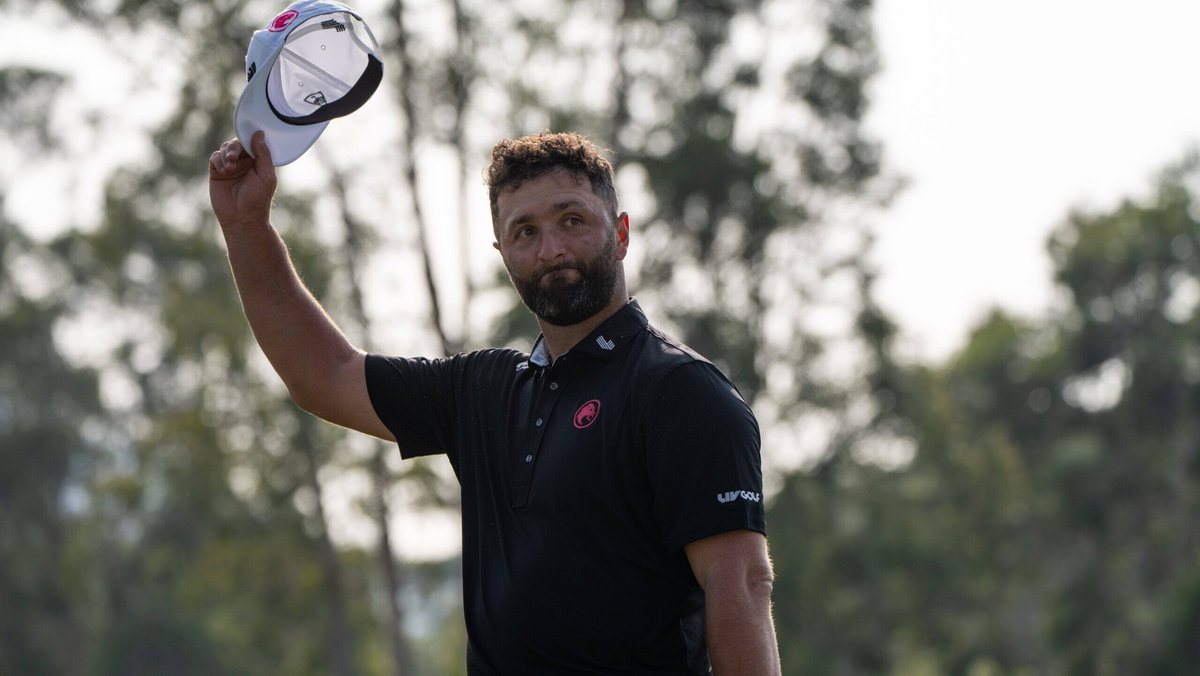
Jon Rahm once made it clear that Brooks Koepka’s decision to return to the PGA Tour would not change his own plans. He was happy with LIV Golf and had no intention of leaving. But ten months later, the Spaniard is looking at a very different future. With LIV facing bankruptcy and Rahm out of the league, he has now admitted that he would most likely accept the same penalties Koepka did to return to the PGA Tour.
Watch What’s Trending Now!
Rahm addressed the possibility at his first press conference since his LIV exit, in Abu Dhabi on Tuesday. Asked about his plans for 2027, he revealed that he had yet to speak with the PGA Tour about a possible route back.
“As of right now, I really don’t know what 2027 is going to look like for me, right? So I have yet to have a discussion with the PGA Tour to see if there’s any path back for next year. So I don’t know, as of right now…Obviously Brooks was able to go back through certain circumstances. I don’t know if the possibility of that would be open for me or not, but if I have to fulfill a one-year suspension, I think it’s a pretty good position to be in that worst-case scenario; I get to play on a wonderful tour for a whole year.”
But when asked whether he would accept the same terms as Koepka, Rahm was clear. “Most likely, yeah. Why not? … I seriously doubt I get offered the same deal that Brooks did. But yeah, if I got offered the same penalties as him, I probably would do it, yes,” Rahm said at his Abu Dhabi Aldar Championship press conference.
That is a notable change from January. When the PGA Tour introduced its Returning Member Program, Rahm was among four LIV players eligible to apply. Yet, he had no interest in following Koepka.
“I’m not planning on going anywhere. … I wish Brooks the best. As far as I’m concerned, I’m focused on the league and my team this year,” Rahm said at LIV’s media day in Palm Beach on January 13.
The program covered players who had won the Players Championship or a major between 2022 and 2025. Alongside Koepka, that included Rahm, Bryson DeChambeau, and Cameron Smith. But returning came at a steep price: a $5 million charitable donation, five years without Player Equity Program payouts and no FedEx Cup bonus money in 2026. Rolapp estimated that the equity forfeiture alone could cost Koepka between $50 million and $85 million. None of the other three accepted the offer before the February 2 deadline.
There was also a key difference between Koepka and Rahm. Koepka had already left LIV on December 23, 2025, by mutual agreement with the league, reportedly a year before his contract ended, citing family reasons.
Rahm, meanwhile, was believed to have at least two years remaining on his LIV contract, ESPN reported. The program also required players to be free of contractual restrictions that could prevent them from following Tour rules. So while both qualified based on their playing records, Koepka was in a different position to make the move.
His return also came with further restrictions. Koepka committed to at least 15 starts and lost access to sponsor exemptions into Signature Events.
“I also understand there are financial penalties associated with this decision, and I accept those,” he said in his January 12 statement.
The bigger problem for Rahm now is that the PGA Tour has no plans to offer the same arrangement again. Rolapp described it as a one-time opportunity and reiterated that position on September 15.
“In terms of where we are today, we are not currently contemplating a returning-member program like the one you saw in January,” Rolapp said.
That leaves Rahm in a very different situation from Koepka. Since January, LIV has filed for Chapter 11 bankruptcy, and Rahm’s representative told the bankruptcy court in October that he found the proposed terms of LIV 2.0 unacceptable and would not take part. Rahm also said in Abu Dhabi that the relaunched league had moved away from the team format that initially attracted him.
He has not explained directly why his thinking on a PGA Tour return has changed. But his latest comments suggest he is now prepared to accept the costs of returning, even if the Tour does not offer him the same early route it gave Koepka.